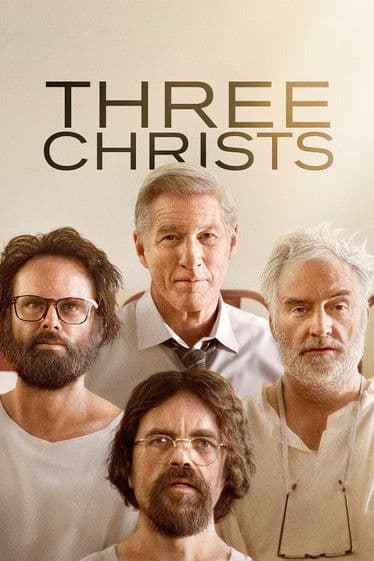
Dr. Alan Stone is a doctor who starts work at a state hospital in Ypsilanti, Michigan, in 1959. He brings Joseph, Leon, and Clyde into the same room because each man believes that he is Jesus Christ. Stone must defend the risky experiment against doctors who prefer shock treatment, strong drugs, and locked wards. The drama is dark and sad, but it also uses strange humor as the three men argue over which one is the real Christ.
The film asks viewers to see very ill patients as full people instead of labels. Stone believes that patient care should use trust, talk, and a caring group, even though his own pride makes the experiment dangerous. The film casts Peter Dinklage as Joseph, and it does not make his visible dwarfism part of the character's story. A Black orderly has a small supporting role, and Joseph briefly kisses Stone after Stone helps him. The kiss looks like thanks rather than romance, while the story stays focused on mental illness, personal pride, and the cost of trying to save people.
Community feedback
Was our 23% Woke rating accurate?
Breakdown
These are the editorial factors and ratings behind our score for Three Christs.
Woke representation / casting
Peter Dinklage plays Joseph, one of the three central patients. The film does not explain his visible dwarfism through the character's backstory or plot. A Black orderly appears in a small supporting role, but the other lead roles do not create a wider identity-focused casting pattern. The film gives no clear message about disability representation.
18%
Woke political dialogue
Not present. The film has debate about shock treatment, heavy drugs, confinement, professional duty, and mental-health care. Those lines belong to the 1959 hospital story and do not push modern identity, DEI, or activist ideas.
0%
Identity-driven story themes
The film repeatedly asks viewers to see very ill patients as full people instead of labels. Stone argues for empathy, shared community, and care outside the hospital. Joseph briefly kisses Stone after Stone helps him, but the scene reads as thanks rather than romance. These ideas give the drama a mild social message, while the main conflict stays focused on mental-health care and personal pride.
24%
Western institutional / cultural critique
Not present. The movie criticizes harsh psychiatric treatment in a 1959 state hospital. That conflict stays tied to the period story and does not become a modern attack on Western culture, family, religion, or male social power.
0%
Woke character or canon changes
Not relevant. The film changes names and adds drama around the real case, but those are ordinary story changes. It does not change a race, gender, sexuality, or identity-based role.
0%
Anti-woke backlash and complaints
Not present. One small review called parts of the script “woke,” but it did not name a clear identity or DEI element. The X pass found no anti-woke reaction, and other audience and news coverage focused on mental health, ethics, and film quality.
0%
Creator track record context
Eric Nazarian has a moderate representation record through stories about immigrant communities, community history, and groups that feel overlooked. Jon Avnet has broad humanitarian ties but no clear pattern of identity politics or DEI work. Milton Rokeach was an academic psychologist, not a modern activist. The listed producers and casting director have no strong documented activist or identity-driven record.
30%
Production
Movie · 2024
On the brink of the Second World War, a young Norwegian man's drive to resist the Nazis sets a new course for his future – and the future of his country.
Movie · 2016
WWII American Army Medic Desmond T. Doss, who served during the Battle of Okinawa, refuses to kill people and becomes the first Conscientious Objector in American history to…
Movie · 2016
On 15 January 2009, the world witnessed the 'Miracle on the Hudson' when Captain 'Sully' Sullenberger glided his disabled plane onto the Hudson River, saving the lives of all 155…
Movie · 2026
While people across 1990s Iraq struggle to survive the war and food shortages, Saddam Hussein requires each school in the country to prepare a cake to celebrate his birthday.
Movie · 2019
Richard Jewell thinks quick, works fast, and saves hundreds, perhaps thousands, of lives after a domestic terrorist plants several pipe bombs and they explode during a concert…
Movie · 2022
A quiet, neglected girl is sent away from her dysfunctional family to live with relatives for the summer. She blossoms in their care, but in this house where there are meant to be…
Movie · 2016
In a desolate war zone where screams of the innocent echo, on the very line between disaster and valor, 7 Maroon Berets will dance with death.
Movie · 2023
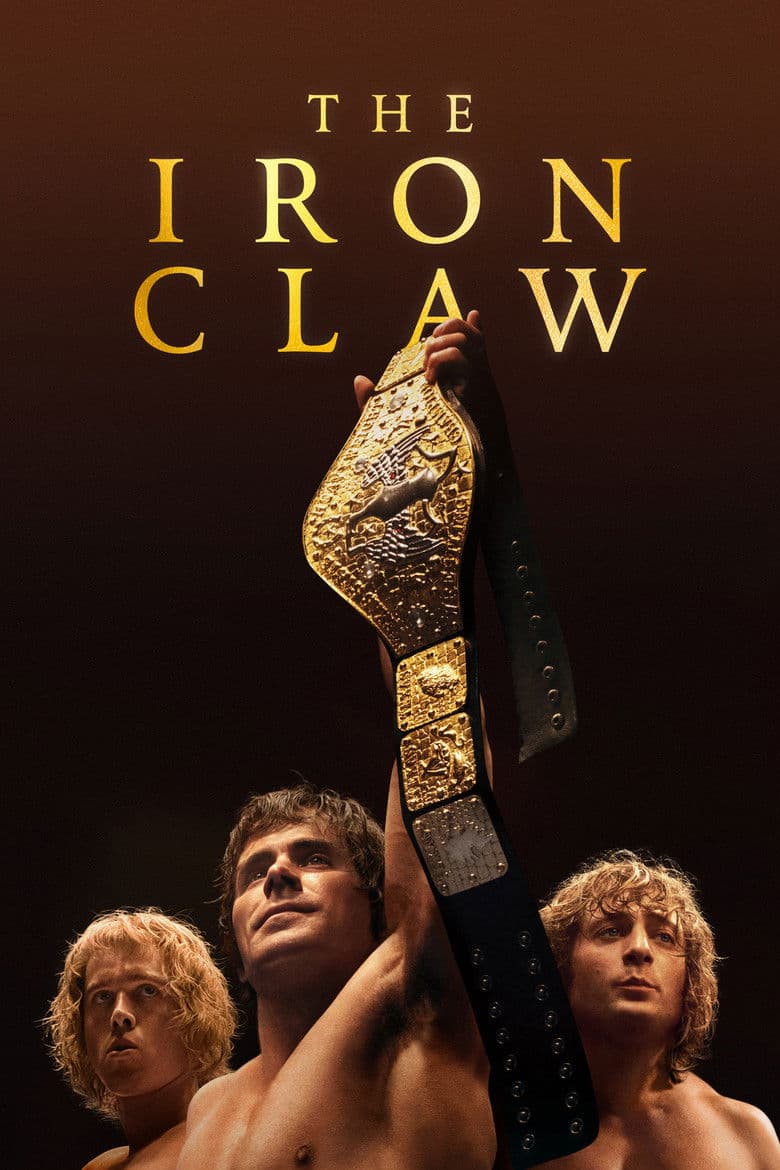
The true story of the inseparable Von Erich brothers, who made history in the intensely competitive world of professional wrestling in the early 1980s.
