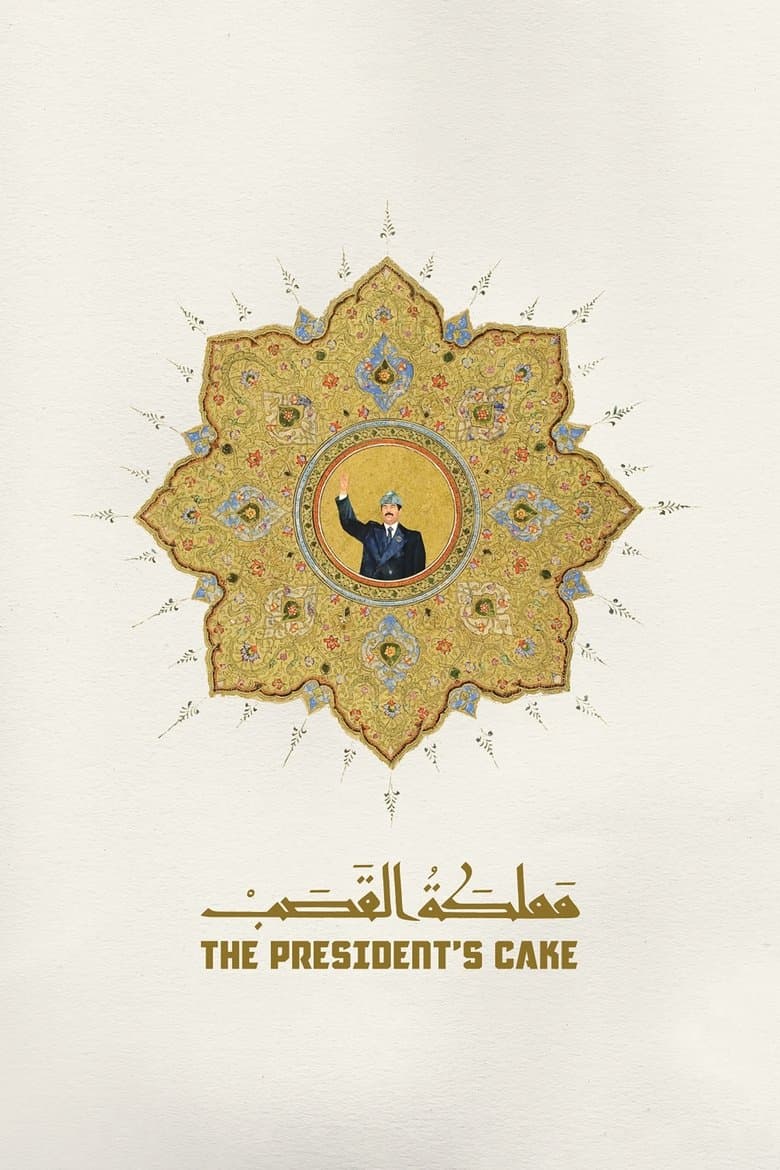
The President’s Cake follows Lamia, a nine-year-old girl who lives with her grandmother in the marshes of early 1990s Iraq. Her teacher picks her to bake a large birthday cake for Saddam Hussein, and refusing the job could bring severe punishment. Lamia travels toward the city with her grandmother, her rooster Hindi, and later her classmate Saeed to find eggs, flour, and sugar. The journey moves between gentle humor, danger, hunger, and fear as the children meet adults damaged by war and poverty.
The film treats the cake as a small demand that shows how dictatorship reaches into daily life. Saddam’s portraits, school rituals, police, shortages, bombings, and corrupt adults keep the ruler’s power in view. Lamia and Saeed show courage and kindness, but the story does not turn them into political heroes. Its main themes are childhood under pressure, survival, friendship, and the moral damage caused when people must obey power to get through the day.
Community feedback
Was our 5% Woke rating accurate?
Breakdown
These are the editorial factors and ratings behind our score for The President's Cake.
Woke representation / casting
Not present. The main cast is Iraqi and the film was shot in Iraq with many nonprofessional local actors. The casting matches the people and setting shown on screen rather than making diversity a separate message.
0%
Woke political dialogue
Not present. The film includes talk about Saddam’s rule, food shortages, sanctions, and war. Those points explain the 1990s setting and do not become modern identity or DEI messaging.
0%
Identity-driven story themes
Not present. Lamia is a girl who must solve a dangerous task, and Saeed is her friend. Their courage grows from the child-centered story, not from a message about race, sex, gender identity, or queer rights.
0%
Western institutional / cultural critique
Not present. The story shows Saddam’s dictatorship, international sanctions, air raids, corrupt officials, and shortages. It treats these as events in Iraq’s history and does not build a modern activist attack on Western culture, family life, or religion.
0%
Woke character or canon changes
Not relevant. The movie uses Saddam Hussein as the real ruler of its period setting, but it does not recast or rewrite a known character or event.
0%
Anti-woke backlash and complaints
Not present. The public discussion found praise, pacing complaints, and questions about U.S. funding and sanctions. No clear anti-woke complaint says the film pushes DEI, identity politics, or left-wing messaging.
0%
Creator track record context
Hasan Hadi has a low cached score and his work centers on Iraqi war memories and social realism. Most listed producers have low or moderate cached scores and no clear activist record. A smaller group has links to representation or social-change work, including Marielle Heller, Kareem Mortimer, Naia Cucukov, Donna Gruneich, and Kevin Gruneich. This raises context modestly, but the film itself stays focused on Iraqi childhood, dictatorship, and survival.
25%
Production
Movie · 2020
A man refuses all assistance from his daughter as he ages and, as he tries to make sense of his changing circumstances, he begins to doubt his loved ones, his own mind and even…
Movie · 2017
In 1950, amidst the ravages of the Korean War, Sergeant Süleyman stumbles upon a a half-frozen little girl, with no parents and no help in sight and he risks his own life to save…
Movie · 2022
London, 1953. Mr. Williams, a veteran civil servant, is an important cog within the city's bureaucracy as it struggles to rebuild in the aftermath of World War II.
Movie · 2017
Members of the Granite Mountain Hotshots battle deadly wildfires to save an Arizona town.
Movie · 2016
After his older brother passes away, Lee Chandler is forced to return home to care for his 16-year-old nephew.
Movie · 2016
On 15 January 2009, the world witnessed the 'Miracle on the Hudson' when Captain 'Sully' Sullenberger glided his disabled plane onto the Hudson River, saving the lives of all 155…

Movie · 2024
On the brink of the Second World War, a young Norwegian man's drive to resist the Nazis sets a new course for his future – and the future of his country.
Movie · 2022
A quiet, neglected girl is sent away from her dysfunctional family to live with relatives for the summer. She blossoms in their care, but in this house where there are meant to be…
