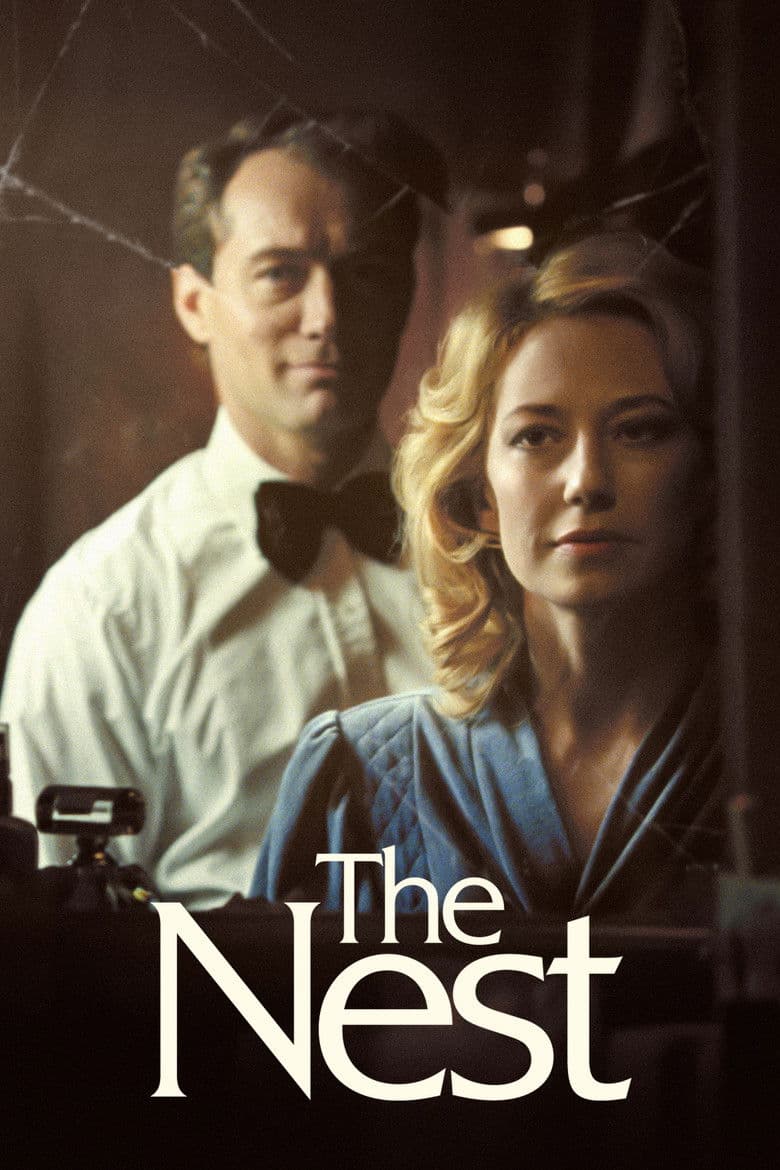
Rory O’Hara is an English financial trader who believes a bigger deal will give his family a better life. In 1986, he moves his American wife Allison and their two children from a comfortable New York suburb to a large, aging house in Surrey. Rory spends more than he has while he tries to rebuild his career and impress his old friends. The family faces debt, lies, loneliness, and growing anger in a cold, uneasy drama.
Rory and Allison begin as near equals, but the move pushes them into an old pattern where the husband must provide and the wife must support him. The film shows that pattern hurting Allison’s work, voice, and place in the family. It also questions the money race and social climbing of the 1980s, while tying them to Rory’s fear of failure and need to look successful. These ideas shape the whole marriage story, but the movie stays focused on one family instead of giving speeches about modern politics or identity.
Community feedback
Was our 37% Woke rating accurate?
Breakdown
These are the editorial factors and ratings behind our score for The Nest.
Woke representation / casting
Not present. The main family is white, and the supporting cast does not form a clear diversity pattern. The movie does not frame its casting as a representation message.
0%
Woke political dialogue
Not present. The characters talk about money, class, family duties, and ambition. The film does not give a clear woke political speech or activist argument.
0%
Identity-driven story themes
The film makes Allison’s loss of an equal place in the marriage a major part of the conflict. The move pushes her into a role where she is expected to support Rory while he claims the provider role. The story links those roles to his lies, money troubles, and harm to the family. Allison resists that role through her work with horses, her anger, and her refusal to keep praising Rory. The message recurs across the family drama, but it stays inside one marriage rather than becoming a broad identity campaign.
42%
Western institutional / cultural critique
The film treats Rory’s provider role and social climbing as harmful forces in the family. Rory hides debt and failures because he thinks a man must look rich and in control. The move turns Allison from an equal partner into someone expected to support his public image. The movie also questions the money race and financial culture of 1980s Britain and America. The critique recurs, but it does not attack Christianity or Western society as a whole.
38%
Woke character or canon changes
Not relevant. The film is an original family drama. It does not change an established character, famous person, historical event, or source canon.
0%
Anti-woke backlash and complaints
Not present. No anti-woke complaint, boycott, or review-bombing was found in the available coverage. The separate X research also found no named complaint that the film pushes woke, DEI, or identity politics.
0%
Creator track record context
Sean Durkin’s cached score is 14, and his record is not built around activism. Jude Law’s cached score is 47 because of progressive causes and projects, while Ben Browning’s is 44 because of Promising Young Woman. Shaheen Baig’s cached score is 53 for inclusive casting work, but most other listed producers and crew have low cached scores. This gives the film some supporting context, though the movie itself is a family drama rather than an activist project.
29%
Production

Movie · 2023
The true story of the inseparable Von Erich brothers, who made history in the intensely competitive world of professional wrestling in the early 1980s.
Movie · 2019
Richard Jewell thinks quick, works fast, and saves hundreds, perhaps thousands, of lives after a domestic terrorist plants several pipe bombs and they explode during a concert…

Movie · 2024
On the brink of the Second World War, a young Norwegian man's drive to resist the Nazis sets a new course for his future – and the future of his country.

Movie · 2016
WWII American Army Medic Desmond T. Doss, who served during the Battle of Okinawa, refuses to kill people and becomes the first Conscientious Objector in American history to…

Movie · 2016
In a desolate war zone where screams of the innocent echo, on the very line between disaster and valor, 7 Maroon Berets will dance with death.
Movie · 2025
Diagnosed with Tourette Syndrome at 15, John Davidson navigates his way against the odds through troubled teenage years and into adulthood, finding inspiration in the kindness of…
Movie · 2023
American ballet dancer Joy Womack is accepted into Moscow's infamously tough Bolshoi Ballet Academy, with the dream of becoming a great ballerina.
Movie · 2020
A man refuses all assistance from his daughter as he ages and, as he tries to make sense of his changing circumstances, he begins to doubt his loved ones, his own mind and even…
