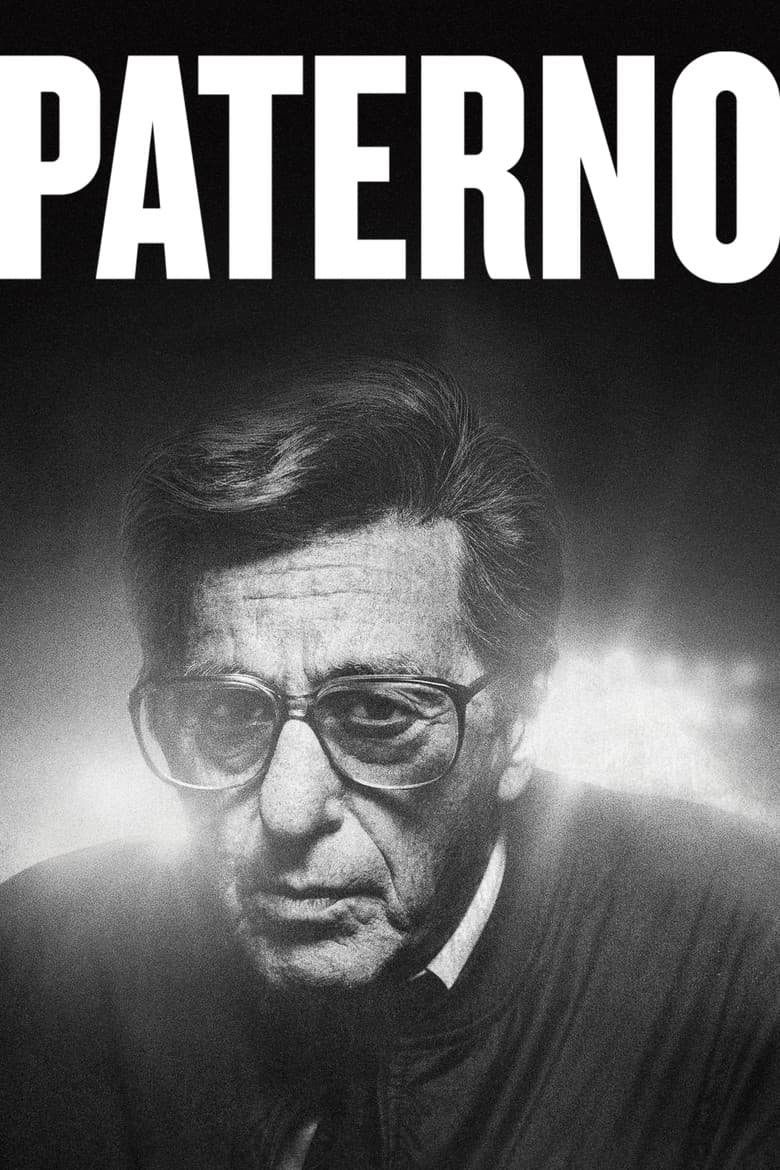
Paterno follows Joe Paterno, the famous Penn State football coach, during the last weeks of his career in 2011. He has just won his 409th game when news breaks that his former assistant, Jerry Sandusky, is accused of abusing boys. Paterno tries to stay focused on football while his family, reporters, university leaders, and angry students press him about what he knew. The movie has a tense and sad tone, and it uses flashbacks from Paterno’s medical scan and failing health to show a proud man losing control of his life.
The story also follows Sara Ganim, a young reporter who keeps working after Penn State fans attack her for exposing the scandal. Paterno’s wife and daughter push him to face the harm done to victims, while his sons argue about his duty and his name. The movie treats silence, loyalty to a powerful institution, and the cost of protecting a hero as its main themes. It ends with another victim’s account, leaving Paterno’s legacy tied to the question of whether he ignored warnings.
Community feedback
Was our 18% Woke rating accurate?
Breakdown
These are the editorial factors and ratings behind our score for Paterno.
Woke representation / casting
Not present. The main actors play real people tied to Penn State and the Sandusky case. The film does not make race, sex, or identity a casting message.
0%
Woke political dialogue
Not present. The characters talk about abuse, duty, football, facts, and public blame. No character gives modern DEI, identity, or activist lines.
0%
Identity-driven story themes
The film gives a major parallel role to Sara Ganim, a young woman who keeps reporting after fans attack her. The story also asks powerful men and a famous institution to answer for ignored victims. Writer Debora Cahn linked the story to the #MeToo-era debate about holding men responsible for abuse. These points add a mild activist and gender-related frame, but the film stays tied to the real scandal.
18%
Western institutional / cultural critique
The film repeatedly shows Penn State leaders and football culture protecting a famous name instead of facing abuse claims. The plot treats the school’s power, money, and fan loyalty as reasons people looked away. Levinson described the story as a failure of the system and linked its ignored voices to #MeToo. The critique is aimed at this real sports scandal, not at Western culture as a whole.
18%
Woke character or canon changes
Not relevant. The film dramatizes and compresses real events, but it does not change the race, sex, sexuality, or leadership role of the real people.
0%
Anti-woke backlash and complaints
One IMDb reviewer, quoted by Onward State, said Sara Ganim seemed included only to give the film a female protagonist. That complaint treats the reporter’s role as a gender choice rather than focusing on the scandal. Most backlash came from Paterno supporters who disputed facts and his blame, not from a broad anti-woke campaign. X research found no anti-woke reaction.
8%
Creator track record context
Barry Levinson has a low cached score and a record of political and institutional stories rather than identity-first work. Debora Cahn and John C. Richards also have low cached scores and no clear DEI pattern. Tom Fontana has a somewhat higher cached score because of earlier racial and queer representation work and television diversity efforts. The rest of the listed producers and the casting director have little recorded activist or identity-focused history.
12%
Production

Movie · 2016
WWII American Army Medic Desmond T. Doss, who served during the Battle of Okinawa, refuses to kill people and becomes the first Conscientious Objector in American history to…
Movie · 2025
Diagnosed with Tourette Syndrome at 15, John Davidson navigates his way against the odds through troubled teenage years and into adulthood, finding inspiration in the kindness of…
Movie · 2019
Pennsylvania, 1956. Frank Sheeran, a war veteran of Irish origin who works as a truck driver, accidentally meets mobster Russell Bufalino.
Movie · 2019
Richard Jewell thinks quick, works fast, and saves hundreds, perhaps thousands, of lives after a domestic terrorist plants several pipe bombs and they explode during a concert…
Movie · 2020
A man refuses all assistance from his daughter as he ages and, as he tries to make sense of his changing circumstances, he begins to doubt his loved ones, his own mind and even…
Movie · 2016
On 15 January 2009, the world witnessed the 'Miracle on the Hudson' when Captain 'Sully' Sullenberger glided his disabled plane onto the Hudson River, saving the lives of all 155…

Movie · 2024
On the brink of the Second World War, a young Norwegian man's drive to resist the Nazis sets a new course for his future – and the future of his country.
Movie · 2022
Based on a true tragedy, the emotionally triggering film sheds light on the plight of Kashmiri Pandits (Hindus), a religious minority in the 1990s Kashmir valley, who were…
