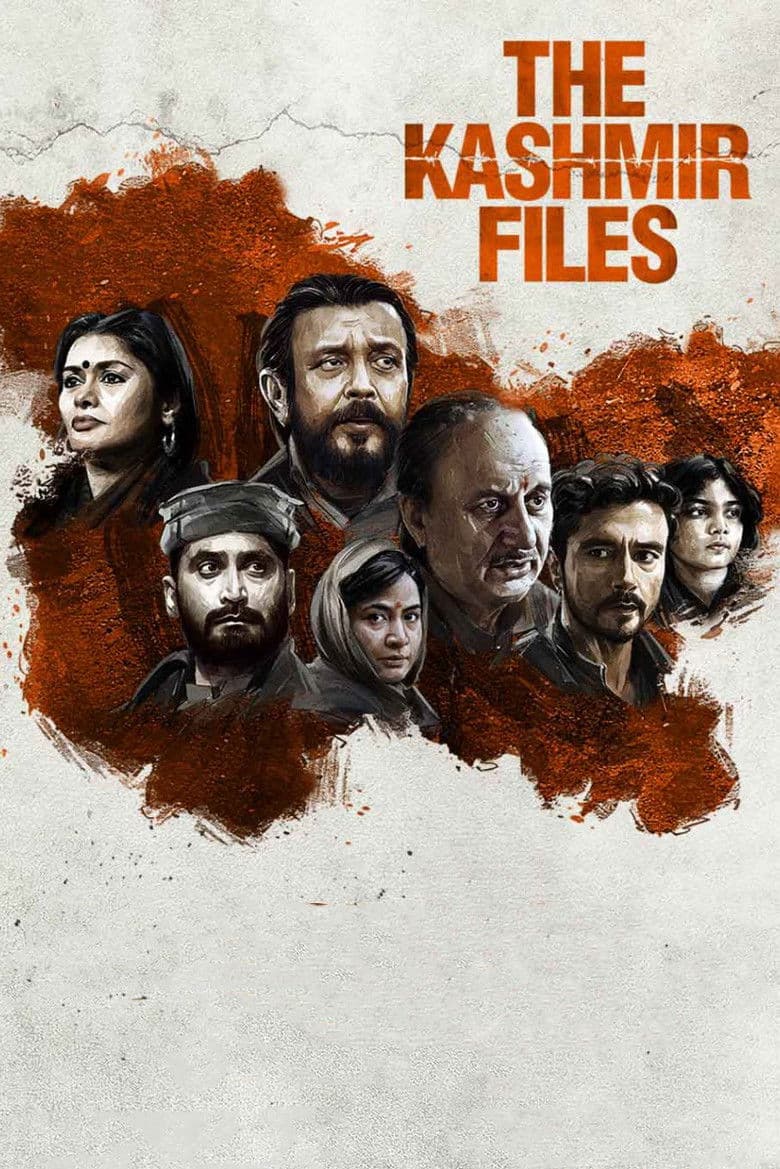
Krishna Pandit is a young Kashmiri Hindu student living in Delhi after his family fled Kashmir. He believes that his parents died in an accident, and he trusts his college teacher, Radhika Menon, who presents a different view of Kashmir’s history. After his grandfather Pushkar Nath dies, Krishna returns to Srinagar with his ashes and meets the old friends who knew his family. The film moves between the late 1980s and the present as Krishna learns why his family left.
The story shows killings, threats, forced flight, and life in refugee camps through the Pandit family and other survivors. Krishna slowly changes from a confused student into someone who demands answers and justice. The film blames Islamist militants and also attacks politicians, news media, and left-leaning teachers for hiding or denying the suffering. Its tone is angry, tragic, and openly patriotic, with graphic violence and speeches about India, Kashmir, and the right to return home.
Community feedback
Was our 0% Woke rating accurate?
Breakdown
These are the editorial factors and ratings behind our score for The Kashmir Files.
Woke representation / casting
Not present. The main cast presents Kashmiri Pandit families, Indian students, teachers, officials, and militants in a story set in India. The film does not use diversity-first casting or an identity swap as a visible message.
0%
Woke political dialogue
Not present. The film contains frequent political speeches about Kashmir, India, Article 370, and Islamist violence. Those speeches support a conservative-nationalist view and do not push modern DEI, gender, queer, or activist ideas.
0%
Identity-driven story themes
Not present. The story is built around the religious identity and suffering of Kashmiri Pandits. It treats that history as a Hindu and national tragedy, not as a modern DEI, queer, or identity-activist program.
0%
Western institutional / cultural critique
Not present. The film attacks Indian politicians, media, and left-leaning university teachers for hiding the Pandit story. It does not frame Western institutions, traditional family life, Christianity, or conservative social norms as the main problem.
0%
Woke character or canon changes
Not relevant. The film dramatizes real events with fictionalized and combined characters, but no race, gender, or sexuality swap is a story point.
0%
Anti-woke backlash and complaints
Not present. No sustained anti-woke complaint was found in the supplied X pass or the reviewed coverage. Right-leaning praise called the film not woke, while other major criticism called it propaganda or anti-Muslim, so the reaction does not raise this factor.
0%
Creator track record context
Not present. The cached profiles describe the director and related creators as conservative-nationalist, anti-left, or mainly commercial. They do not show a woke, DEI, queer, or representation-first track record.
0%
Production
Movie · 2016
WWII American Army Medic Desmond T. Doss, who served during the Battle of Okinawa, refuses to kill people and becomes the first Conscientious Objector in American history to…
Movie · 2017
Members of the Granite Mountain Hotshots battle deadly wildfires to save an Arizona town.
Movie · 2023
American ballet dancer Joy Womack is accepted into Moscow's infamously tough Bolshoi Ballet Academy, with the dream of becoming a great ballerina.
Movie · 2022
A quiet, neglected girl is sent away from her dysfunctional family to live with relatives for the summer. She blossoms in their care, but in this house where there are meant to be…
Movie · 2025
A logger leads a life of quiet grace as he experiences love and loss during an era of monumental change in early 20th-century America.
Movie · 2016
On 15 January 2009, the world witnessed the 'Miracle on the Hudson' when Captain 'Sully' Sullenberger glided his disabled plane onto the Hudson River, saving the lives of all 155…
Movie · 2024
On the brink of the Second World War, a young Norwegian man's drive to resist the Nazis sets a new course for his future – and the future of his country.

Movie · 2023
The story of J. Robert Oppenheimer's role in the development of the atomic bomb during World War II.
