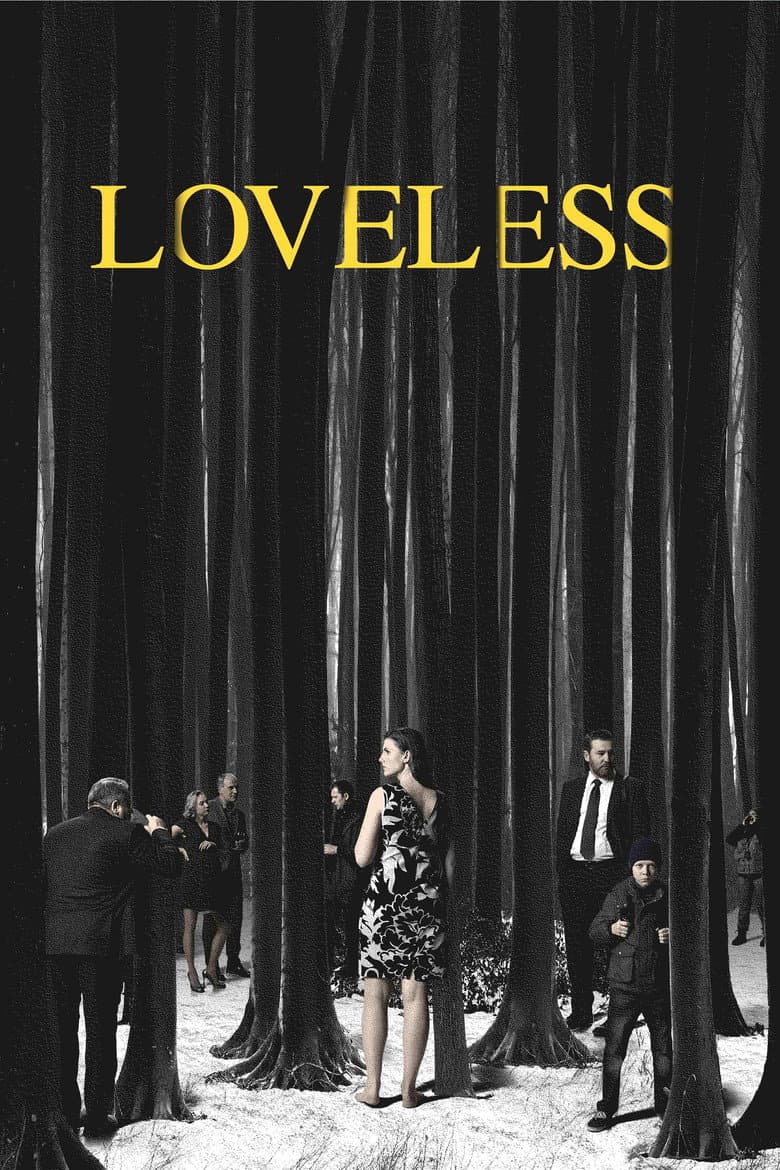
Zhenya and Boris are a Russian couple in a bitter divorce. They live in Moscow while each starts a new relationship and tries to sell the home they still share. Their 12-year-old son Alyosha hears them argue and then disappears. The search turns the film into a cold, tense drama about a family that has stopped caring for one another.
The main social message comes through its picture of selfish adults, weak public offices, and a volunteer group that works harder than the police. Boris hides the divorce because his religious employer wants workers to be married, while Zhenya mocks this pressure and chases a richer life. News about Russia’s conflict with Ukraine, social media, consumer goods, and a final Russia tracksuit widen the story into a dark picture of modern Russian life. These ideas repeat, but the film stays focused on neglect, broken family ties, and the cost to a child.
Community feedback
Was our 34% Woke rating accurate?
Breakdown
These are the editorial factors and ratings behind our score for Loveless.
Woke representation / casting
Not present. The major roles are Russian people in a Russian family drama, and the supporting cast fits the Moscow setting. The film does not present casting as a diversity or identity statement.
0%
Woke political dialogue
Zhenya calls Boris’s workplace rules “Russian Orthodox Shariah Law” in a brief joke. Boris explains that his religious employer expects workers to be married, so he hides the divorce. News broadcasts also carry political material about elections and the Ukraine conflict. These lines and broadcasts are noticeable, but they do not become repeated activist speech.
16%
Identity-driven story themes
The film treats marriage and parenthood as burdens when people enter them without love. Zhenya says she should have had an abortion, and both parents put new partners ahead of Alyosha. The story shows this choice as cruel and destructive. The theme is important to the family plot, but it works mainly as a warning about selfishness.
22%
Western institutional / cultural critique
Loveless uses a family crisis to criticize parts of modern Russian life. Boris’s religious employer treats marriage and children as job rules, and Zhenya mocks that pressure. The police show little care, while the volunteer search group does the useful work. The film also shows social media and consumer goods as signs of a cold, self-focused life. These points recur, but they stay tied to Russian social decay and family failure.
34%
Woke character or canon changes
Not relevant. The film is an original story about a Russian family. It does not change an established character, canon, or historical figure.
0%
Anti-woke backlash and complaints
Not present. No sustained public campaign accused the film of pushing identity politics or left-wing ideas. Russian criticism targeted its bleak view of Russia and supposed lack of patriotism, while the X research pass found no anti-woke complaints.
0%
Creator track record context
Zvyagintsev and Negin repeatedly make stories about family pain, social problems, state power, and moral failure. Rodnyansky has backed films about social problems and has a strong public anti-war record. The other listed producers and the casting director have little recorded activist or identity-focused activity. This gives the film a clear social-critique background, but not a strong DEI or queer pattern.
45%
Production
Movie · 2016
On 15 January 2009, the world witnessed the 'Miracle on the Hudson' when Captain 'Sully' Sullenberger glided his disabled plane onto the Hudson River, saving the lives of all 155…
Movie · 2022
A quiet, neglected girl is sent away from her dysfunctional family to live with relatives for the summer. She blossoms in their care, but in this house where there are meant to be…
Movie · 2020
A man refuses all assistance from his daughter as he ages and, as he tries to make sense of his changing circumstances, he begins to doubt his loved ones, his own mind and even…
Movie · 2016
In a desolate war zone where screams of the innocent echo, on the very line between disaster and valor, 7 Maroon Berets will dance with death.

Movie · 2023
The true story of the inseparable Von Erich brothers, who made history in the intensely competitive world of professional wrestling in the early 1980s.

Movie · 2023
American ballet dancer Joy Womack is accepted into Moscow's infamously tough Bolshoi Ballet Academy, with the dream of becoming a great ballerina.
Movie · 2026
While people across 1990s Iraq struggle to survive the war and food shortages, Saddam Hussein requires each school in the country to prepare a cake to celebrate his birthday.
Movie · 2025
Diagnosed with Tourette Syndrome at 15, John Davidson navigates his way against the odds through troubled teenage years and into adulthood, finding inspiration in the kindness of…
