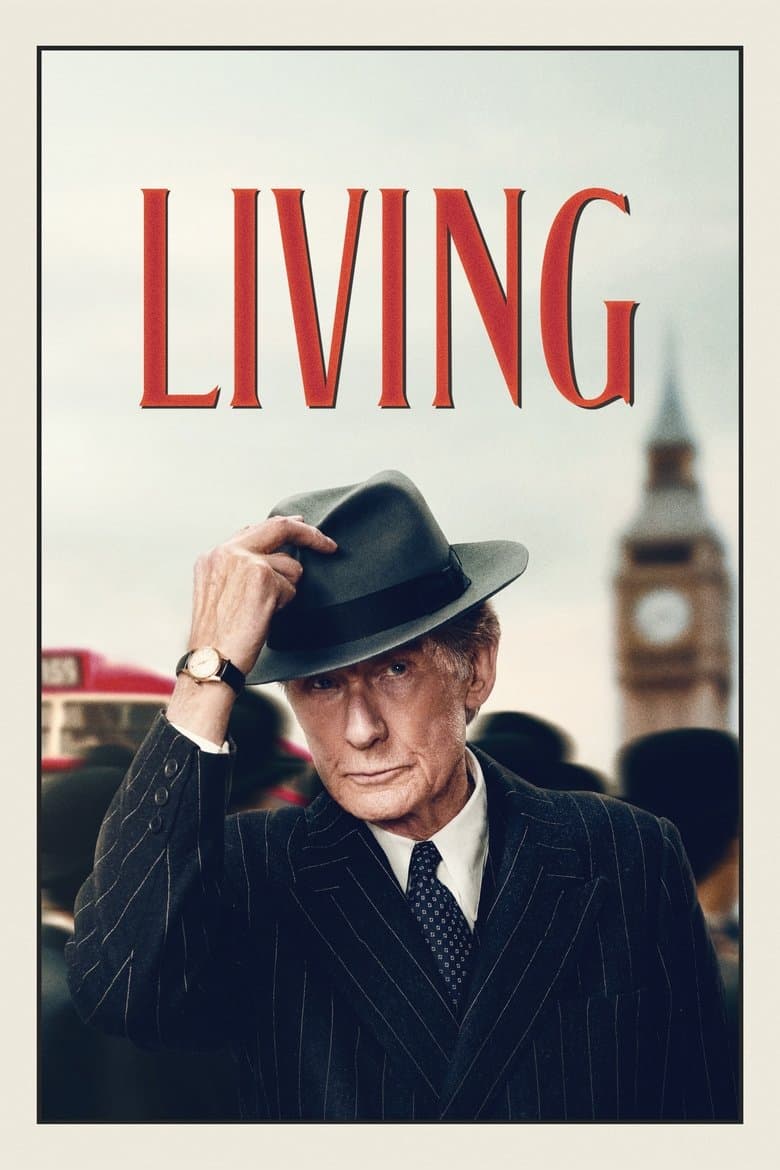
In 1953 London, Mr. Williams is a quiet senior clerk at City Hall. His days are stacks of paper, stiff manners, and an empty home life. A deadly illness forces him to face how little he has really lived. He steps away from routine, befriends a lively young co-worker, and tries to finish one useful act before time runs out.
The film is a gentle story about death, wasted years, and doing one good thing that outlasts you. The main push is against cold office habits that block a children’s playground, and for small human kindness. That is classic life-and-death drama moved from the Japanese film *Ikiru* into postwar England. Viewers mainly see Bill Nighy’s careful performance, lonely English manners of the period, and hope that younger people will keep a better example. Modern identity politics, race or gender swaps, and activist speeches are not what the movie is about.
Community feedback
Was our 7% Woke rating accurate?
Breakdown
These are the editorial factors and ratings behind our score for Living.
Woke representation / casting
Period-accurate 1950s London civil service look. Lead is Bill Nighy. A minor clerk named Singh is present but not framed as a diversity lesson. Women co-workers and playground petitioners match the story and the source film. No race or gender swaps of famous characters and no heavy identity casting push.
0%
Woke political dialogue
Talk is about work piles, illness, family distance, and using the time left well. No activist lines about race, gender ideology, or modern identity politics that a normal viewer would notice.
0%
Identity-driven story themes
Themes are empty routine, facing death, and one lasting good act. That comes from the Kurosawa story and classic “how should we live?” ideas, not race, gender, or queer identity as the plot engine. Margaret’s energy is youth and life force, not identity messaging.
0%
Western institutional / cultural critique
City offices that bounce petitions and help nobody are shown as cold and pointless. That is old-style anti-bureaucracy storytelling, not a modern sermon on whiteness, colonial guilt, patriarchy, or capitalism-as-identity-oppression. Stiff English manners look sad and lonely, not like a DEI lecture.
5%
Woke character or canon changes
Not present in this title.
0%
Anti-woke backlash and complaints
No clear anti-woke or right-leaning backlash treating the film as DEI, identity propaganda, or activist media. Coverage stayed on performance, the remake, and life-and-death themes.
0%
Creator track record context
Cached scores are mostly low (Kurosawa 0, Hooks 7, Ko Kurosawa 0, Ramsay 12) with Karlsen 24 and Woolley 43 higher. Woolley has backed progressive and queer-adjacent films; Karlsen often backs women’s stories. For this title the mix is mild overall, not a strong activist slate driving the content.
18%
Production
Movie · 2020
A man refuses all assistance from his daughter as he ages and, as he tries to make sense of his changing circumstances, he begins to doubt his loved ones, his own mind and even…
Movie · 2016
On 15 January 2009, the world witnessed the 'Miracle on the Hudson' when Captain 'Sully' Sullenberger glided his disabled plane onto the Hudson River, saving the lives of all 155…

Movie · 2017
In 1950, amidst the ravages of the Korean War, Sergeant Süleyman stumbles upon a a half-frozen little girl, with no parents and no help in sight and he risks his own life to save…
Movie · 2016
In a desolate war zone where screams of the innocent echo, on the very line between disaster and valor, 7 Maroon Berets will dance with death.
Movie · 2026
While people across 1990s Iraq struggle to survive the war and food shortages, Saddam Hussein requires each school in the country to prepare a cake to celebrate his birthday.
Movie · 2019
Richard Jewell thinks quick, works fast, and saves hundreds, perhaps thousands, of lives after a domestic terrorist plants several pipe bombs and they explode during a concert…

Movie · 2022
A quiet, neglected girl is sent away from her dysfunctional family to live with relatives for the summer. She blossoms in their care, but in this house where there are meant to be…

Movie · 2024
On the brink of the Second World War, a young Norwegian man's drive to resist the Nazis sets a new course for his future – and the future of his country.
