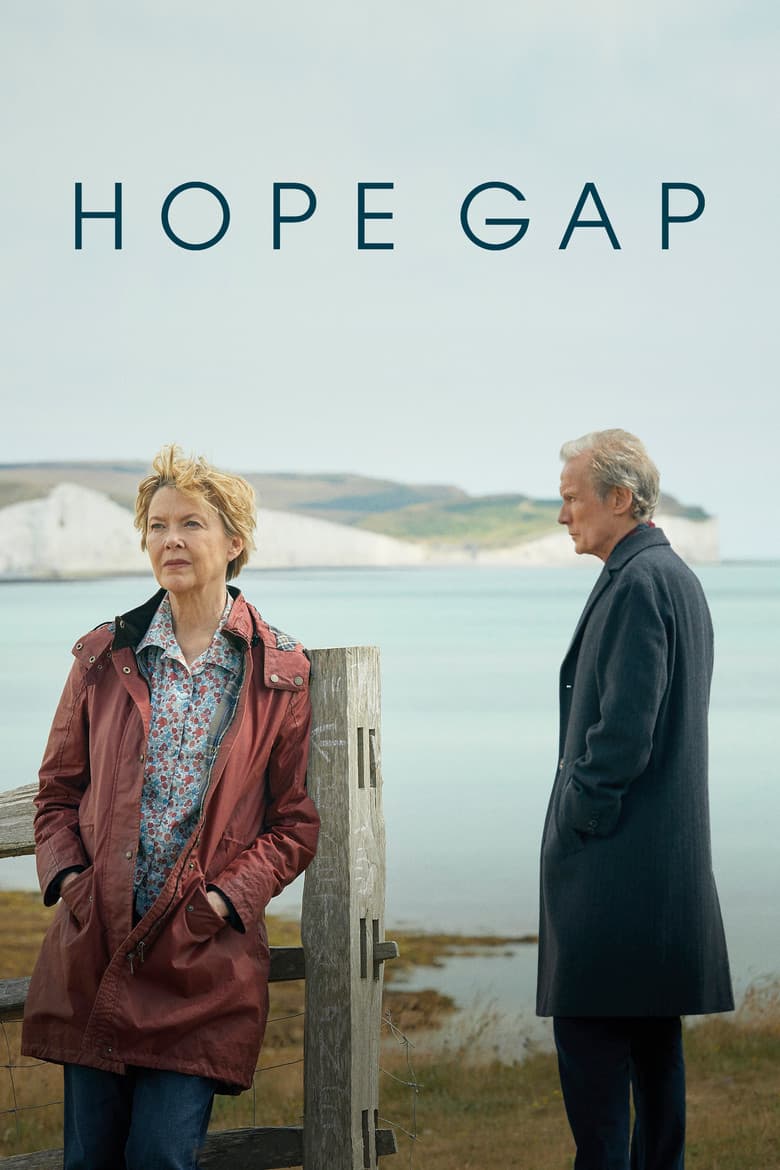
Grace and Edward have lived for 29 years in a quiet seaside town on the English coast. Edward is a withdrawn history teacher who tells their adult son, Jamie, that he is leaving Grace for another woman. Jamie becomes trapped between his angry mother and his fearful father as the marriage breaks apart. The film is a slow, sad family drama about grief, guilt, faith, and learning to live after a long relationship ends.
The film gives a mild focus to gender roles because Edward’s silence and fear of conflict create deep problems, while Grace demands more open feeling from the men around her. Grace later finds a new purpose by helping people in crisis, but the story also shows her anger, control, and physical abuse. The family faces grief and guilt without a simple hero or villain. The story treats honest speech, personal responsibility, and letting go as the path toward a quieter life.
Community feedback
Was our 12% Woke rating accurate?
Breakdown
These are the editorial factors and ratings behind our score for Hope Gap.
Woke representation / casting
Not present. The story uses ordinary casting for a British family drama. Aiysha Hart has a small supporting role, but the film does not present her identity as a diversity message.
0%
Woke political dialogue
Not present. The characters talk about love, marriage, faith, grief, and communication. The film has no clear speeches or repeated lines about DEI, identity politics, or activist causes.
0%
Identity-driven story themes
The film repeatedly contrasts Grace’s demand for open feelings with Edward and Jamie’s quiet habits. The story treats male silence and fear of conflict as harmful, which creates a mild gender-role message. Grace also rebuilds her life after the divorce, but the film shows her abuse and control instead of making her a perfect empowerment figure. The message stays inside one family and does not become activist politics.
18%
Western institutional / cultural critique
Not present. The film shows a troubled marriage and a Catholic woman who attends church. It does not attack Christianity, family life, or Western institutions.
0%
Woke character or canon changes
Not relevant. The film adapts Nicholson’s own play about his parents’ separation. The title and seaside setting changed for the film, but no identity-driven rewrite of a known character or historical figure is shown.
0%
Anti-woke backlash and complaints
Not present. The supplied X pass found no anti-woke posts, boycott talk, or review-bomb claims. Other audience comments focus on divorce, abuse, pacing, or whether the film is unfair to Edward. Those comments do not clearly call the film woke, activist, or identity-driven.
0%
Creator track record context
William Nicholson’s record is mainly linked to human and historical dramas, with no clear focus on modern identity politics. Gary Davy has some diversity-focused talent work, but no identity message is tied to this film’s cast or story. The listed producers mostly have low public activist profiles. The overall creator track record context is low.
14%
Production

Movie · 2026
While people across 1990s Iraq struggle to survive the war and food shortages, Saddam Hussein requires each school in the country to prepare a cake to celebrate his birthday.
Movie · 2016
On 15 January 2009, the world witnessed the 'Miracle on the Hudson' when Captain 'Sully' Sullenberger glided his disabled plane onto the Hudson River, saving the lives of all 155…
Movie · 2022
London, 1953. Mr. Williams, a veteran civil servant, is an important cog within the city's bureaucracy as it struggles to rebuild in the aftermath of World War II.

Movie · 2023
American ballet dancer Joy Womack is accepted into Moscow's infamously tough Bolshoi Ballet Academy, with the dream of becoming a great ballerina.

Movie · 2017
In 1950, amidst the ravages of the Korean War, Sergeant Süleyman stumbles upon a a half-frozen little girl, with no parents and no help in sight and he risks his own life to save…
Movie · 2020
A man refuses all assistance from his daughter as he ages and, as he tries to make sense of his changing circumstances, he begins to doubt his loved ones, his own mind and even…

Movie · 2016
WWII American Army Medic Desmond T. Doss, who served during the Battle of Okinawa, refuses to kill people and becomes the first Conscientious Objector in American history to…
Movie · 2022
A quiet, neglected girl is sent away from her dysfunctional family to live with relatives for the summer. She blossoms in their care, but in this house where there are meant to be…
