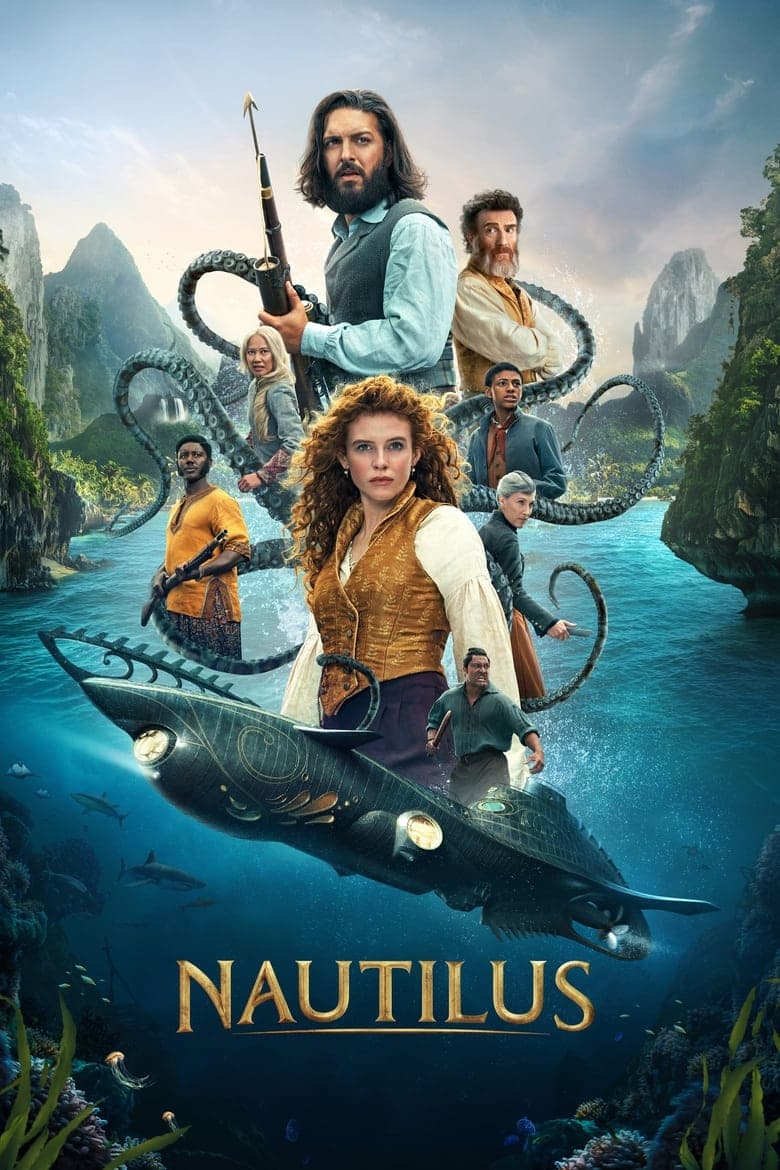
Started October 25, 2024 · Ended · Based on 1 season, 10 episodes through October 25, 2024 · TV-PG
Nautilus follows Nemo, an Indian prince who was robbed of his home and family by the British East India Company. The Company forces him to help build a powerful submarine in a prison camp in 1857 India. Nemo steals the ship with other prisoners and sails across dangerous seas while enemy ships chase him. The season mixes revenge, sea monsters, lost treasure, romance, and fast action.
The show makes colonial rule and company power the main enemy. Nemo and his crew speak about stolen land, forced labor, slavery, family loss, and the need to destroy the Company. The crew is built around a South Asian hero and several people from places ruled or harmed by the British, while Humility is a clever female engineer who helps save the ship. The story supports rebellion, freedom, and ending the Company's control, but these ideas stay inside a fast adventure story rather than becoming a long modern political debate.
Community feedback
Was our 53% Woke rating accurate?
Breakdown
These are the editorial factors and ratings behind our score for Nautilus.
Woke representation / casting
Nemo's Indian identity follows Jules Verne's later book, so the lead is not a mismatch with the source. The show still puts a highly mixed group of prisoners from across the old British Empire in major roles. Humility is a prominent English engineer who repeatedly helps solve the ship's hardest problems. Producer coverage openly described the cast as diverse and said some roles were shaped around actor backgrounds.
36%
Woke political dialogue
Company officials say the Nautilus will help expand and exploit the Chinese market. Crew members talk about stolen land, prison labor, slavery, taxes, and the power of shareholders. The crew says millions suffer under the same system and that the Company must be brought down. This talk returns through the season, but it stays inside the 1857 revenge plot instead of becoming a modern party debate.
39%
Identity-driven story themes
Nemo's Indian identity and his family's deaths under the Company drive the full season. Other prisoners explain that the Company took their land, freedom, families, or relatives. The crew includes a Maori warrior, an Indian fisherman, a Bengali intellectual, a trader from Zanzibar, and a boy from the Caribbean. The show presents their shared suffering as a reason to join a common fight against empire.
45%
Western institutional / cultural critique
The East India Company is shown as a private power that steals land, uses prison labor, enslaves people, kills families, and starts wars for profit. Characters say its soldiers risk their lives so shareholders can get rich. The finale removes its chairman, ends its tax system, frees prisoners, and burns its records. This recurring anti-corporate and anti-imperial message is central, though it is tied to the historical villain rather than every Western institution.
44%
Woke character or canon changes
Not relevant. The series expands a short backstory from The Mysterious Island into a full origin story. Nemo's Indian identity remains tied to Verne's source, and the other changes are new adventure plot material.
0%
Anti-woke backlash and complaints
A few small X accounts called the show woke garbage or said it makes white men look bad. Other small posts complained about virtue signaling, a Mary Sue, eco messaging, diversity, and a girl boss. The accounts had little reach and almost no engagement. No large campaign or major news fight was found.
12%
Creator track record context
James Dormer has a recorded score of 9/100 and no known activist history. Writer Sian Ejiwunmi-Le Berre has a recorded score of 78/100, and writer Melissa Bubnic has 55/100 from work about black identity, sexism, and power. Producer Johanna Devereaux has a recorded score of 64/100 from Disney diversity work, while most other listed creators have low or mild scores. This gives the title a moderate creator-context signal.
36%
Production
TV Show · 2022
Journey into the lives of two distinctly different Jedi from the prequel era – Ahsoka Tano and Count Dooku. Each will be put to the test as they make choices that will define…
TV Show · 2021
The 'Bad Batch' of elite and experimental clones make their way through an ever-changing galaxy in the immediate aftermath of the Clone Wars.
TV Show · 2026
After the Clone Wars, Maul plots to rebuild his criminal syndicate on a planet untouched by the Empire.
TV Show · 2025
Two outlaws must navigate the galaxy's dangerous underworld as they chart their destinies.
TV Show · 2024
A journey into the fearsome Galactic Empire through the eyes of two warriors on divergent paths.
TV Show · 2022
When an explosive battle with Dr. Eggman shatters the universe, Sonic races through parallel dimensions to reconnect with his friends and save the world.
TV Show · 2019
The life of Christ through the eyes of those who encountered him.
TV Show · 2016
After uncovering a mysterious amulet, an average teen assumes an unlikely destiny and sets out to save two worlds.
