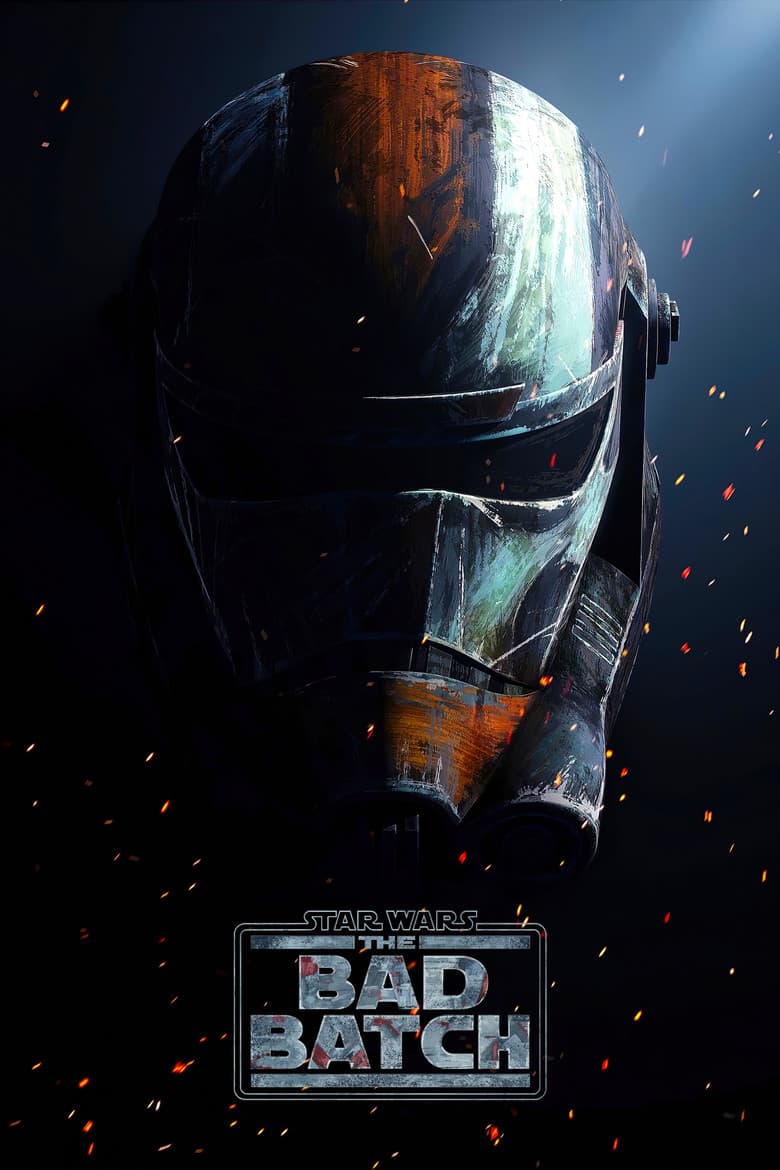
Started May 4, 2021 · Ended · Based on 3 seasons through May 1, 2024 · TV-PG
Star Wars: The Bad Batch is a three-season animated series (2021-2024) that follows a squad of genetically defective clone troopers known as the Bad Batch as they resist Order 66 and navigate the rise of the Galactic Empire in the immediate aftermath of the Clone Wars. They are joined by Omega, a young female clone who becomes central to the story and the squad's chosen family. The narrative focuses on loyalty, survival, loss, individuality among clones, and resistance to authoritarian control, with themes of post-war displacement for the clones drawing from real military veteran experiences. Woke elements are minimal and not prominent. Omega serves a clear plot function tied to Imperial cloning projects rather than representation signaling. The main audience-visible debate involved early left-side complaints about lighter skin tones on the Bad Batch clones compared to standard clones, leading to design adjustments in later seasons.
Breakdown
These are the editorial factors and ratings behind our score for Star Wars: The Bad Batch.
Woke representation / casting
Omega, a young female clone, is the central protagonist alongside a squad of male clones; her unmodified Jango Fett genetics are plot-critical to Imperial cloning experiments. Supporting characters include various female and alien figures in standard Star Wars fashion. Early design of the Bad Batch drew left criticism for lighter skin tones versus regular clones; adjustments followed. The show does not emphasize or market around modern identity quotas or signaling.
18%
Woke political dialogue
Dialogue and conflicts focus on resisting Imperial authoritarianism, clone loyalty versus programming, survival as mercenaries, and post-war purpose for soldiers. Standard fictional anti-tyranny framing with no modern activist terminology, lectures, or identity-based rhetoric.
0%
Identity-driven story themes
Core arcs explore clone individuality through genetic "defects," chosen family bonds with Omega, loss (e.g., Tech), and resistance to conformity under the Empire. These arise organically from the premise of defective clones and the Empire's shift to cheaper conscripts; no reframing into contemporary identity politics or social-justice messaging.
8%
Western institutional / cultural critique
The Empire is portrayed as a classic dictatorship using propaganda, control, and dehumanization of clones. This is story-logical resistance to fictional tyranny without mapping onto modern activist critiques of Western institutions, patriarchy, capitalism, whiteness, or similar present-day frameworks.
0%
Woke character or canon changes
Not relevant. This is an original story expanding existing Star Wars canon around clones introduced in The Clone Wars; no identity-driven alterations to established characters, source material, or historical figures.
0%
Anti-woke backlash and complaints
Limited volume. The dominant public debate stemmed from pro-diversity complaints about clone "whitewashing" and design, with some right-leaning coverage highlighting the subsequent adjustments as caving to pressure. Direct claims that the series pushes woke, DEI, or identity-driven content in story or themes were minimal and not a major feature of reception.
12%
Creator track record context
Aggregates low-to-moderate profiles: Dave Filoni (cached 16/100, lore-focused), Jennifer Corbett (Navy veteran background applied to military squad stories; no activist record), Brad Rau (professional director), George Lucas (cached 34/100, broader liberal context), and other writers/directors/producers with low public profiles and no documented patterns of identity-driven or activist creative work per cached summaries and independent research.
16%
Production