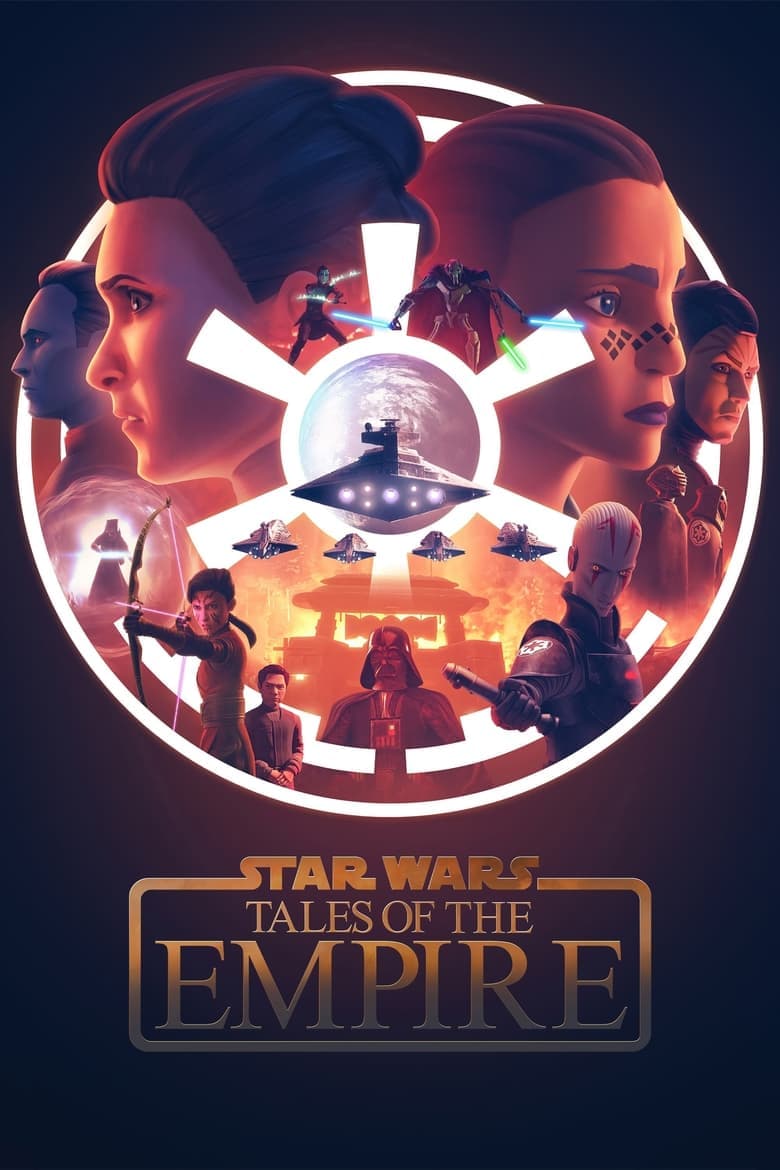
Started May 4, 2024 · Ended · Based on 1 season, 6 episodes through May 4, 2024 · TV-PG
Star Wars: Tales of the Empire is a six-episode animated anthology set as the Republic falls and the Empire takes control. The first three episodes follow young Morgan Elsbeth after General Grievous destroys her Nightsister home on Dathomir. The last three follow former Jedi Barriss Offee as she leaves prison, joins the Inquisitors, and later tries to help a family with a Force-sensitive child. The tone is dark and sad, with fast fights, revenge, fear, and a small path toward mercy.
The clearest woke element appears in episode five, where an unnamed Jedi is referred to with they and them pronouns. The scene is brief and the Jedi dies soon after, so it does not control the season’s main story. The season also gives every episode to two female warriors, but both characters come from earlier Star Wars stories and their skills fit their roles. Most of the season focuses on loss, anger, loyalty, the cruelty of the Empire, and Barriss’s return to a better path.
Community feedback
Was our 28% Woke rating accurate?
Breakdown
These are the editorial factors and ratings behind our score for Star Wars: Tales of the Empire.
Woke representation / casting
Every episode centers on one of two female warriors, Morgan Elsbeth or Barriss Offee. Both women hold major fighting and leadership roles. Their roles fit established Star Wars characters, and the show does not present the casting as a diversity campaign. This is a mild representation signal, not a major casting theme.
12%
Woke political dialogue
Not present. Barriss talks about the Jedi using soldiers, and the show shows Imperial cruelty. Those points belong to the Star Wars war story and are not modern activist politics.
0%
Identity-driven story themes
The fifth episode introduces an unnamed Jedi who is presented as non-binary and referred to with they and them pronouns. Barriss and the Fourth Sister use those pronouns after the Jedi is wounded. The scene makes gender identity visible, but it lasts only a short time and does not shape the season’s main arcs. The larger stories focus on grief, revenge, survival, and redemption.
28%
Western institutional / cultural critique
Not present. The show condemns the Empire’s violence and shows the Jedi as flawed within the story. It does not turn those conflicts into a modern critique of patriarchy, capitalism, Christianity, or Western culture.
0%
Woke character or canon changes
Not relevant. The season fills in the past of Morgan Elsbeth and Barriss Offee. It adds backstory without changing either character for a diversity or identity message.
0%
Anti-woke backlash and complaints
A large X post from @libsoftiktok accused the show of using a non-binary Jedi to target children. Conservative outlets and accounts called the they and them wording a Disney agenda and said other characters were forced to respect the pronouns. Smaller posts called the show feminist or “woke” and attacked its female focus. The reaction was notable but scattered, with no clear organized boycott or review-bomb campaign.
38%
Creator track record context
Dave Filoni’s known record centers on moral growth, selflessness, and classic heroic stories. The listed directors and producers have no known activist record. George Lucas has a stronger liberal history and backed Red Tails because studios resisted its mostly black cast. The team context gives a mild signal, not a strong activist one.
15%
Production
TV Show · 2022
Journey into the lives of two distinctly different Jedi from the prequel era – Ahsoka Tano and Count Dooku. Each will be put to the test as they make choices that will define…
TV Show · 2026
After the Clone Wars, Maul plots to rebuild his criminal syndicate on a planet untouched by the Empire.
TV Show · 2021
The 'Bad Batch' of elite and experimental clones make their way through an ever-changing galaxy in the immediate aftermath of the Clone Wars.
TV Show · 2025
Two outlaws must navigate the galaxy's dangerous underworld as they chart their destinies.
TV Show · 2020
Merlin’s apprentice joins Arcadia’s heroes on a time-bending adventure in Camelot, where conflict is brewing between the human, troll and magical worlds.
TV Show · 2022
When an explosive battle with Dr. Eggman shatters the universe, Sonic races through parallel dimensions to reconnect with his friends and save the world.
TV Show · 2018
The Boss Baby brings his big brother Tim to the office to teach him the art of business in this animated series sprung from the hit film.
TV Show · 2021
Frozen’s beloved snowman retelling several classic Disney tales as only he can.
