TV Show review
Sci-Fi · Fantasy · Animation · Crime · Action · Adventure · Drama
Started May 4, 2025 · Ended · Based on 1 season, 6 episodes through May 4, 2025 · TV-PG
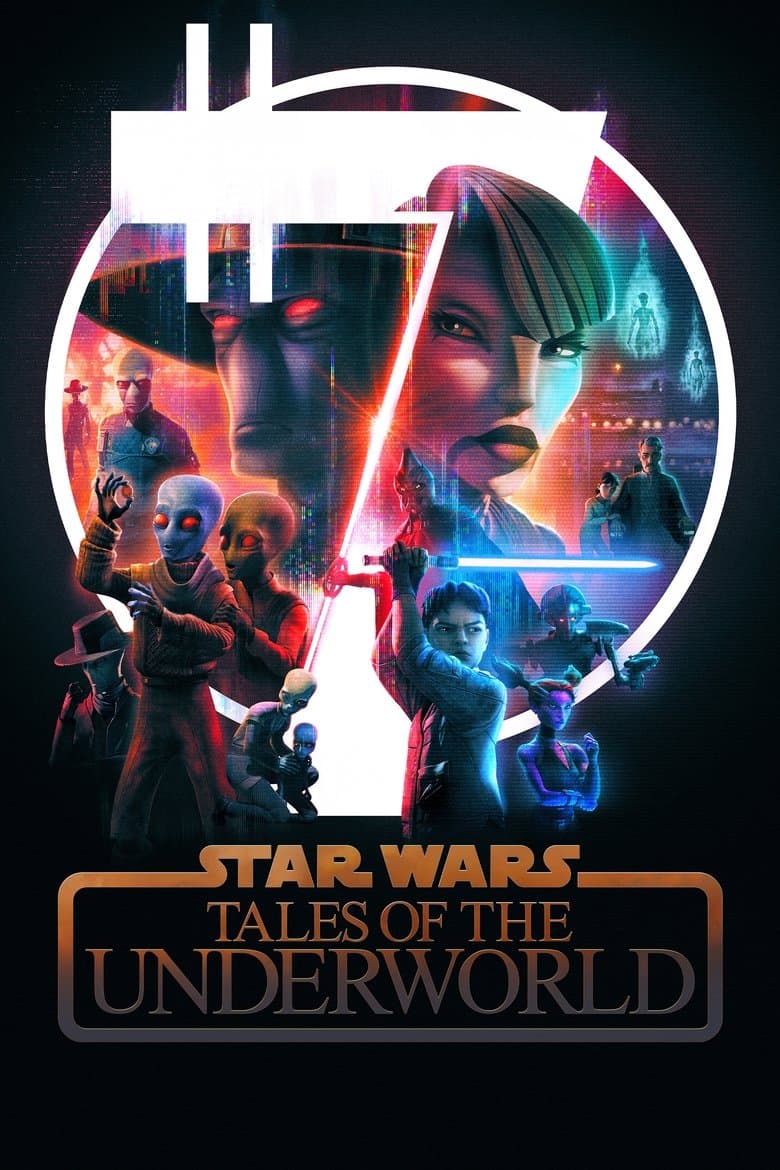
Star Wars: Tales of the Underworld is a six-episode animated season set in the years around the fall of the Republic and the rise of the Empire. The first three episodes follow Asajj Ventress, a former assassin who survives death and runs with Lyco Strata, a young Force-sensitive survivor seeking the Hidden Path to safety. The last three episodes follow Cad Bane from a hungry street child to a feared bounty hunter who faces Niro, his old friend, after Niro becomes a lawman. The tone is dark but fast, with crime, guns, lightsabers, western standoffs, and short stories about choice, loyalty, and redemption.
Ventress has a major role as a powerful female character, but her place in the story comes from earlier Star Wars episodes and her own history. She learns trust while helping Lyco, and she chooses a new path after her separation from Quinlan Vos. Cad Bane receives a darker lesson about friendship, law, and the results of selfish choices. The season uses the Empire, the Hidden Path, and local disputes as parts of its space adventure, while its main message stays focused on personal choices and redemption.
Community feedback
Was our 3% Woke rating accurate?
Breakdown
These are the editorial factors and ratings behind our score for Star Wars: Tales of the Underworld.
Woke representation / casting
Not present. The show includes a darker-skinned human teen and a disabled veteran, but neither detail is framed as a diversity goal. Asajj Ventress and Cad Bane are established Star Wars characters, and the show gives no public identity-based casting message.
0%
Woke political dialogue
Not present. Characters discuss the Empire, the Hidden Path, crime, war, and local water disputes. These talks serve the space adventure and do not use modern activist or identity-politics arguments.
0%
Identity-driven story themes
Not present. Ventress's change comes from guilt, survival, friendship, and her bond with Quinlan Vos. Cad Bane's arc is about loyalty, violence, and personal choice.
0%
Western institutional / cultural critique
Not present. The Empire and gangs create setting-based danger, while Niro is shown as a lawman trying to protect his neighborhood. The story does not attack modern Western institutions or traditional social norms.
0%
Woke character or canon changes
Not relevant. The season revives Ventress after Dark Disciple and fills in Cad Bane's past. Those are story and lore choices, not identity-driven changes to established characters.
0%
Anti-woke backlash and complaints
Not present. The supplied X research found no anti-woke posts, boycott, or review-bombing campaign. Web and fan complaints focused on short episodes, pacing, the resurrection, and lore.
0%
Creator track record context
Dave Filoni's known work emphasizes moral growth, selflessness, faith, and classic heroic storytelling. Matt Michnovetz, the directors, and the producers have no known activist pattern in the supplied records. George Lucas has a stronger liberal record because he backed a majority-Black film and spoke about universal equality, but that background is not a theme of this season.
15%
Production
TV Show · 2026
After the Clone Wars, Maul plots to rebuild his criminal syndicate on a planet untouched by the Empire.
TV Show · 2021
The 'Bad Batch' of elite and experimental clones make their way through an ever-changing galaxy in the immediate aftermath of the Clone Wars.
TV Show · 2022
Journey into the lives of two distinctly different Jedi from the prequel era – Ahsoka Tano and Count Dooku. Each will be put to the test as they make choices that will define…
TV Show · 2022
When an explosive battle with Dr. Eggman shatters the universe, Sonic races through parallel dimensions to reconnect with his friends and save the world.
TV Show · 2018
The Boss Baby brings his big brother Tim to the office to teach him the art of business in this animated series sprung from the hit film.
TV Show · 2022
Lightning McQueen and his best friend Mater head east from Radiator Springs on a cross-country road trip to meet up with Mater’s sister.
TV Show · 2022
There's no guarding the galaxy from this mischievous toddler! Get ready as Baby Groot takes center stage in his very own collection of shorts, exploring his glory days growing up…
TV Show · 2021
Frozen’s beloved snowman retelling several classic Disney tales as only he can.
