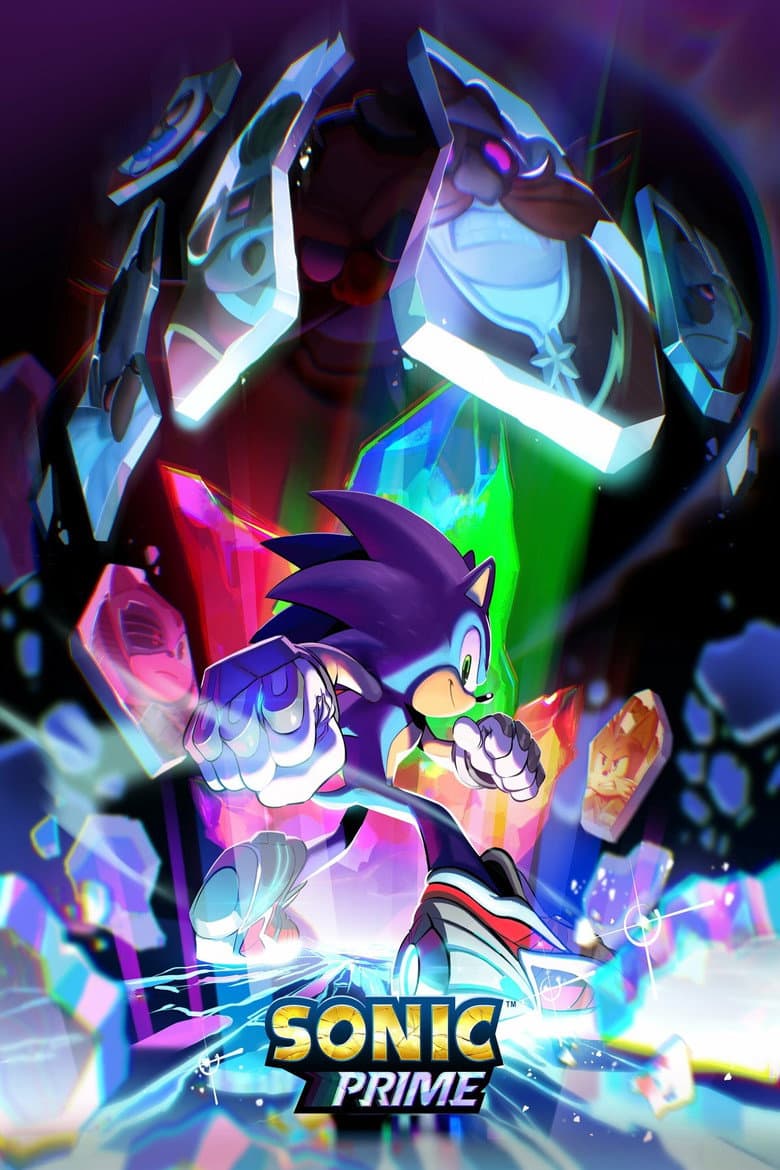
Started December 15, 2022 · Ended · Based on 3 seasons, 23 episodes through January 11, 2024 · TV-Y7
Sonic Prime follows Sonic after his careless fight with Dr. Eggman breaks the Paradox Prism and tears his world into many connected worlds. Sonic travels through the Shatterverse to find the missing Prism pieces and reunite versions of Tails, Amy, Knuckles, Rouge, and Big. New Yoke City is ruled by five versions of Eggman, while other worlds turn Sonic’s friends into rebels, pirates, scavengers, or lonely survivors. The show uses fast battles, bright computer animation, jokes, and serious moments about friendship and taking responsibility.
The show has very little clear woke content. Its strongest social ideas come from the New Yoke Resistance fighting a strict ruling council, but the story treats that conflict as a simple battle against villains rather than a modern identity or activist campaign. Several female versions of Rouge and Amy lead fights and help plan the final battle, yet the show presents them as normal Sonic heroes instead of making gender or diversity their message. The main lesson across all three seasons is that Sonic must listen, value his friends, and accept personal blame, while Nine must learn that fear and loneliness do not justify harming others.
Community feedback
Was our 14% Woke rating accurate?
Breakdown
These are the editorial factors and ratings behind our score for Sonic Prime.
Woke representation / casting
The show gives Rebel Rouge command of the New Yoke Resistance. Rusty Rose, Thorn Rose, and Black Rose are recurring fighters who take part in major rescues and battles. These female-led action roles are visible, but they use established Sonic characters and are not tied to a diversity or empowerment campaign.
18%
Woke political dialogue
Not present. The characters talk about fighting the Chaos Council and freeing New Yoke City. The dialogue treats this as a fantasy fight against villainous rulers and does not use modern identity or activist politics.
0%
Identity-driven story themes
Not present. The story centers on friendship, regret, trust, loneliness, and personal responsibility. Nine’s pain comes from bullying and rejection, but the show does not connect it to a real-world identity group.
0%
Western institutional / cultural critique
Not present. The Chaos Council rules New Yoke through robots and force. The show does not attack modern Western institutions, traditional family roles, Christianity, capitalism, or men as a group.
0%
Woke character or canon changes
Not relevant. The show changes the looks and roles of Sonic characters through alternate worlds. Those changes serve the multiverse story and are not identity or DEI changes.
0%
Anti-woke backlash and complaints
Not present. Fan complaints target pacing, repeated fights, Sonic’s characterization, and how the show fits the games. No sustained anti-woke campaign or clear DEI complaint appears in the reviewed public discussion.
0%
Creator track record context
The four creators have a mild and mixed background record. Duncan Rouleau said he wished Generator Rex had more LGBT themes and representation. Joe Casey has spoken against racism and misogyny and supported broader representation, while Steven T. Seagle co-directed The Laramie Project: Ten Years Later about LGBTQ identity and homophobia. Joe Kelly has no strong public record of activist or identity-focused work.
26%
Production
TV Show · 2018
The Boss Baby brings his big brother Tim to the office to teach him the art of business in this animated series sprung from the hit film.
TV Show · 2026
After the Clone Wars, Maul plots to rebuild his criminal syndicate on a planet untouched by the Empire.
TV Show · 2021
The 'Bad Batch' of elite and experimental clones make their way through an ever-changing galaxy in the immediate aftermath of the Clone Wars.
TV Show · 2025
Two outlaws must navigate the galaxy's dangerous underworld as they chart their destinies.
TV Show · 2022
Follow the misadventures of the impulsive Cuphead and his cautious but persuadable brother Mugman in this animated series based on the hit video game.
TV Show · 2022
Journey into the lives of two distinctly different Jedi from the prequel era – Ahsoka Tano and Count Dooku. Each will be put to the test as they make choices that will define…
TV Show · 2016
David Attenborough presents a documentary series exploring how animals meet the challenges of surviving in the most iconic habitats on earth.
TV Show · 2021
A series of shorts that follows the humorous misadventures of Dug, the lovable dog from Disney and Pixar’s “Up.” Each short features everyday events that occur in Dug's backyard…
