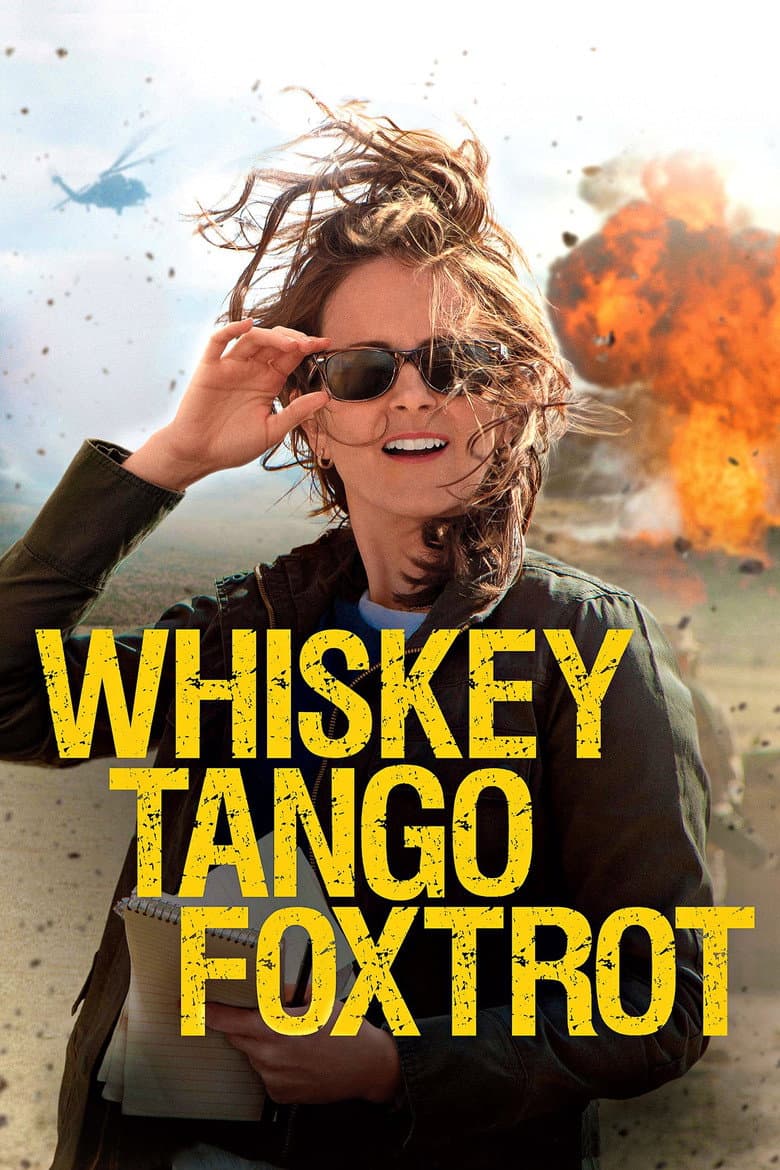
Cable news producer Kim Baker is stuck in a career and personal rut in New York. She accepts a dangerous job as a war correspondent in early-2000s Afghanistan. In Kabul she works among embeds, parties, and combat risk, and she bonds with a glamorous BBC reporter, a fixer, Marine leaders, and a Scottish photojournalist. The film follows her growing addiction to the work, her romantic and work relationships, and her eventual return to a desk job in the United States. It is adapted from a memoir and keeps war politics in the background so the story stays a personal fish-out-of-water adventure.
Audience-visible social themes center on gender more than modern identity politics. A woman reinvents herself outside a dull domestic path, works in a male-dominated war-reporting world, faces the male gaze, and puts career ahead of romance. Afghan women's limited lives show up as a reporting beat, including a well-sabotage story. Casting mainly matches the real memoir subject and real female war correspondents of the era, not engineered diversity casting. Dialogue is mostly workplace banter and war-zone logistics, with only brief self-aware lines and mild satire of the media bubble and mission fatigue rather than long activist speeches.
Community feedback
Was our 27% Woke rating accurate?
Breakdown
These are the editorial factors and ratings behind our score for Whiskey Tango Foxtrot.
Woke representation / casting
Female leads match the real memoir subject and real female war reporters of that time. Supporting military roles show ordinary workplace diversity. The big casting fight was white actors playing Afghans. That is the opposite of identity-first casting.
10%
Woke political dialogue
Most talk is comedy, workplace banter, and war-zone logistics. There is a brief self-aware American-white-lady line and some soldier doubt about the mission. There are no long activist or DEI speeches. The creators said they kept policy talk small on purpose.
12%
Identity-driven story themes
The story clearly centers a woman reinventing herself outside a dull home life. She works in a male-dominated war-reporting world, faces the male gaze, and puts career over romance. Afghan women's limited lives are part of her reporting beat. This is classic liberal feminist self-growth, not modern race or queer identity politics.
32%
Western institutional / cultural critique
The film mildly mocks the media bubble, addiction to war reporting, and the West failing to fix Afghanistan. Mission fatigue shows up in places. It does not mainly attack capitalism, whiteness, colonialism, or patriarchy as a big system. The directors pushed a non-political design and fairly military-friendly accuracy.
18%
Woke character or canon changes
Not relevant. Name changes, a cable-news shift, and a stronger romance track are ordinary adaptation choices. Casting white actors as Afghans is the reverse of woke recasting.
0%
Anti-woke backlash and complaints
Not present. There was no real anti-woke or anti-DEI campaign against the film. Identity heat came mostly from progressive whitewashing and white-savior critiques. Isolated title snark does not count as meaningful backlash.
0%
Creator track record context
Most of the creative package scores low on activist filmmaking. Tina Fey as star and producer is the main mild lift. Her work often features smart female leads and gender or media satire. That is not identity-first or activist cinema.
20%
Production
Movie · 2017
Matt Ryder is convinced to drive his estranged and dying father Benjamin Ryder cross country to deliver four old rolls of Kodachrome film to the last lab in the world that can…
Movie · 2020
Scott has been a case of arrested development ever since his firefighter father died when he was seven. He's now reached his mid-20s having achieved little, chasing a dream of…
Movie · 2016
Two high school girls are best friends until one dates the other's older brother, who is totally his sister's nemesis.
Movie · 2019
Los Angeles, 1969. TV star Rick Dalton, a struggling actor specializing in westerns, and stuntman Cliff Booth, his best friend, try to survive in a constantly changing movie…

Movie · 2017
An aspiring actor in Hollywood meets an enigmatic stranger by the name of Tommy Wiseau, the meeting leads the actor down a path nobody could have predicted; creating the worst…
Movie · 2023
Allison's life falls apart following her involvement in a fatal accident. The unlikely relationship she forms with her would-be father-in-law helps her live a life worth living.
Movie · 2018
Thirteen-year-old Kayla endures the tidal wave of contemporary suburban adolescence as she makes her way through the last week of middle school — the end of her thus far…
Movie · 2025
1984; Michael Larson, an unemployed ice-cream truck driver from Ohio, steps onto the game show "Press Your Luck" harboring a secret: the key to endless amounts of money.
