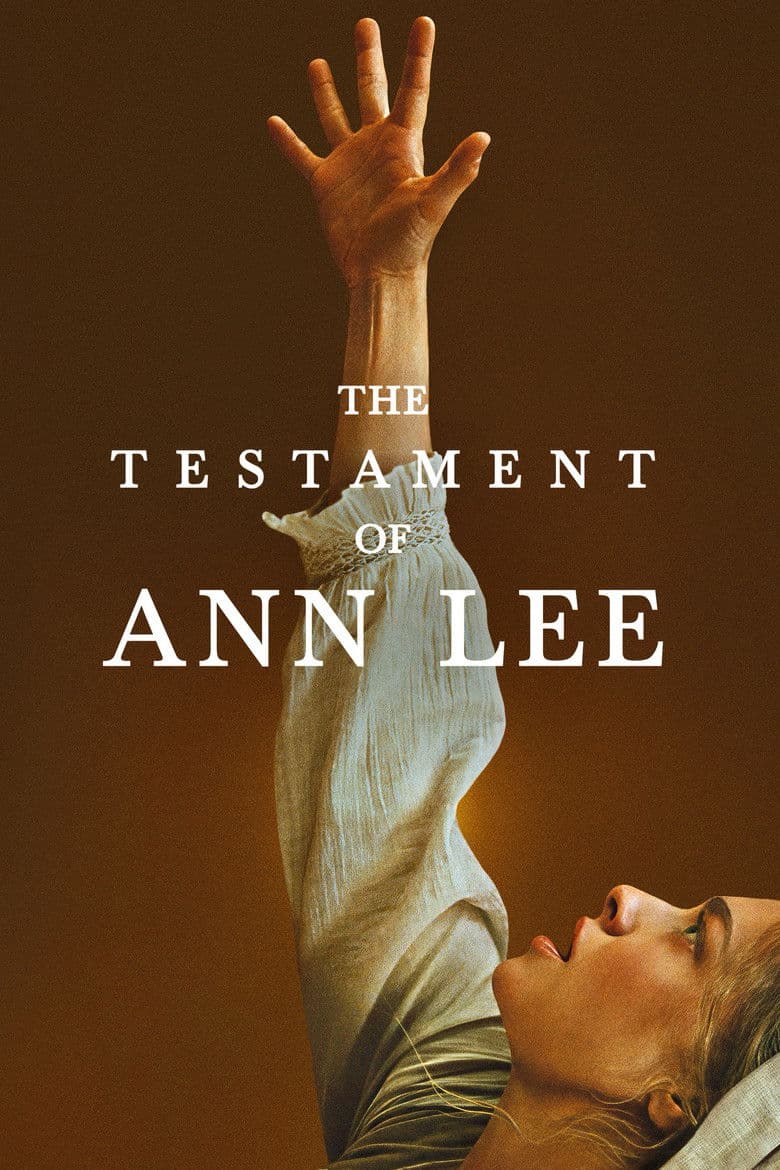
Ann Lee is a poor young woman in 18th-century Manchester who feels trapped by work, family life, and harsh religious rules. After losing all four of her children, she joins a small group of believers who worship through loud singing, shaking, and dance. Ann becomes their leader and takes them across the Atlantic to build a Shaker community in New York. The film is a strange, intense musical about faith, grief, sex, power, and the cost of trying to build a perfect society.
The story puts a female religious leader at the center of a movement that treats women and men as spiritual equals. Ann rejects marriage and sex for the group, and the film links that choice to her pain, her wish for control over her body, and her belief in a better community. Her followers call her a female form of Christ, so the film joins female power with a strong Christian claim. The story also shows fathers, husbands, churches, and townsmen as forces that hurt or silence women, while Ann’s group is shown as both hopeful and strict.
Community feedback
Was our 63% Woke rating accurate?
Breakdown
These are the editorial factors and ratings behind our score for The Testament of Ann Lee.
Woke representation / casting
The film places Amanda Seyfried at the center as a rare female religious leader in the 18th century. Stacy Martin also plays female preacher Jane Wardley. These roles fit the real Shaker story, so the casting is not a clear time-period mismatch. Fastvold and Seyfried also framed the project around female leadership and feminism, which adds a clear identity signal.
28%
Woke political dialogue
Ann and the Shakers repeatedly speak about equal spiritual standing for women and men. Ann rejects marriage and sex as rules for a new community and as a way to give women more control over their lives. The film also presents shared work and shared wealth as parts of the Shaker plan. These ideas drive the story, but the dialogue stays inside an 18th-century religious movement instead of using current party language.
27%
Identity-driven story themes
The film makes Ann’s rise as a female spiritual leader the main story. The Shakers build a community where women and men have equal spiritual power and where marriage is rejected. Her followers treat her as a female form of Christ, and the film asks viewers to take her struggle and vision seriously. These ideas return throughout her life, so the identity-driven message is central and easy to notice.
62%
Western institutional / cultural critique
The film shows Ann’s father beating her and her husband using sex as control. Male religious and civic authorities punish the Shakers and reject a woman as a spiritual leader. Ann answers by rejecting marriage and building a community with equal roles for women and men. The story treats these old male-run rules as forces that harm women, although it also shows the Shaker system as strict and costly.
46%
Woke character or canon changes
Not relevant. Ann Lee is a real historical figure, and the film’s female leadership, celibacy, and gender equality come from the known Shaker story. Reports call it a speculative retelling, but they do not show a clear identity-driven change to her historical role.
0%
Anti-woke backlash and complaints
A National Review critic said the film turns Shaker celibacy into progressive feminism and presents human extinction as a virtue. A few small social posts called the movie agenda-driven, socialist propaganda, or hostile to Christianity. The X pass found no sustained boycott, review-bombing campaign, or large anti-woke pile-on. The complaint volume is therefore fringe and limited.
17%
Creator track record context
Mona Fastvold has a cached creator score of 64/100 because her work often centers on queer and feminist themes and she has publicly framed Ann Lee as an early feminist. Brady Corbet has a cached score of 47/100 because his work and public statements often engage with political history and social causes. Their combined record supports a noticeable activist and feminist frame around this title. The score is context only, since the film’s own content carries the main weight.
55%
Production
Movie · 2026
While people across 1990s Iraq struggle to survive the war and food shortages, Saddam Hussein requires each school in the country to prepare a cake to celebrate his birthday.
Movie · 2025
Diagnosed with Tourette Syndrome at 15, John Davidson navigates his way against the odds through troubled teenage years and into adulthood, finding inspiration in the kindness of…
Movie · 2016
WWII American Army Medic Desmond T. Doss, who served during the Battle of Okinawa, refuses to kill people and becomes the first Conscientious Objector in American history to…
Movie · 2023
The story of J. Robert Oppenheimer's role in the development of the atomic bomb during World War II.
Movie · 2020
A man refuses all assistance from his daughter as he ages and, as he tries to make sense of his changing circumstances, he begins to doubt his loved ones, his own mind and even…
Movie · 2024
On the brink of the Second World War, a young Norwegian man's drive to resist the Nazis sets a new course for his future – and the future of his country.
Movie · 2016
In a desolate war zone where screams of the innocent echo, on the very line between disaster and valor, 7 Maroon Berets will dance with death.
Movie · 2017
In 1950, amidst the ravages of the Korean War, Sergeant Süleyman stumbles upon a a half-frozen little girl, with no parents and no help in sight and he risks his own life to save…
