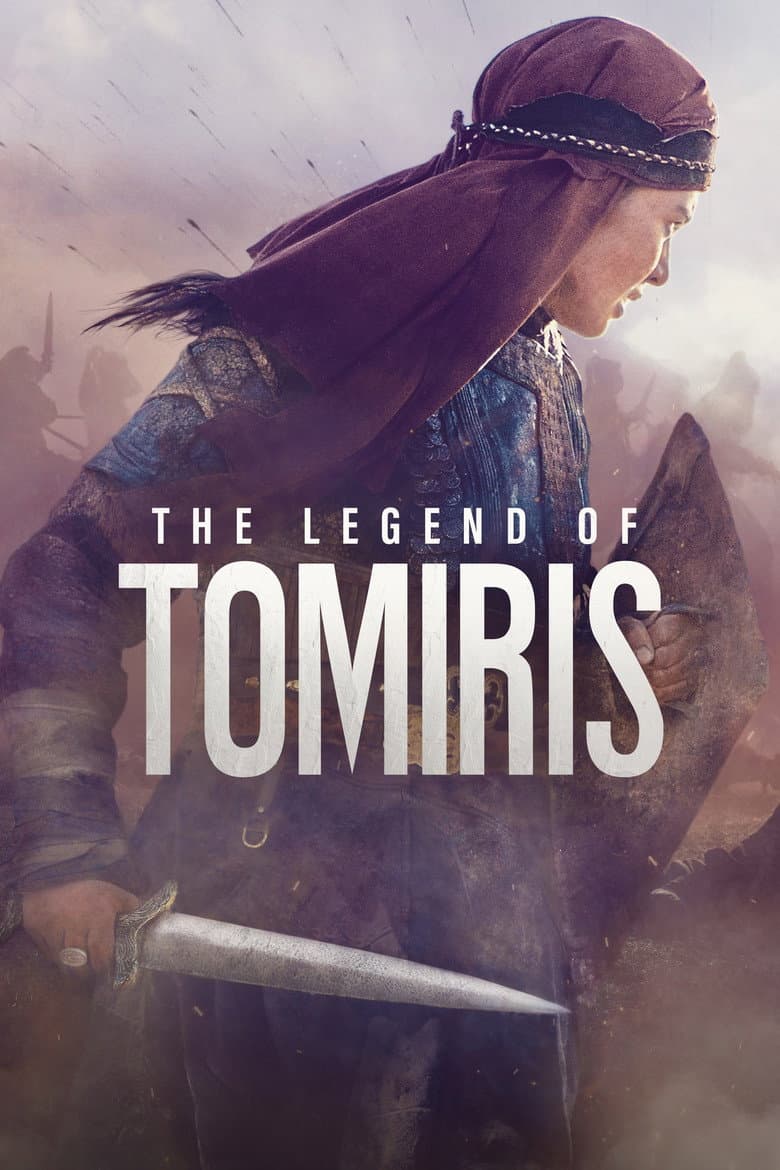
The film follows Tomiris, the daughter of a steppe chief who grows into a skilled rider, fighter, and ruler. Her mother dies when she is born, and her father trains her after hoping for a son. A betrayal destroys her family and forces her into exile with a tribe of women warriors. Years later, Tomiris unites rival Saka tribes and faces Cyrus of Persia in a brutal fight for land and freedom. The film uses wide steppe landscapes, raids, court deals, visions, and large battles, and it keeps a serious, violent tone.
Tomiris is shown as a woman who can lead armies, plan battles, and rule beside her husband. The film also shows women warriors fighting and hunting beside men, while Tomiris remains a wife and mother as well as a queen. A few scenes make the gender message clear, including her father's choice to raise her as a warrior and her wedding promise that she and her husband will rule together. These ideas are tied to the historical heroine and the story's tribal world, but they remain a strong part of the film's central image.
Community feedback
Was our 38% Woke rating accurate?
Breakdown
These are the editorial factors and ratings behind our score for The Legend of Tomiris.
Woke representation / casting
Not present. The film casts Central Asian performers in an ancient Central Asian story. Tomiris and the women warriors fit the steppe setting shown in the film, and there is no modern diversity message.
0%
Woke political dialogue
One wedding scene has Tomiris announce that she and Argun will rule together. The birth scene treats the lack of a son as a problem before her father chooses to train Tomiris as a warrior. The rest of the dialogue centers on freedom, tribal unity, revenge, and war. The gender message is noticeable but limited to a few scenes.
24%
Identity-driven story themes
Tomiris is trained from childhood, survives exile, joins women warriors, and becomes queen. The story repeatedly shows women fighting, leading, and making major choices beside or above men. Her marriage is presented as a partnership, while Argun acts as her ally rather than the sole leader. The film also keeps Tomiris as a wife, mother, and protector of her people, so the message stays tied to this historical heroine.
47%
Western institutional / cultural critique
Not present. The film attacks invading rulers, traitors, and slavery in an ancient tribal war. It does not target modern Western institutions, Christianity, capitalism, patriarchy, or conservative social norms.
0%
Woke character or canon changes
The film presents the Saka tribes as a shared Turkic world and gives them a made-for-the-film ancient Turkic language. The story frames the steppe lands as one united homeland linked to modern Central Asian heritage. Historians have disputed the language, geography, and parts of the story. This is a national-history change rather than a modern DEI message.
25%
Anti-woke backlash and complaints
Some Kazakh commentators questioned whether the female-ruler story was meant to prepare people for a woman president. One critic called the film an expensive campaign video. Other complaints focused on history, language, and national identity rather than woke politics. The separate X check found no anti-woke complaints, so the backlash was small and mixed.
8%
Creator track record context
Aliya Nazarbayeva's environmental work gives the creators one mild activist link. Satayev, Zhaksylykov, and the producers otherwise have low cached scores and histories centered on national history, war, crime, family, and production. No creator frames this film through DEI, queer, race, or modern gender politics.
6%
Production
Movie · 2019
Richard Jewell thinks quick, works fast, and saves hundreds, perhaps thousands, of lives after a domestic terrorist plants several pipe bombs and they explode during a concert…
Movie · 2016
On 15 January 2009, the world witnessed the 'Miracle on the Hudson' when Captain 'Sully' Sullenberger glided his disabled plane onto the Hudson River, saving the lives of all 155…

Movie · 2016
After his older brother passes away, Lee Chandler is forced to return home to care for his 16-year-old nephew.
Movie · 2026
While people across 1990s Iraq struggle to survive the war and food shortages, Saddam Hussein requires each school in the country to prepare a cake to celebrate his birthday.

Movie · 2023
The true story of the inseparable Von Erich brothers, who made history in the intensely competitive world of professional wrestling in the early 1980s.

Movie · 2023
American ballet dancer Joy Womack is accepted into Moscow's infamously tough Bolshoi Ballet Academy, with the dream of becoming a great ballerina.

Movie · 2022
A quiet, neglected girl is sent away from her dysfunctional family to live with relatives for the summer. She blossoms in their care, but in this house where there are meant to be…

Movie · 2022
London, 1953. Mr. Williams, a veteran civil servant, is an important cog within the city's bureaucracy as it struggles to rebuild in the aftermath of World War II.
