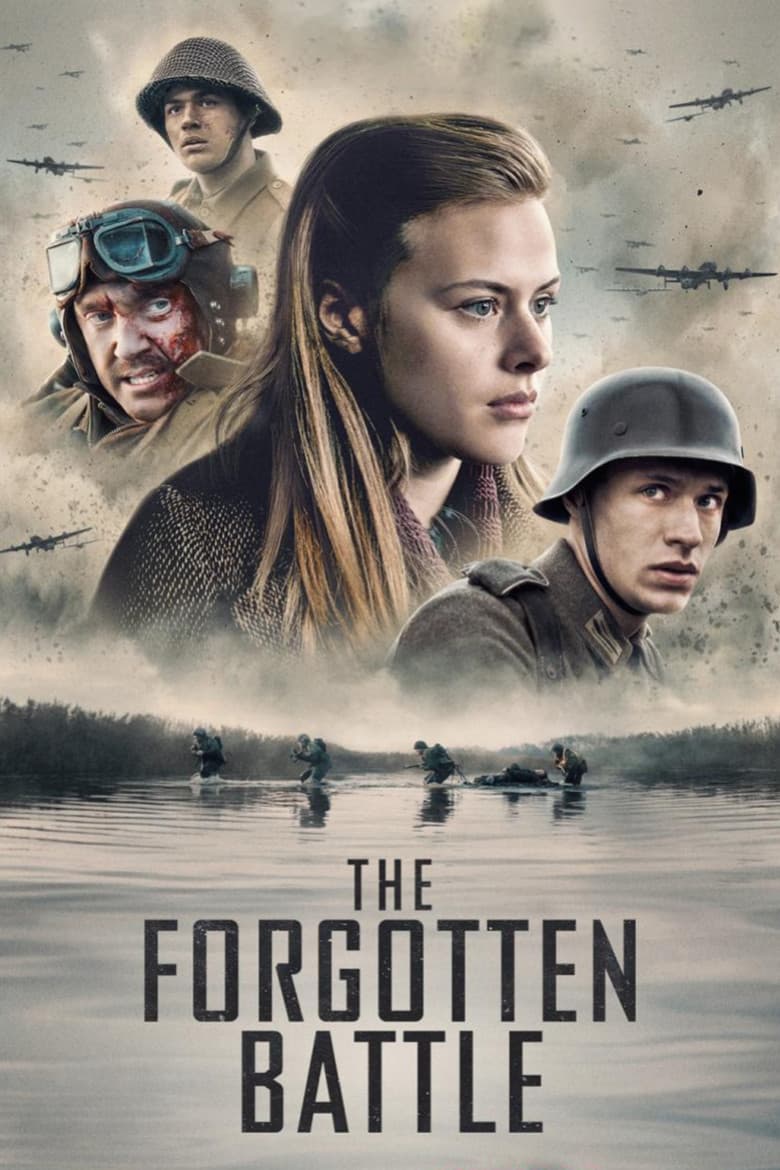
The Forgotten Battle follows three young people during the Battle of the Scheldt in 1944. Teuntje works in a mayor’s office in German-occupied Zeeland, Marinus serves with the German forces, and William flies a British glider. Teuntje enters the Dutch Resistance after German troops arrest and execute her brother, while William survives a crash and Marinus begins to doubt his cause. Their paths meet during the fight for the Walcheren causeway, where maps, orders, fear, and hard choices decide who lives. The film has a grim, tense, and violent war tone.
The film gives a major heroic role to a young woman who believes her office job will keep her safe. It also places a black British glider pilot among the three main viewpoints in a European war setting, but the story does not make his race a subject. The film stresses freedom, moral choice, sacrifice, and the harm caused by Nazi rule. Those ideas stay tied to the 1944 battle, and the movie does not turn them into a modern identity or culture-war message.
Community feedback
Was our 16% Woke rating accurate?
Breakdown
These are the editorial factors and ratings behind our score for The Forgotten Battle.
Woke representation / casting
The film gives one of its three main viewpoints to William Sinclair, a black British glider pilot. This is a prominent identity choice in a 1944 European war story, but the character’s race is not part of his arc. The writer also wanted a girl in the story, yet the film does not frame either choice as a modern diversity campaign.
20%
Woke political dialogue
Not present. The characters talk about freedom, duty, fear, loyalty, and survival in World War II. The film has no confirmed modern identity, gender, DEI, or activist speeches.
0%
Identity-driven story themes
Teuntje has an important arc from a cautious office worker to an active Resistance courier. The film lets the map she steals help change the battle. Her role grows from family danger and wartime duty, not from a modern lesson about women, and Marinus and William remain equally important.
15%
Western institutional / cultural critique
Not present. The film shows Nazi occupation, torture, executions, and military abuse as part of the 1944 war. It does not attack modern Western culture, Christianity, capitalism, family life, or traditional social roles.
0%
Woke character or canon changes
Not relevant. The lead characters are fictional people created for this film. The film compresses wartime events, but it does not change a known character or historical person’s race, gender, or sexuality.
0%
Anti-woke backlash and complaints
Not present. Public discussion focused on the battle, action, history, and pacing. The supplied X research found no anti-woke complaints, while a few right-leaning posts praised the film as not woke.
0%
Creator track record context
The director has no documented activist or DEI public profile. Paula van der Oest has a moderate record of stories about women facing institutions and has criticized cuts to arts funding. The other cached creators have little or no public record of identity politics, so creator track record context is mild.
10%
Production
Movie · 2016
WWII American Army Medic Desmond T. Doss, who served during the Battle of Okinawa, refuses to kill people and becomes the first Conscientious Objector in American history to…
Movie · 2025
Diagnosed with Tourette Syndrome at 15, John Davidson navigates his way against the odds through troubled teenage years and into adulthood, finding inspiration in the kindness of…
Movie · 2016
On 15 January 2009, the world witnessed the 'Miracle on the Hudson' when Captain 'Sully' Sullenberger glided his disabled plane onto the Hudson River, saving the lives of all 155…

Movie · 2023
The true story of the inseparable Von Erich brothers, who made history in the intensely competitive world of professional wrestling in the early 1980s.
Movie · 2020
A man refuses all assistance from his daughter as he ages and, as he tries to make sense of his changing circumstances, he begins to doubt his loved ones, his own mind and even…
Movie · 2023
The story of J. Robert Oppenheimer's role in the development of the atomic bomb during World War II.
Movie · 2022
London, 1953. Mr. Williams, a veteran civil servant, is an important cog within the city's bureaucracy as it struggles to rebuild in the aftermath of World War II.
Movie · 2022
A quiet, neglected girl is sent away from her dysfunctional family to live with relatives for the summer. She blossoms in their care, but in this house where there are meant to be…
