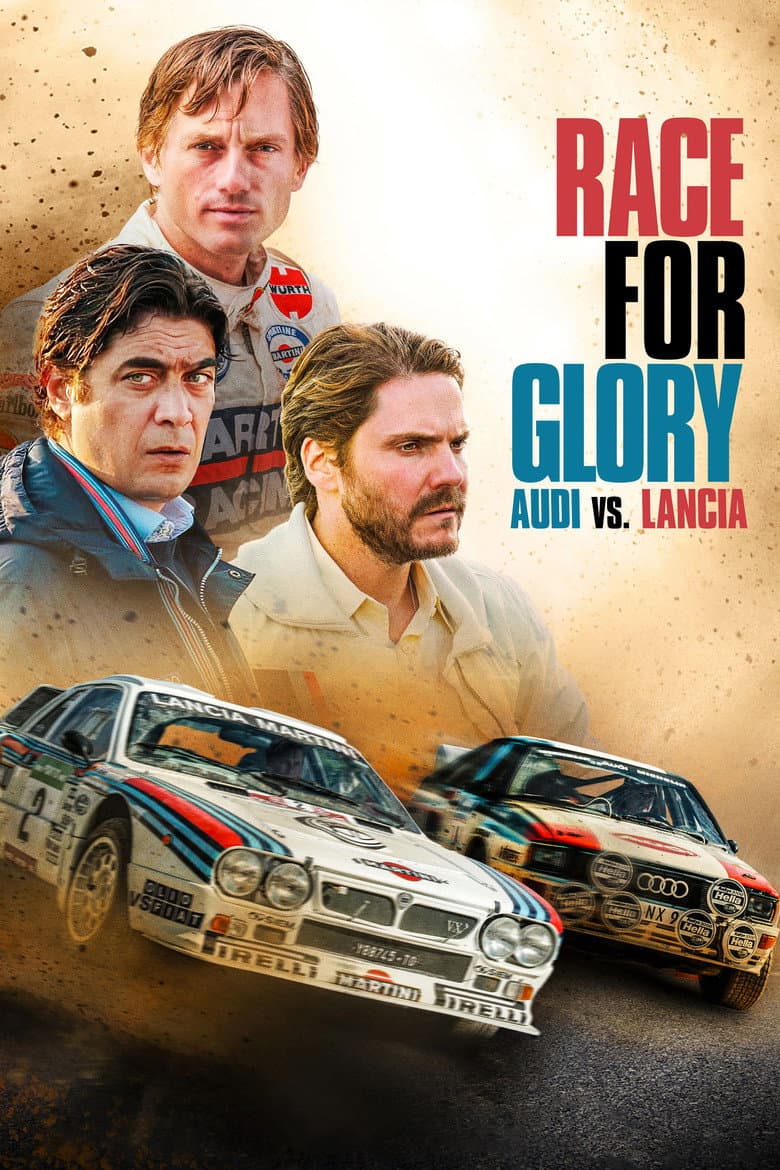
Cesare Fiorio runs Italy’s Lancia rally team during the 1983 World Rally Championship. His smaller team must beat Audi, a rich German rival with a faster four-wheel-drive car. Cesare recruits gifted driver Walter Röhrl and uses careful plans, clever rule reading, and risky tricks to close the gap. The movie has a calm, serious tone, with short bursts of danger during races.
The main story praises skill, teamwork, courage, and hands-on problem solving over money and new technology. Cesare’s need to win can make him cold, while Walter cares more about driving well than collecting titles. Jane, a British team health worker, supports the group after losing her father in a rally and questions why drivers risk their lives. The German and Italian characters often show national styles, but their shared respect matters more than simple pride.
Community feedback
Was our 22% Woke rating accurate?
Breakdown
These are the editorial factors and ratings behind our score for Race for Glory: Audi vs. Lancia.
Woke representation / casting
The film gives a major supporting role to Jane, a made-up British woman who works as Lancia’s team health expert in the mainly male 1983 rally world. Jane gives medical help, challenges Cesare’s risky choices, and becomes his moral check. The real French woman driver Michèle Mouton also appears, but only briefly in her accurate role. The other main cast choices fit the real European people and setting.
24%
Woke political dialogue
Not present. Cesare briefly calls rallying a democratic sport that belongs to everyone, but he means that races happen on public roads near ordinary people. The rest of the dialogue stays on cars, teamwork, danger, and winning.
0%
Identity-driven story themes
The story builds a mild unity theme around an Italian team that depends on German driver Walter and British worker Jane. The characters keep clear national styles while learning to trust each other. The theme supports respect across national lines, but it never becomes an activist story about identity.
12%
Western institutional / cultural critique
Not present. The movie contrasts a small team with a richer company, but it praises car companies, sponsors, and competition. It does not attack Western culture, family, faith, men, or free markets.
0%
Woke character or canon changes
The film adds Jane McCoy, a fictional British woman, to Lancia’s real 1983 team. Jane becomes Cesare’s main moral check and gives Britain a place in the Italian and German story. She does not replace a known person or change the championship result.
22%
Anti-woke backlash and complaints
Not present. Reviews and motorsport discussions criticized pacing, writing, and historical errors. They did not accuse the movie of pushing woke or DEI ideas.
0%
Creator track record context
Stefano Mordini has the strongest cached record at 28 through earlier social themes and comments about social rights. Riccardo Scamarcio has a mixed, low score of 12, while Filippo Bologna is at 0. The casting director and listed producers sit from 0 to 15, so the group shows only low to mild activist history.
13%
Production
Movie · 2019
Richard Jewell thinks quick, works fast, and saves hundreds, perhaps thousands, of lives after a domestic terrorist plants several pipe bombs and they explode during a concert…
Movie · 2025
Diagnosed with Tourette Syndrome at 15, John Davidson navigates his way against the odds through troubled teenage years and into adulthood, finding inspiration in the kindness of…
Movie · 2017
Members of the Granite Mountain Hotshots battle deadly wildfires to save an Arizona town.
Movie · 2024
On the brink of the Second World War, a young Norwegian man's drive to resist the Nazis sets a new course for his future – and the future of his country.
Movie · 2016
WWII American Army Medic Desmond T. Doss, who served during the Battle of Okinawa, refuses to kill people and becomes the first Conscientious Objector in American history to…
Movie · 2022
Based on a true tragedy, the emotionally triggering film sheds light on the plight of Kashmiri Pandits (Hindus), a religious minority in the 1990s Kashmir valley, who were…
Movie · 2023
The true story of the inseparable Von Erich brothers, who made history in the intensely competitive world of professional wrestling in the early 1980s.
Movie · 2016
On 15 January 2009, the world witnessed the 'Miracle on the Hudson' when Captain 'Sully' Sullenberger glided his disabled plane onto the Hudson River, saving the lives of all 155…
