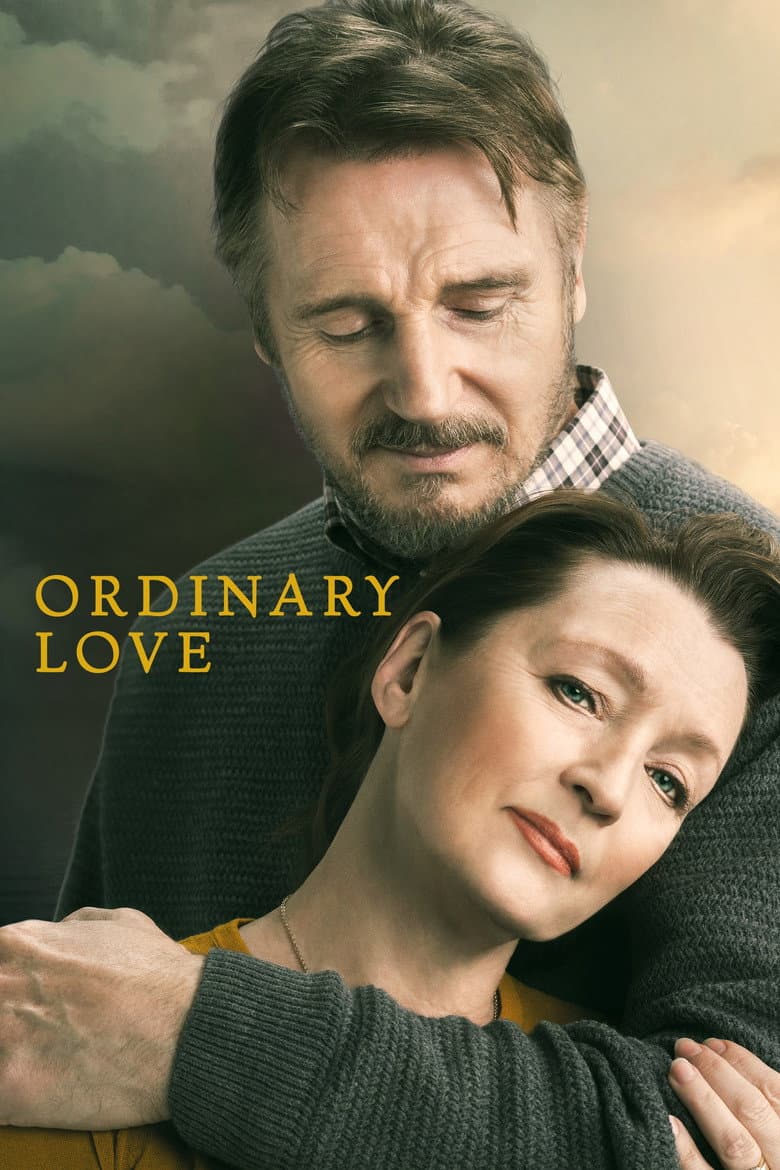
Ordinary Love follows Joan and Tom Thompson, a long-married couple living a quiet life in Northern Ireland. Their walks, shopping trips, jokes, and small arguments change when Joan finds a lump in her breast and learns that she has cancer. Joan faces surgery, cancer treatment, hair loss, and the removal of a breast while Tom tries to help her and hide his fear. The couple also carry the old pain of losing their daughter Debbie. The tone is sad, gentle, and often funny as the film watches a normal marriage face illness and death.
The film’s main message is about love, care, grief, and the value of ordinary days. It gives a serious side story to Peter, a former teacher who has terminal cancer, and Steve, his male partner. Their relationship is treated as normal, and Steve later gives a speech at Peter’s funeral. Joan’s illness, treatment, and desire remain visible parts of the story, including her fear of losing a breast and a tender scene with Tom before surgery. These scenes add some LGBTQ representation and a clear focus on a woman’s body, but they stay inside the cancer and marriage story instead of becoming a political campaign.
Community feedback
Was our 18% Woke rating accurate?
Breakdown
These are the editorial factors and ratings behind our score for Ordinary Love.
Woke representation / casting
The film gives a meaningful side role to Steve, played by Amit Shah, as Peter’s male partner. Their couple comes from different racial backgrounds and appears in the hospital, at Peter’s funeral, and in the closing Christmas plan. The film does not present this casting as a diversity campaign, and the main couple is a white man and white woman from Northern Ireland.
10%
Woke political dialogue
Not present. The spoken conflict concerns cancer, fear, marriage, grief, and daily life. The film does not include modern identity, DEI, or activist lines.
0%
Identity-driven story themes
The film gives a recurring side story to Peter and Steve, a male couple dealing with Peter’s terminal cancer. Their relationship is shown as normal and caring without debate or apology. Peter’s funeral and Steve’s speech give the relationship real emotional weight, but it stays secondary to Joan and Tom’s cancer story.
24%
Western institutional / cultural critique
Not present. The hospital causes stress through tests, waiting rooms, and treatment, but the story does not attack Western institutions or family life. It does not use toxic masculinity, anti-conservative messaging, or ridicule of Christianity.
0%
Woke character or canon changes
Not relevant. The film is an original story about Joan, Tom, Peter, and Steve. It does not change established characters, source material, or historical events.
0%
Anti-woke backlash and complaints
Not present. The separate X research found no anti-woke posts or named complaints about the film. Reviewed audience comments mainly praise the acting and emotional story or criticize the slow pace. Liam Neeson’s separate 2019 racial remarks were not complaints about this film’s content.
0%
Creator track record context
The directors’ earlier Good Vibrations gave space to people outside the usual Troubles stories. Producer Stephen Kelliher has a credit on A Kid Like Jake, which centers on a child’s gender expression. The remaining key creators have mostly professional profiles, with little public evidence of DEI activism.
14%
Production

Movie · 2018
German artist Kurt Barnert has escaped East Germany and now lives in West Germany, but is tormented by his childhood under the Nazis and the GDR regime.

Movie · 2017
Nothing is as it seems in this riveting World War 2 thriller as a wary soldier goes to investigate a mysterious German monarch at his secluded mansion, leading him into a web of…
Movie · 2018
The coming-of-age tale of 16-year-old Lina Vilkas who is deported to Siberia amid Stalin's reign of terror in the Baltic region during WWII.

Movie · 2017
A brilliant but impulsive young surgeon spirals into self-destruction after a painful breakup, struggling to cope with love, loss, and the consequences of his own temper.

Movie · 2017
In 1950s London, a renowned dressmaker's meticulous lifestyle begins drastically changing as his relationship with his young muse intensifies.

Movie · 2023
College freshman Abby tries to distance herself from her dark past while resisting her attraction to bad boy Travis.

Movie · 2019
England, early 20th century. The future writer and philologist John Ronald Reuel Tolkien (1892-1973) and three of his schoolmates create a strong bond between them as they share…

Movie · 2023
Set in 1889 France, Dodin Bouffant is a chef living with his personal cook and lover Eugénie. They share a long history of gastronomy and love but Eugénie refuses to marry Dodin…
