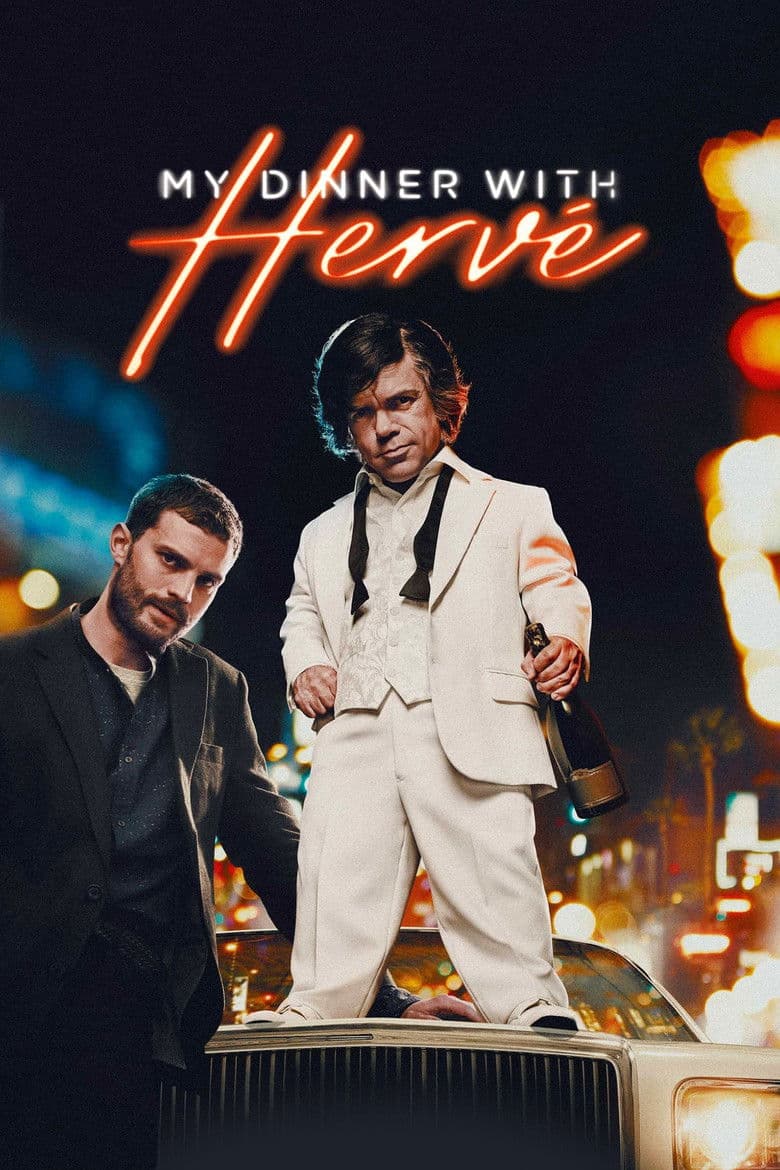
My Dinner with Hervé follows Danny Tate, a journalist who travels to Los Angeles for a major interview. Danny is also trying to stay sober and repair the damage caused by his drinking. He meets Hervé Villechaize, a famous French actor whose career has faded after years of fame, sex, anger, and drinking. Their long night moves through hotels, clubs, old television studios, and memories from France, and the mood shifts from wild comedy to sadness.
The film makes Hervé’s dwarfism a central part of his life story. It shows his mother’s shame, his father’s attempts to change his body, the public’s cruel jokes, and Hollywood’s use of his size as a selling point. The story asks viewers to see a hurt and difficult man as a full person instead of a punchline. This identity focus returns throughout the movie, but the drama stays tied to one man’s childhood, fame, relationships, addiction, and suicide rather than a broad modern political message.
Community feedback
Was our 33% Woke rating accurate?
Breakdown
These are the editorial factors and ratings behind our score for My Dinner with Hervé.
Woke representation / casting
Not present. Peter Dinklage has dwarfism, like Hervé Villechaize, so the lead casting matches the real person. The other main roles do not form a diversity-first pattern.
0%
Woke political dialogue
Not present. The film has no repeated speeches about modern identity politics, DEI, gender roles, or activism. Hervé talks about his size and public treatment, but those lines tell his personal history rather than promote a modern political program.
0%
Identity-driven story themes
The film makes Hervé’s dwarfism a part of his childhood, work, family, and search for love. It shows his mother treating his body as shameful and his father trying to cure him. It shows Hollywood turning him into a joke, a costume, and a small role. The story asks viewers to see him as a full person, but it keeps this message tied to one man’s life instead of a wider activist campaign.
44%
Western institutional / cultural critique
The film shows the press and Hollywood reducing Hervé to a joke and a sidekick. It shows producers, fans, and newspapers judging him by his size instead of his work. It also shows fame and money using his pain for entertainment. This critique returns across his career, but it does not become a broad attack on Western culture, religion, family, or capitalism.
28%
Woke character or canon changes
Not relevant. The film changes and compresses real events for drama, but it does not make a race, gender, sexuality, or hero-role change to a known character or real figure.
0%
Anti-woke backlash and complaints
Not present. X research found no anti-woke reaction to the film. Reported casting criticism focused on alleged whitewashing, not on the film being too woke or too political.
0%
Creator track record context
Sacha Gervasi has a mild representation link because he wanted to show Hervé as a full person instead of a joke. Peter Dinklage has pushed for better roles for people with dwarfism and helped develop this project for years. Carmen Cuba has a moderate diversity-focused casting record. Most of the other listed creators have low or unclear activist links, so the team context is mild rather than strong.
20%
Production
Movie · 2022
A quiet, neglected girl is sent away from her dysfunctional family to live with relatives for the summer. She blossoms in their care, but in this house where there are meant to be…
Movie · 2025
Diagnosed with Tourette Syndrome at 15, John Davidson navigates his way against the odds through troubled teenage years and into adulthood, finding inspiration in the kindness of…
Movie · 2016
After his older brother passes away, Lee Chandler is forced to return home to care for his 16-year-old nephew.
Movie · 2020
A man refuses all assistance from his daughter as he ages and, as he tries to make sense of his changing circumstances, he begins to doubt his loved ones, his own mind and even…
Movie · 2023
American ballet dancer Joy Womack is accepted into Moscow's infamously tough Bolshoi Ballet Academy, with the dream of becoming a great ballerina.
Movie · 2017
In 1950, amidst the ravages of the Korean War, Sergeant Süleyman stumbles upon a a half-frozen little girl, with no parents and no help in sight and he risks his own life to save…
Movie · 2022
Based on a true tragedy, the emotionally triggering film sheds light on the plight of Kashmiri Pandits (Hindus), a religious minority in the 1990s Kashmir valley, who were…
Movie · 2016
In a desolate war zone where screams of the innocent echo, on the very line between disaster and valor, 7 Maroon Berets will dance with death.
