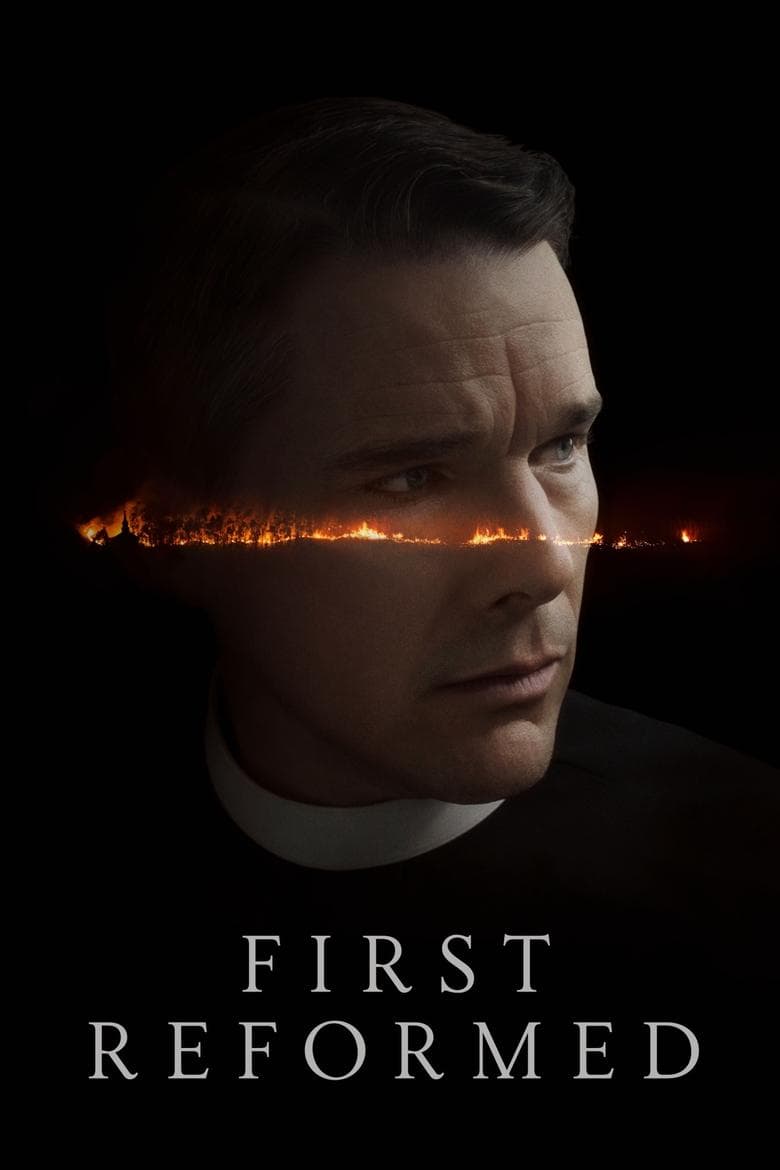
First Reformed follows Ernst Toller, a lonely pastor who serves a small Dutch Reformed church in upstate New York. The church is old and nearly empty, while a large nearby church controls its money and public events. Toller is sick, drinks too much, and feels guilty because his son died in Iraq after Toller urged him to join the military. His life starts to break apart when a pregnant woman named Mary asks Toller to counsel her husband, Michael, who fears that climate change makes it wrong to bring a child into the world. The film is slow, cold, tense, and focused on faith, grief, and despair.
The clearest woke-leaning material is the film’s strong focus on climate change, pollution, and the power of rich companies. Michael’s environmental despair pulls Toller into a fight with the church’s wealthy donor, whose business pollutes the local water. The story also questions a big church that works closely with money, politics, and conservative power. These ideas are important to the plot, but the movie presents them through one pastor’s illness, guilt, and loss of faith rather than through a broad identity campaign. The film has no clear race, gender, or LGBTQ message.
Community feedback
Was our 45% Woke rating accurate?
Breakdown
These are the editorial factors and ratings behind our score for First Reformed.
Woke representation / casting
Not present. Casting follows natural story logic in a traditional upstate New York church setting with no visible diversity quotas, identity signaling, or mismatched prominent roles.
0%
Woke political dialogue
Michael speaks at length about climate change, pollution, and whether a child should enter a ruined world. Toller later confronts church leaders over a polluter’s money and the church’s silence. The film also calls the Iraq War morally wrong and shows a right-wing student attacking Toller’s attempt to separate Christianity from nationalism. These ideas are clear, but they grow out of Toller’s grief and breakdown instead of a simple campaign speech.
45%
Identity-driven story themes
Not present in this title.
0%
Western institutional / cultural critique
The film shows Abundant Life as a wealthy megachurch with flashy screens, a gift shop, and close ties to a polluting donor. Toller sees the church’s anniversary event as a public cover for that relationship. The story also links Christianity with nationalism and questions churches that put money and public power before moral duty. The criticism is audience-visible, but it remains tied to Toller’s private collapse rather than a broad identity campaign.
48%
Woke character or canon changes
Not relevant. original screenplay with no source material, established characters, or historical figures altered for ideological reasons.
0%
Anti-woke backlash and complaints
A Metacritic user review calls the climate material “topical propaganda” and a heavy-handed cliché. A climate-skeptic Reddit commenter calls the film Hollywood propaganda that pushes environmental radicalism. A conservative Christian commentary also objects to its treatment of radical environmentalism and church power. The wider response was mostly praise and discussion, so this backlash appears scattered rather than major.
19%
Creator track record context
Paul Schrader has a long record of stories about troubled men, faith, and moral struggle, and he has recently criticized cancel culture and “woke” changes in film culture. His interviews about this film stress Christian roots, Thomas Merton, despair, and environmental fear. Producer Christine Vachon has a strong history of queer and socially engaged films through Killer Films. That history matters as background, but this film does not follow a queer-centered pattern.
30%
Production
Movie · 2016
After his older brother passes away, Lee Chandler is forced to return home to care for his 16-year-old nephew.
Movie · 2019
Richard Jewell thinks quick, works fast, and saves hundreds, perhaps thousands, of lives after a domestic terrorist plants several pipe bombs and they explode during a concert…
Movie · 2016
WWII American Army Medic Desmond T. Doss, who served during the Battle of Okinawa, refuses to kill people and becomes the first Conscientious Objector in American history to…
Movie · 2025
Diagnosed with Tourette Syndrome at 15, John Davidson navigates his way against the odds through troubled teenage years and into adulthood, finding inspiration in the kindness of…
Movie · 2016
On 15 January 2009, the world witnessed the 'Miracle on the Hudson' when Captain 'Sully' Sullenberger glided his disabled plane onto the Hudson River, saving the lives of all 155…
Movie · 2016
In a desolate war zone where screams of the innocent echo, on the very line between disaster and valor, 7 Maroon Berets will dance with death.
Movie · 2024
On the brink of the Second World War, a young Norwegian man's drive to resist the Nazis sets a new course for his future – and the future of his country.

Movie · 2023
American ballet dancer Joy Womack is accepted into Moscow's infamously tough Bolshoi Ballet Academy, with the dream of becoming a great ballerina.
