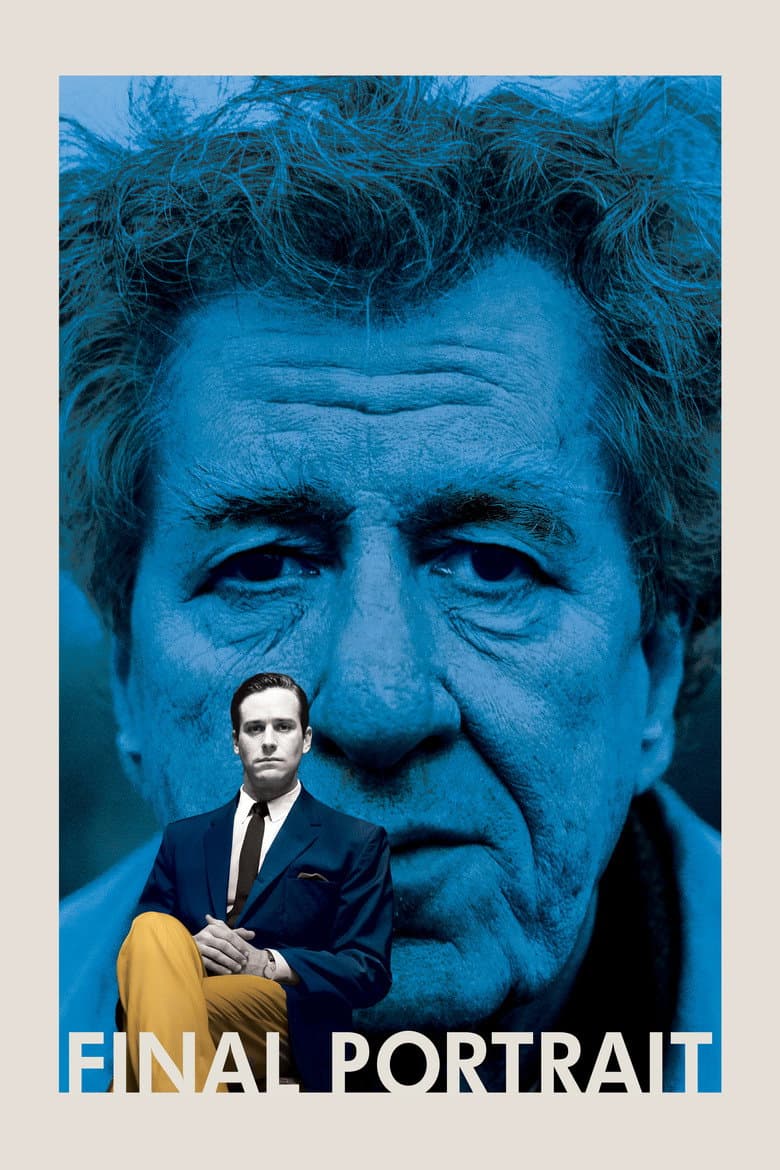
Final Portrait takes place in Paris in 1964. James Lord is an American writer who agrees to sit for his friend, the Swiss artist Alberto Giacometti. Giacometti promises that the portrait will take an afternoon, but he keeps starting over and holds Lord in the studio for almost three weeks. The film has a dry, tense, and funny tone as Lord watches the artist battle doubt, money, anger, and the need to make the picture perfect.
The clearest identity element is that Lord is a gay man with a boyfriend in New York. The boyfriend is never shown, but phone calls and a brief exchange with Caroline make Lord's attraction to men clear. This detail is brief and does not control the plot, which stays focused on art, friendship, and Giacometti's chaotic marriage and affair. The film also shows Giacometti neglecting his wife while he favors Caroline, but it treats this as personal cruelty rather than a modern lesson about gender or society.
Community feedback
Was our 23% Woke rating accurate?
Breakdown
These are the editorial factors and ratings behind our score for Final Portrait.
Woke representation / casting
Tony Shalhoub, a Lebanese-American actor, plays Diego Giacometti, Alberto's Swiss-Italian brother. That is a visible mismatch in an important supporting role. The other main roles match the people written in the story, and the film does not sell the cast as a diversity message.
20%
Woke political dialogue
Not present. The film has no modern speeches or repeated lines about DEI, identity politics, or activist causes. Its talk centers on art, money, friendship, and personal anger.
0%
Identity-driven story themes
James Lord is shown as a gay man with a boyfriend in New York. The boyfriend stays off camera, but phone calls and a brief exchange with Caroline make his attraction to men clear. This identity detail appears more than once, but it does not drive the main conflict. The story stays focused on the portrait, the friendship, and Giacometti's work.
27%
Western institutional / cultural critique
Not present. The film shows Giacometti neglecting his wife and treating Caroline as a favorite lover. It presents this as personal cruelty and a messy marriage, not as a modern attack on men, family, or Western institutions.
0%
Woke character or canon changes
Not relevant. The film is based on James Lord's account of a real meeting and keeps the known backgrounds of Lord and Giacometti. It does not change their race, gender, or sexuality.
0%
Anti-woke backlash and complaints
Not present. Searches, including the separate X pass, found no meaningful complaints that the film pushes woke, DEI, or identity politics. Online discussion centers on pace, the artist's behavior, and the small gay detail.
0%
Creator track record context
Stanley Tucci has a mild humanitarian and socially liberal record through refugee support. Interviews about the title describe the film as a study of art and the creative process, not as a political project. James Lord's queer life is part of his biography, but he was not known for an activist public role. Nina Gold has supported diversity in casting, while the other key crew show mild or little identity-focused activity.
20%
Production
Movie · 2016
On 15 January 2009, the world witnessed the 'Miracle on the Hudson' when Captain 'Sully' Sullenberger glided his disabled plane onto the Hudson River, saving the lives of all 155…
Movie · 2023
The story of J. Robert Oppenheimer's role in the development of the atomic bomb during World War II.
Movie · 2016
WWII American Army Medic Desmond T. Doss, who served during the Battle of Okinawa, refuses to kill people and becomes the first Conscientious Objector in American history to…

Movie · 2023
American ballet dancer Joy Womack is accepted into Moscow's infamously tough Bolshoi Ballet Academy, with the dream of becoming a great ballerina.
Movie · 2022
A quiet, neglected girl is sent away from her dysfunctional family to live with relatives for the summer. She blossoms in their care, but in this house where there are meant to be…
Movie · 2019
Richard Jewell thinks quick, works fast, and saves hundreds, perhaps thousands, of lives after a domestic terrorist plants several pipe bombs and they explode during a concert…
Movie · 2017
In 1950, amidst the ravages of the Korean War, Sergeant Süleyman stumbles upon a a half-frozen little girl, with no parents and no help in sight and he risks his own life to save…
Movie · 2016
In a desolate war zone where screams of the innocent echo, on the very line between disaster and valor, 7 Maroon Berets will dance with death.
