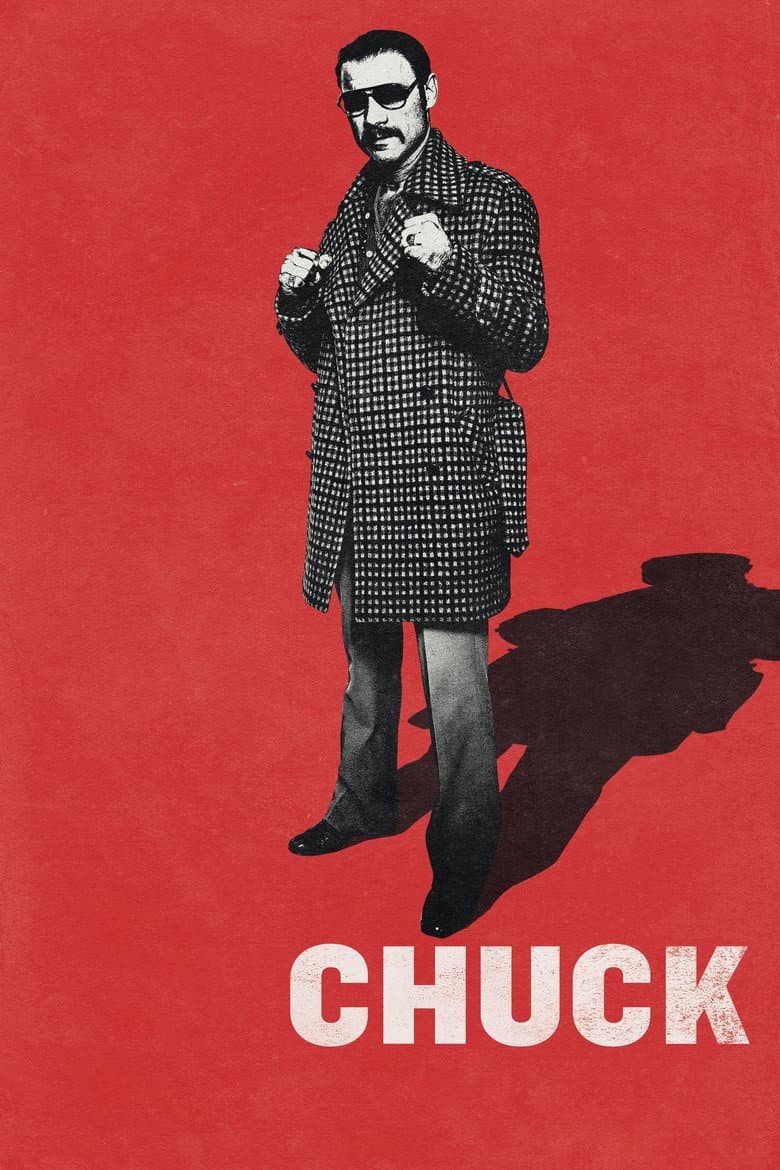
Chuck follows Chuck Wepner, a tough New Jersey heavyweight boxer who works as a liquor salesman and dreams of a title shot. In 1975, Muhammad Ali gives him a chance to fight for the world championship after Ali wins a major bout. Chuck lasts into the fifteenth round, scores a surprise knockdown, and becomes a local hero because his fight helps inspire Rocky. The film has a rough, funny, and sad tone as Chuck enjoys fame, drinks, uses cocaine, chases women, and struggles to keep his family together.
The story stays focused on fame, pride, addiction, marriage, fatherhood, and the danger of trying to become a public legend. Chuck’s wife Phyllis pushes back against his cheating, and Linda later becomes part of his effort to build a calmer life. Chuck also tries to turn his link to Rocky into an acting career, but the film shows his need for attention as a weakness rather than a social cause. The boxing match, prison sentence, and final family repair shape the ending, which treats personal change and loyalty as more important than celebrity.
Community feedback
Was our 4% Woke rating accurate?
Breakdown
These are the editorial factors and ratings behind our score for Chuck.
Woke representation / casting
Not present. The main roles match the real people and the New Jersey boxing setting. The film does not frame casting as a diversity or identity message.
0%
Woke political dialogue
Not present. The film includes a period discussion of race around the Ali fight, but that line explains the boxing event rather than promoting modern identity or activist ideas.
0%
Identity-driven story themes
Not present. The story centers on boxing, fame, addiction, marriage, family, and personal change. It does not make race, gender, sexuality, or representation the main message.
0%
Western institutional / cultural critique
Not present. The film questions celebrity culture and Chuck’s personal choices. It does not attack Western institutions, traditional family life, or Christianity through a modern activist frame.
0%
Woke character or canon changes
Not relevant. The film rearranges or compresses parts of Wepner’s life for drama. It does not change his race, gender, sexuality, or role in the story.
0%
Anti-woke backlash and complaints
Not present. The supplied X pass found no anti-woke posts or specific complaints. Web reviews and audience posts focus on the boxing story, acting, pacing, sex, and drugs instead of woke or DEI messaging.
0%
Creator track record context
Liev Schreiber has spoken in support of his transgender child and humanitarian causes. Philippe Falardeau has made stories about immigration, culture, and social institutions. Michael Cristofer has written LGBTQ-inclusive and AIDS-related stories. The other listed creators have little documented activist history, so the overall context is mild and does not define this film.
18%
Production
Movie · 2025
Diagnosed with Tourette Syndrome at 15, John Davidson navigates his way against the odds through troubled teenage years and into adulthood, finding inspiration in the kindness of…
Movie · 2016
WWII American Army Medic Desmond T. Doss, who served during the Battle of Okinawa, refuses to kill people and becomes the first Conscientious Objector in American history to…

Movie · 2024
On the brink of the Second World War, a young Norwegian man's drive to resist the Nazis sets a new course for his future – and the future of his country.
Movie · 2023
The true story of the inseparable Von Erich brothers, who made history in the intensely competitive world of professional wrestling in the early 1980s.
Movie · 2020
A man refuses all assistance from his daughter as he ages and, as he tries to make sense of his changing circumstances, he begins to doubt his loved ones, his own mind and even…
Movie · 2022
London, 1953. Mr. Williams, a veteran civil servant, is an important cog within the city's bureaucracy as it struggles to rebuild in the aftermath of World War II.
Movie · 2026
While people across 1990s Iraq struggle to survive the war and food shortages, Saddam Hussein requires each school in the country to prepare a cake to celebrate his birthday.
Movie · 2017
Members of the Granite Mountain Hotshots battle deadly wildfires to save an Arizona town.
