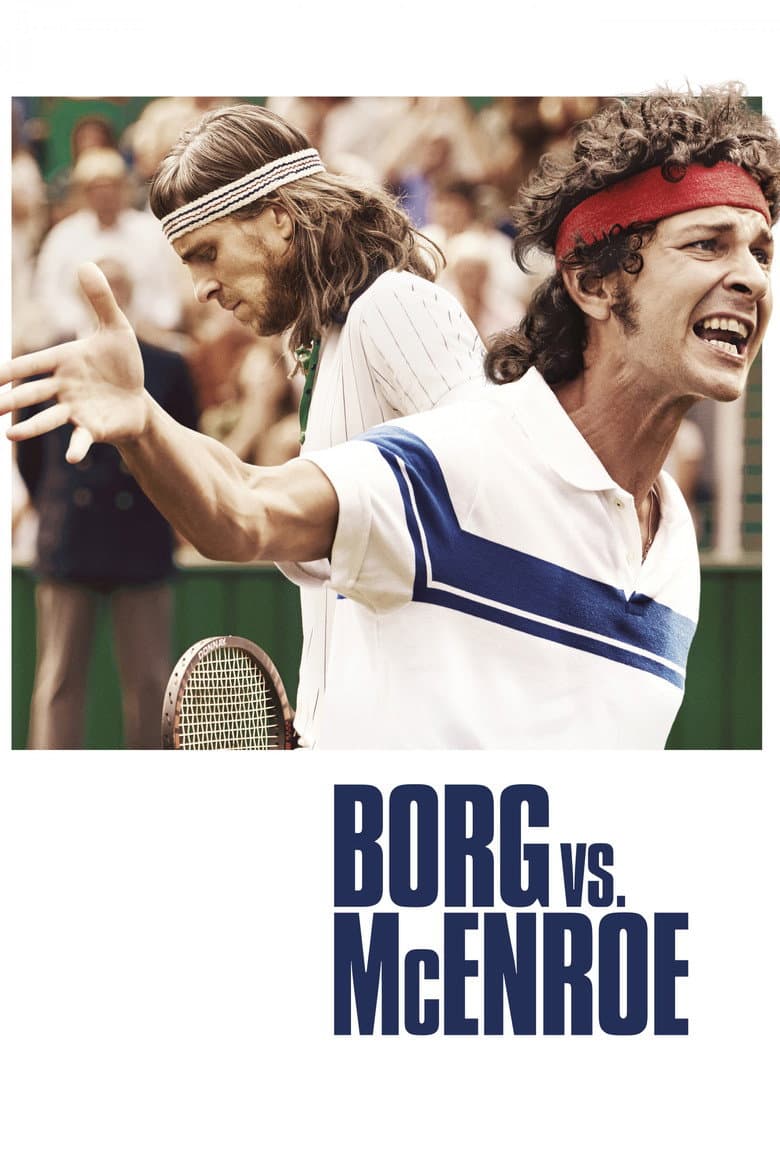
Borg vs McEnroe follows Swedish champion Björn Borg as he prepares for the 1980 Wimbledon final. Borg wants a fifth straight title, but the young American John McEnroe wants to win his first. Borg lives in Monaco with his girlfriend Mariana and follows strict routines, while McEnroe faces a hard contest against his own temper and his parents’ demands. The film moves between the tournament, their childhood years, and the pressure around their growing fame. Its serious, tense tone treats the match as a test of skill, fear, and self-control.
The main social ideas are about male emotional control and the class barriers around tennis. The film shows Borg learning to hide his anger and shows the cost of that lesson in his private life. It also shows McEnroe’s struggle with family pressure and public judgment. These ideas support a story about talent, discipline, fear, fame, and the friendship that grows from rivalry.
Community feedback
Was our 17% Woke rating accurate?
Breakdown
These are the editorial factors and ratings behind our score for Borg vs McEnroe.
Woke representation / casting
Not present. The main actors portray the real Swedish player Björn Borg, American player John McEnroe, Swedish coach Lennart Bergelin, and Romanian player Mariana Simionescu. The film does not build an identity-focused group or market these choices as a diversity message.
0%
Woke political dialogue
Not present. The spoken conflict covers tennis, temper, family pressure, fame, and winning. The film has no clear modern identity, DEI, or activist speech.
0%
Identity-driven story themes
The film repeatedly shows boys and men being pushed to control or hide their feelings. Young Borg is taught to bury his anger, and the story links that training to loneliness, fear, and stress. McEnroe also faces pressure from his parents and from the demand to win. The movie treats these as personal sports drama, not as a broad modern campaign about gender or identity.
15%
Western institutional / cultural critique
The film shows a tennis official telling young Borg that the sport is not for every social level. The story contrasts Borg’s restrained Swedish background with McEnroe’s more individual American style. These points add a small class and culture critique, but the movie does not attack modern Western institutions, capitalism, Christianity, or family life. The idea stays secondary to the rivalry.
13%
Woke character or canon changes
Not relevant. The movie dramatizes real people and events, but it does not swap anyone’s race, gender, sexuality, or hero role. Its invented scenes change timing and behavior, not identity.
0%
Anti-woke backlash and complaints
Not present. The supplied X pass found no anti-woke complaints, and the wider search found no sustained complaint about woke, DEI, or identity politics. Public criticism focused on accuracy, portrayal, and filmmaking, while audience praise centered on the acting and match.
0%
Creator track record context
Writer Ronnie Sandahl has a record of writing about class, power, masculinity, and pressure on young people. He has supported MeToo, and those concerns partly match the film’s focus on emotional control and the cost of success. Director Janus Metz and the two producers have no strong recorded activist or representation-focused public profile in the cached context. This gives the title a mild creator track record signal, while the story stays focused on tennis and personal pressure.
28%
Production
Movie · 2025
Diagnosed with Tourette Syndrome at 15, John Davidson navigates his way against the odds through troubled teenage years and into adulthood, finding inspiration in the kindness of…
Movie · 2016
WWII American Army Medic Desmond T. Doss, who served during the Battle of Okinawa, refuses to kill people and becomes the first Conscientious Objector in American history to…
Movie · 2024
On the brink of the Second World War, a young Norwegian man's drive to resist the Nazis sets a new course for his future – and the future of his country.
Movie · 2020
A man refuses all assistance from his daughter as he ages and, as he tries to make sense of his changing circumstances, he begins to doubt his loved ones, his own mind and even…

Movie · 2016
After his older brother passes away, Lee Chandler is forced to return home to care for his 16-year-old nephew.
Movie · 2019
Richard Jewell thinks quick, works fast, and saves hundreds, perhaps thousands, of lives after a domestic terrorist plants several pipe bombs and they explode during a concert…
Movie · 2022
A quiet, neglected girl is sent away from her dysfunctional family to live with relatives for the summer. She blossoms in their care, but in this house where there are meant to be…
Movie · 2022
London, 1953. Mr. Williams, a veteran civil servant, is an important cog within the city's bureaucracy as it struggles to rebuild in the aftermath of World War II.
