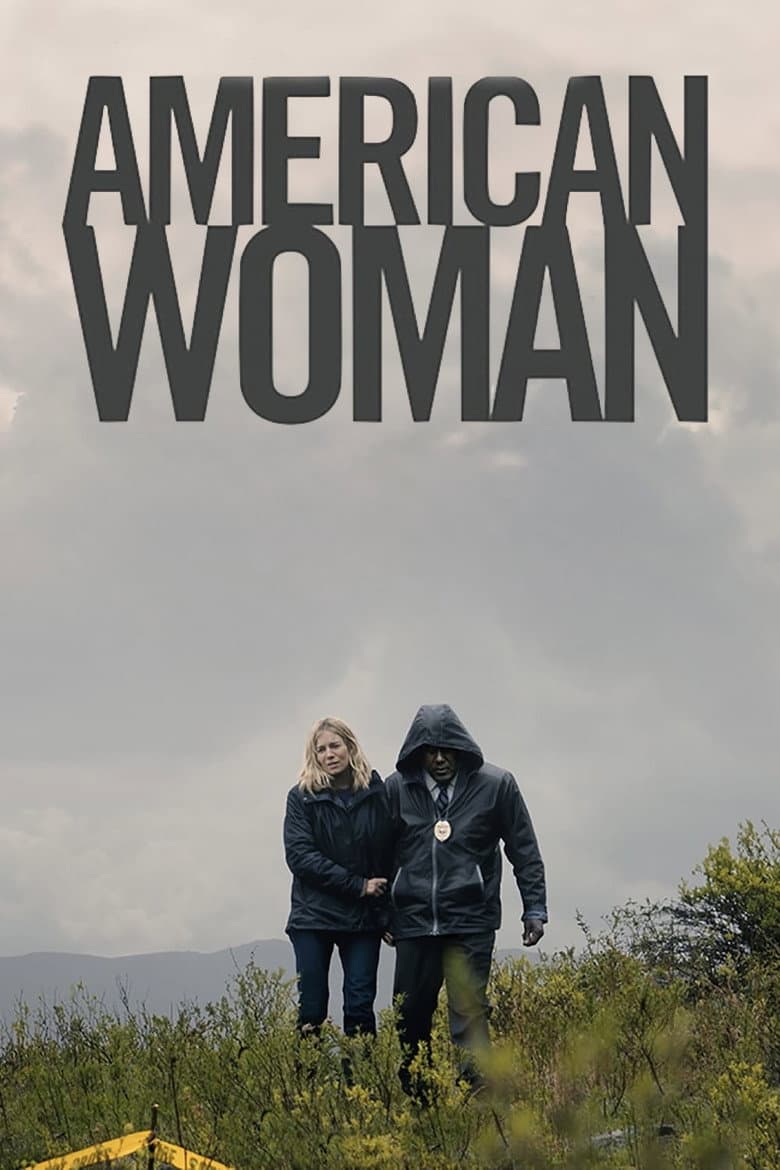
American Woman follows Deb Callahan, a young mother in a small Pennsylvania town who is already a grandmother. When her teenage daughter Bridget disappears, Deb must raise Bridget’s baby son Jesse while searching for answers. The story moves across about eleven years as Deb faces grief, drinking, bad relationships, poverty, and the demands of caring for a child. The tone is sad and rough, but it also gives space to family love, small moments of humor, and hope.
The film puts three generations of women at the center and follows Deb as she grows from a reckless, sex-focused young mother into a steadier worker and guardian. Several men bring harm or disappointment, including an abusive boyfriend and a husband who cheats, so Deb’s final choice to leave and start again carries a clear message about female self-respect. Her sister and mother help her survive, and family support matters more than romance. The film treats abuse, motherhood, and personal strength as human problems inside one family.
Community feedback
Was our 34% Woke rating accurate?
Breakdown
These are the editorial factors and ratings behind our score for American Woman.
Woke representation / casting
The main cast follows one mostly white Pennsylvania family, so the character choices do not create a clear diversity pattern. Jake Scott framed the film as a woman’s view separate from the male gaze, and he chose a female editor to add balance to a largely male crew. That identity framing is visible in interviews, but it is limited and does not make the cast a representation-first design.
15%
Woke political dialogue
Not present. The dialogue focuses on family, grief, sex, drinking, work, and abuse. It does not contain clear speeches or repeated lines about DEI, identity politics, or activist causes.
0%
Identity-driven story themes
The film centers on Deb’s growth from a reckless young mother into a self-reliant worker and guardian. Three generations of women carry the family story, and the women support one another through grief and poverty. Ray abuses Deb, Brett keeps her as a secret affair, and Chris cheats on her, so the plot repeatedly ties female strength to surviving harmful men. Deb’s choice to leave and start again gives the story a clear female self-respect message, although it remains a personal family drama rather than a policy argument.
44%
Western institutional / cultural critique
The film presents several men as controlling, absent, or unfaithful toward women. Ray controls and beats Deb in front of Jesse, while Bridget’s father is absent and Chris cheats after marriage. The story links Deb’s freedom to rejecting harmful male relationships and leaving her home. It does not attack Christianity, capitalism, or Western institutions, so the cultural critique stays focused on personal abuse and male entitlement.
26%
Woke character or canon changes
Not relevant. The movie is an original family drama, not an adaptation with established characters or a retelling of a real historical event. No identity-related change to known canon is part of the story.
0%
Anti-woke backlash and complaints
Not present. No documented anti-woke backlash was found. The supplied X pass found no reaction, and wider audience and news discussion centered on the plot, Miller’s performance, and the film’s small release. No reliable complaint accused the movie of pushing DEI, identity politics, or left-wing messaging.
0%
Creator track record context
Most of the key creative people have low stored scores and no known activist pattern. Erika Olde has a higher stored score because she supports women and underrepresented filmmakers, and Carmen Cuba has a moderate stored score for diverse casting. Jake Scott’s title-related interviews used women’s-view and male-gaze language, but they stressed truthful character work rather than a political campaign. These signals give the context a mild lift, not a strong one.
16%
Production
Movie · 2019
Richard Jewell thinks quick, works fast, and saves hundreds, perhaps thousands, of lives after a domestic terrorist plants several pipe bombs and they explode during a concert…

Movie · 2016
In a desolate war zone where screams of the innocent echo, on the very line between disaster and valor, 7 Maroon Berets will dance with death.

Movie · 2023
The true story of the inseparable Von Erich brothers, who made history in the intensely competitive world of professional wrestling in the early 1980s.
Movie · 2016
WWII American Army Medic Desmond T. Doss, who served during the Battle of Okinawa, refuses to kill people and becomes the first Conscientious Objector in American history to…

Movie · 2025
Diagnosed with Tourette Syndrome at 15, John Davidson navigates his way against the odds through troubled teenage years and into adulthood, finding inspiration in the kindness of…

Movie · 2023
The story of J. Robert Oppenheimer's role in the development of the atomic bomb during World War II.
Movie · 2020
A man refuses all assistance from his daughter as he ages and, as he tries to make sense of his changing circumstances, he begins to doubt his loved ones, his own mind and even…
Movie · 2026
While people across 1990s Iraq struggle to survive the war and food shortages, Saddam Hussein requires each school in the country to prepare a cake to celebrate his birthday.
