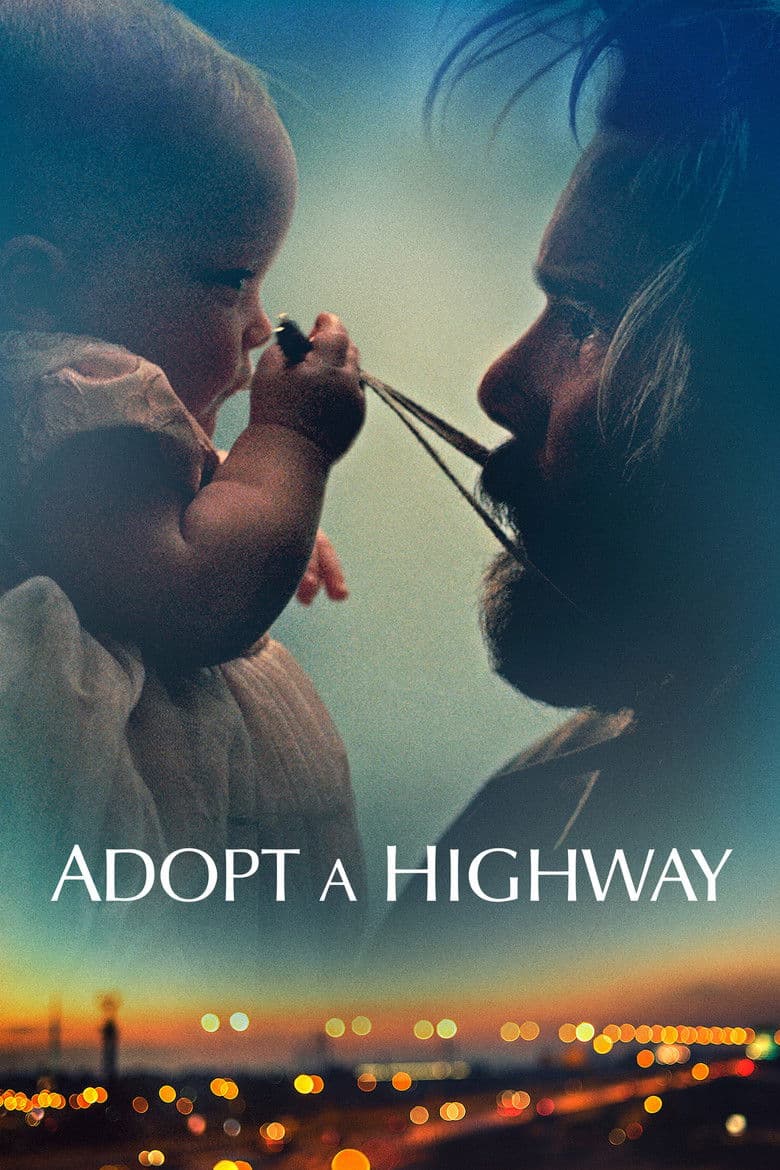
Russ Millings leaves a California prison after serving 21 years for a third strike tied to marijuana. He takes a dishwashing job and tries to learn how the modern world works after missing most of the internet age. When he finds a baby named Ella in a dumpster, he hides her and tries to care for her while fearing the police and a return to prison. The film is a quiet, sad, and sometimes gentle drama about loneliness, fatherhood, and a second chance.
The film gives a clear but limited political edge to Russell’s story. The opening uses Bill Clinton’s tough-on-crime speech and points to California’s three-strikes law as the reason a minor drug crime ruined a young man’s life. A desk clerk also says that Russell is not Black when he describes his prison sentence, which briefly raises the issue of unequal drug punishment. The rest of the story stays with Russell’s care for Ella, his trip to see his dead father’s things, and his effort to give Ella a better future, rather than making identity politics the main subject.
Community feedback
Was our 33% Woke rating accurate?
Breakdown
These are the editorial factors and ratings behind our score for Adopt a Highway.
Woke representation / casting
Not present. The film centers on a white male lead and uses a mixed supporting cast in a present-day California story. It does not make the cast’s identities a message or a plot point.
0%
Woke political dialogue
The film opens with Bill Clinton’s tough-on-crime speech about three-strikes and drug sentencing. A desk clerk tells Russell that he is not Black when he describes his prison term, which briefly points to unequal drug punishment. Parole meetings keep the rules of reentry in the spoken story. The film does not turn these points into repeated speeches about current identity politics.
26%
Identity-driven story themes
The story asks viewers to see Russell as a kind, hurt man instead of only as a criminal. It treats a long prison term for a minor drug crime and weak reentry help as forces that can damage a person’s whole life. The film also makes male fear, care, and fatherhood more important than a tough-guy image. These ideas shape Russell’s full journey, but the film does not center race, sexuality, or a broad identity campaign.
28%
Western institutional / cultural critique
The film treats California’s three-strikes law as a harsh rule that kept Russell in prison for 21 years over marijuana. It shows parole rules, lost skills, and weak help for people returning to society as parts of a system that still controls him. The opening and later reentry scenes keep this criticism visible. The story focuses on criminal justice policy and does not attack religion, family life, capitalism, or Western culture as a whole.
35%
Woke character or canon changes
Not relevant. The film is an original story about Russell Millings and Ella. It does not change an established character or retell a real historical event.
0%
Anti-woke backlash and complaints
Not present. No anti-woke reaction was found in the separate X pass or in the reviewed Reddit, Letterboxd, Rotten Tomatoes, and news results. The few complaints focused on plot logic, pacing, and the ending.
0%
Creator track record context
Logan Marshall-Green has a mild record of stories about prison, reentry, and compassion for misunderstood people. Ethan Hawke has supported same-sex marriage and called himself a feminist, while Jason Blum has made some political comments and backed inclusion efforts. The other listed producers and the casting director have little public activist history in the cached summaries. This gives the film mild creator track record context, but it is not a strong identity signal.
23%
Production
Movie · 2022
London, 1953. Mr. Williams, a veteran civil servant, is an important cog within the city's bureaucracy as it struggles to rebuild in the aftermath of World War II.
Movie · 2016
On 15 January 2009, the world witnessed the 'Miracle on the Hudson' when Captain 'Sully' Sullenberger glided his disabled plane onto the Hudson River, saving the lives of all 155…
Movie · 2025
A logger leads a life of quiet grace as he experiences love and loss during an era of monumental change in early 20th-century America.

Movie · 2017
In 1950, amidst the ravages of the Korean War, Sergeant Süleyman stumbles upon a a half-frozen little girl, with no parents and no help in sight and he risks his own life to save…
Movie · 2026
While people across 1990s Iraq struggle to survive the war and food shortages, Saddam Hussein requires each school in the country to prepare a cake to celebrate his birthday.
Movie · 2019
Richard Jewell thinks quick, works fast, and saves hundreds, perhaps thousands, of lives after a domestic terrorist plants several pipe bombs and they explode during a concert…

Movie · 2023
American ballet dancer Joy Womack is accepted into Moscow's infamously tough Bolshoi Ballet Academy, with the dream of becoming a great ballerina.

Movie · 2016
In a desolate war zone where screams of the innocent echo, on the very line between disaster and valor, 7 Maroon Berets will dance with death.
