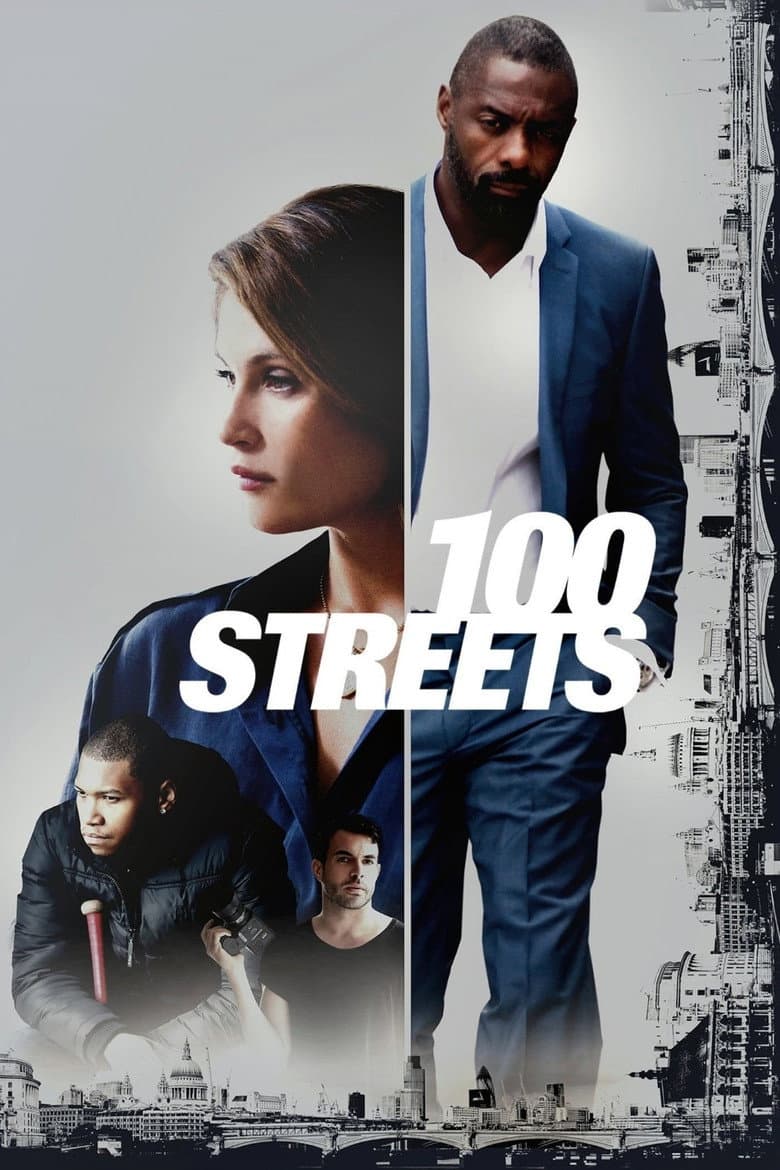
100 Streets follows three stories in one small part of present-day London. Max is a former England rugby captain whose drinking, drug use, and cheating push his marriage toward collapse. Kingsley sells drugs but hopes to leave crime and become an actor after meeting an older theatre man during community service. George, a taxi driver, faces guilt and fear after a road accident while he and his wife Kathy try to adopt a child. The tone is serious, sad, and sometimes overly dramatic.
The film gives clear attention to London’s mix of rich and poor people and to black and white characters sharing the same streets. Kingsley’s story links crime, class, race, family pressure, and the hope of a better life through art. The film asks viewers to feel for people from very different backgrounds, but it does not build its story around a political speech or a modern identity campaign. Its main messages concern personal choices, loneliness, family damage, chance, and the chance to change.
Community feedback
Was our 23% Woke rating accurate?
Breakdown
These are the editorial factors and ratings behind our score for 100 Streets.
Woke representation / casting
100 Streets places black actors in two prominent roles, Max and Kingsley, while most other central roles are white. The film’s official framing calls attention to London’s social and ethnic mix. The casting fits a modern London setting and does not create a clear story mismatch. The visible race mix gives representation a small but noticeable place in the film.
18%
Woke political dialogue
Not present. The dialogue deals with marriage, crime, money, charity, and personal failure. It does not push DEI, gender-role, or activist ideas.
0%
Identity-driven story themes
The film repeatedly links a black young man’s escape from drug dealing with crossing class lines and entering theatre. The story places wealthy, middle-class, and estate lives in the same small area. These choices make race, class, and shared human worth part of the story, with a clear push toward empathy. The film does not turn those ideas into a present-day identity campaign, so the theme stays mild rather than central.
28%
Western institutional / cultural critique
Max’s power as a sports celebrity is tied to cheating, control, and angry behavior toward his wife. Emily pushes back against being treated as a dependent wife and tries to return to acting. This gives the film a mild critique of male entitlement and old gender roles. The story keeps the issue inside one broken marriage and does not attack men, family life, or Christianity as a whole.
15%
Woke character or canon changes
Not relevant. The film is an original story set in present-day London. It does not change a known character, book, historical person, or real event.
0%
Anti-woke backlash and complaints
Not present. No anti-woke backlash was found in the supplied X search. News and audience coverage focused on the film’s linked stories, acting, and weak ending rather than DEI or identity politics. No notable anti-woke controversy was reported.
0%
Creator track record context
The director has no known activist record. The writer has shown interest in class contrast and complex young black characters, but not a lasting identity-politics campaign. Idris Elba has spoken about race in Hollywood and supported anti-knife-crime work. The wider producing group has mild social or human-rights links, not a strong activist pattern.
12%
Production
Movie · 2016
On 15 January 2009, the world witnessed the 'Miracle on the Hudson' when Captain 'Sully' Sullenberger glided his disabled plane onto the Hudson River, saving the lives of all 155…
Movie · 2017
Members of the Granite Mountain Hotshots battle deadly wildfires to save an Arizona town.
Movie · 2022
London, 1953. Mr. Williams, a veteran civil servant, is an important cog within the city's bureaucracy as it struggles to rebuild in the aftermath of World War II.
Movie · 2016
In a desolate war zone where screams of the innocent echo, on the very line between disaster and valor, 7 Maroon Berets will dance with death.
Movie · 2019
Richard Jewell thinks quick, works fast, and saves hundreds, perhaps thousands, of lives after a domestic terrorist plants several pipe bombs and they explode during a concert…
Movie · 2022
Based on a true tragedy, the emotionally triggering film sheds light on the plight of Kashmiri Pandits (Hindus), a religious minority in the 1990s Kashmir valley, who were…
Movie · 2020
A man refuses all assistance from his daughter as he ages and, as he tries to make sense of his changing circumstances, he begins to doubt his loved ones, his own mind and even…
Movie · 2022
A quiet, neglected girl is sent away from her dysfunctional family to live with relatives for the summer. She blossoms in their care, but in this house where there are meant to be…
