TV Show review
Started April 23, 2026 · Returning Series · Based on 1 season, 10 episodes through April 23, 2026 · TV-PG
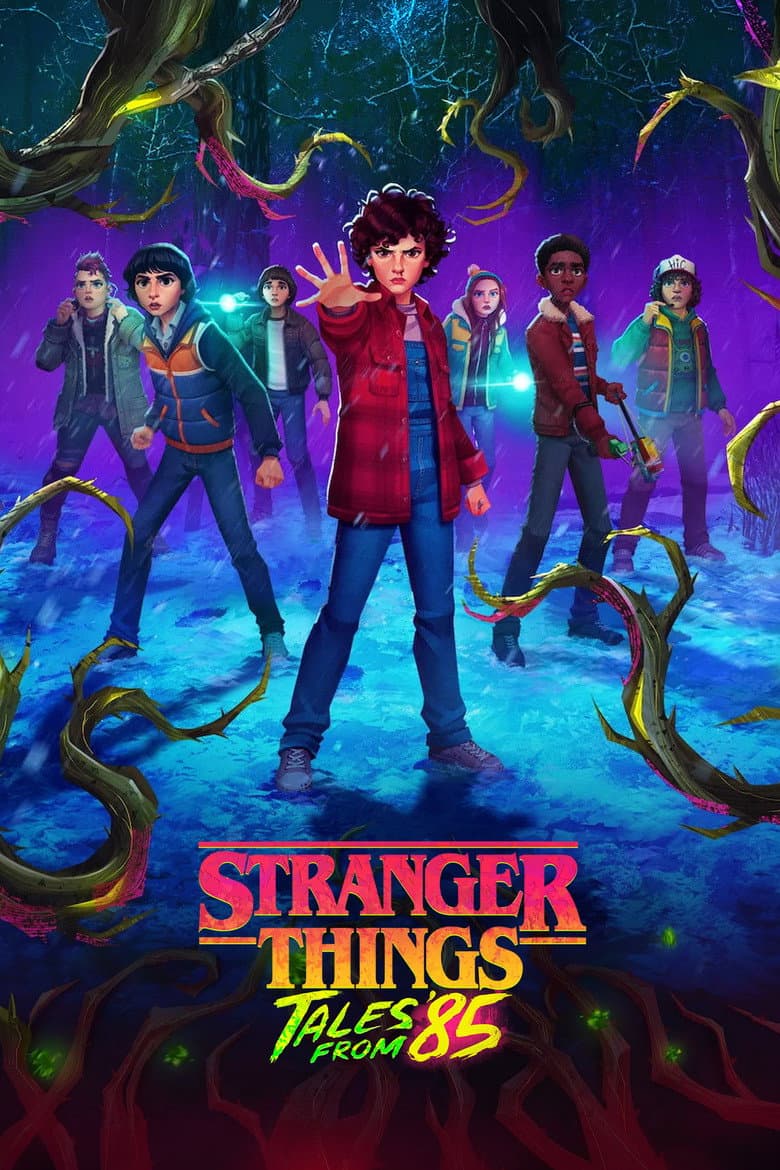
Nikki Baxter is a new student in Hawkins, Indiana, during the winter of 1985. She joins Eleven, Mike, Will, Dustin, Lucas, and Max after strange plant creatures begin attacking the town. The friends form the Hawkins Investigators Club and follow clues from a secret science project to a growing monster called the Queen. The season uses bright animation, jokes, young romance, school trouble, and scary fights to make a lighter adventure than the live-action show.
The clearest woke signals come from Nikki's role and the way the girls are shown as strong decision makers. Nikki is a punk outsider, a skilled inventor, and a key fighter who saves the group several times, while Eleven and Max also lead fights and challenge the boys when they try to decide for them. Several scenes stress that girls can choose their own risks and that outsiders should be accepted, while Nikki helps Will gain confidence. These ideas support the friendship story, but they are recurring character points rather than the main subject of the season.
Community feedback
Was our 46% Woke rating accurate?
Breakdown
These are the editorial factors and ratings behind our score for Stranger Things: Tales from '85.
Woke representation / casting
The main child group has three prominent girls and three boys, with Eleven as the strongest fighter, Max as a regular fighter, and Nikki as the new lead problem solver. Nikki has a striking punk look and sits at the center of the group. Lucas remains the only Black member of the main child group, which fits the established story and does not create a new race-swap issue. The repeated female fighter and inventor roles make the representation pattern noticeable, but the show does not present it as a diversity campaign.
41%
Woke political dialogue
Eleven tells Mike that he cannot speak for her after he blocks her from fighting. Max says the boys should have listened to Eleven's plan. Nikki says she can make her own decisions when Will questions her choices. These lines recur as short parts of group arguments, but the season does not stop for speeches about DEI, identity politics, or activism.
28%
Identity-driven story themes
Nikki is written as an outsider who moves often and expects to leave before she can belong. The season makes her a confident inventor, fighter, and problem solver who rescues the group several times. Eleven and Max also take major action, and the boys learn to respect their choices after trying to control the plan. Nikki helps Will treat his outsider label as a source of strength, so acceptance and female competence recur through the season. The message supports the adventure but does not replace the monster mystery.
49%
Western institutional / cultural critique
Not present. The story uses Hawkins Lab experiments and Hopper's rules as plot problems, but it does not frame them as a modern attack on police, family, religion, or Western culture.
0%
Woke character or canon changes
Not relevant. The show adds Nikki and changes the voice cast, but it does not change an established character's race, gender, sexuality, or hero role.
0%
Anti-woke backlash and complaints
A small X reaction called Nikki's haircut and wardrobe woke and described the animation as gay. The posts came from anonymous or very small accounts with no meaningful reach. Some fan posts called Nikki a modern Mary Sue, but many of those complaints focused on story quality or canon instead of identity politics. No major anti-woke campaign or boycott was found.
18%
Creator track record context
Ross and Matt Duffer have a recent LGBTQ story in the main Stranger Things series and have defended it publicly. Eric Robles and Jennifer Muro have no clear activist record in the available profiles. Most writers, producers, and directors have low or unclear identity-driven records. Chris Wyatt and Molly Miller add limited gender or social-justice context, but the overall creator signal is mild.
18%
Production
TV Show · 2024
A journey into the fearsome Galactic Empire through the eyes of two warriors on divergent paths.
TV Show · 2026
After the Clone Wars, Maul plots to rebuild his criminal syndicate on a planet untouched by the Empire.
TV Show · 2021
The 'Bad Batch' of elite and experimental clones make their way through an ever-changing galaxy in the immediate aftermath of the Clone Wars.
TV Show · 2022
Journey into the lives of two distinctly different Jedi from the prequel era – Ahsoka Tano and Count Dooku. Each will be put to the test as they make choices that will define…
TV Show · 2022
When an explosive battle with Dr. Eggman shatters the universe, Sonic races through parallel dimensions to reconnect with his friends and save the world.
TV Show · 2020
Merlin’s apprentice joins Arcadia’s heroes on a time-bending adventure in Camelot, where conflict is brewing between the human, troll and magical worlds.
TV Show · 2025
Two outlaws must navigate the galaxy's dangerous underworld as they chart their destinies.
TV Show · 2018
The Boss Baby brings his big brother Tim to the office to teach him the art of business in this animated series sprung from the hit film.
