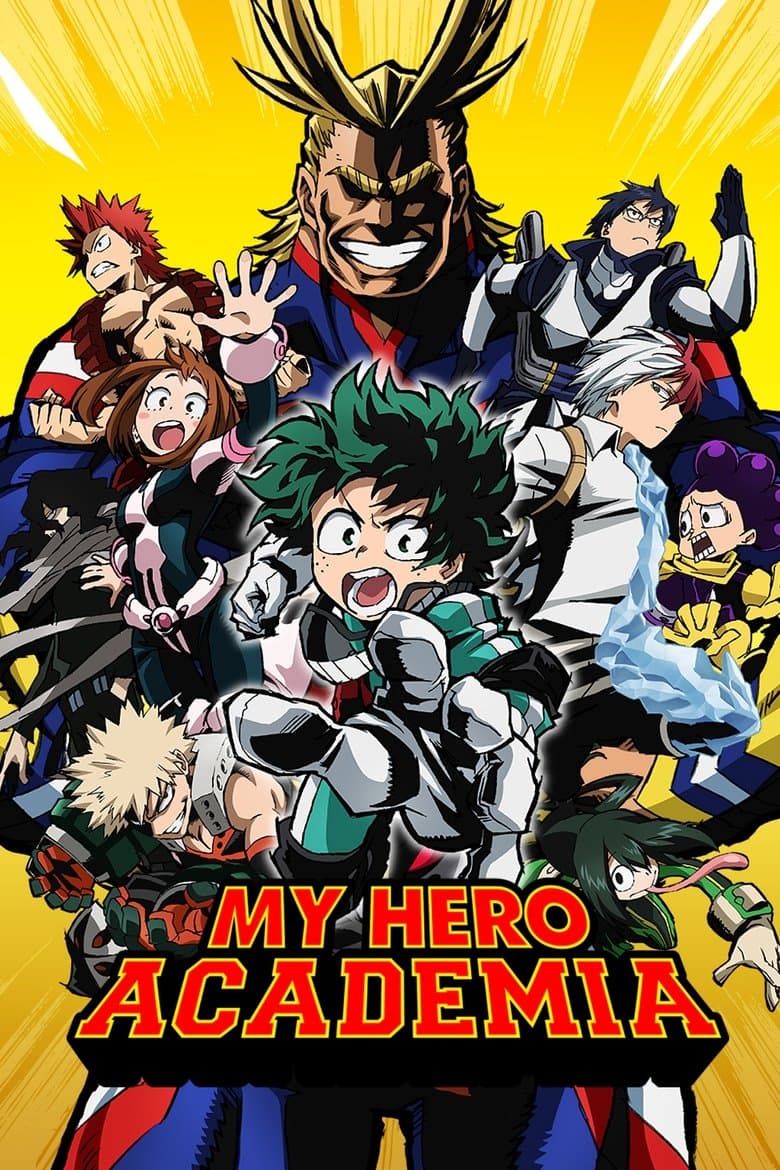
Started April 3, 2016 · Ended · Based on 8 seasons, 170 episodes through December 13, 2025 · TV-14 · 24 min · Japanese
My Hero Academia follows Izuku Midoriya, a kind but powerless boy who dreams of becoming a hero. In a Japan where about 80 percent of people have superpowers called Quirks, the top hero All Might gives Izuku a power and a chance to enter U.A. High School. Izuku trains with his classmates while facing villains, dangerous exams, and a society that depends too much on famous heroes. The show mixes school comedy, bright superhero action, painful family drama, and a darker final war.
Identity themes grow as the story continues. The show treats Quirkless people and people with visibly different bodies as targets of unfair treatment, then asks whether hero society failed people such as Shigaraki, Toga, and Spinner. Season seven gives Shoji a major speech about prejudice against heteromorphs, while season eight shows the heroes rebuilding society and trying to understand villains instead of only destroying them. The show also includes confirmed transgender characters Magne and Tiger, many powerful female heroes, and Toga’s intense feelings toward both Izuku and Ochaco, but these ideas remain part of a large action story rather than its only subject.
Community feedback
Was our 46% Woke rating accurate?
Breakdown
These are the editorial factors and ratings behind our score for My Hero Academia.
Woke representation / casting
Several women hold visible hero roles, including Mirko, Star and Stripe, Ryukyu, and Nana Shimura. Magne and Tiger are confirmed transgender characters, although neither leads most of the story. The show uses a large Japanese cast without a clear race-based diversity campaign.
22%
Woke political dialogue
Shoji asks civilians to stop judging people whose powers change their bodies. Uraraka asks why Toga was treated as a monster instead of a troubled girl. Spinner and Shigaraki blame hero society for rejecting people who do not fit its rules. These lines appear mainly in the later war and rebuilding arcs, while most episodes use ordinary hero and battle talk.
34%
Identity-driven story themes
The story repeatedly asks how society treats people whose powers, bodies, or feelings seem abnormal. Deku starts as a powerless child who is told he cannot be a hero, while Toga, Shigaraki, and Spinner receive backstories about rejection and neglect. Uraraka tries to understand Toga, and Shoji challenges hatred of heteromorphs, people whose powers change their bodies. The final season makes empathy, shared responsibility, and rebuilding after social failure part of the ending.
48%
Western institutional / cultural critique
Endeavor’s drive to become No. 1 causes him to abuse his wife and children, and the story condemns that control. The hero rankings and the Public Safety Commission show how fame and official power can harm people. These criticisms target the fictional Japanese hero system, not Christianity, Western culture, or conservative politics.
18%
Woke character or canon changes
Not relevant. The anime follows Horikoshi’s manga without a race, gender, sexuality, or hero-role swap. The Maruta name change happened in the manga after a historical controversy, not as a woke rewrite in the anime.
0%
Anti-woke backlash and complaints
Small posts call the show woke because it includes transgender or LGBT characters such as Magne and Tiger. Tiny accounts also call Horikoshi or the later arc “Western catered.” No named boycott, review bomb, or broad news cycle formed around those claims. Praise that the show is not woke is approval, so it does not raise this score.
10%
Creator track record context
Horikoshi’s work repeatedly centers rejected people, social exclusion, trauma, and institutional failure, and his available creator profile rates him 50/100. Kuroda’s available profile rates him 0/100, and the other named directors and producers are mostly rated from 0 to 22/100. Horikoshi’s interviews describe heroism as helping others and making room for ordinary people, but they do not present a party or DEI campaign. The team therefore supports the show’s social themes more than it shows a strong activist record.
28%
Production
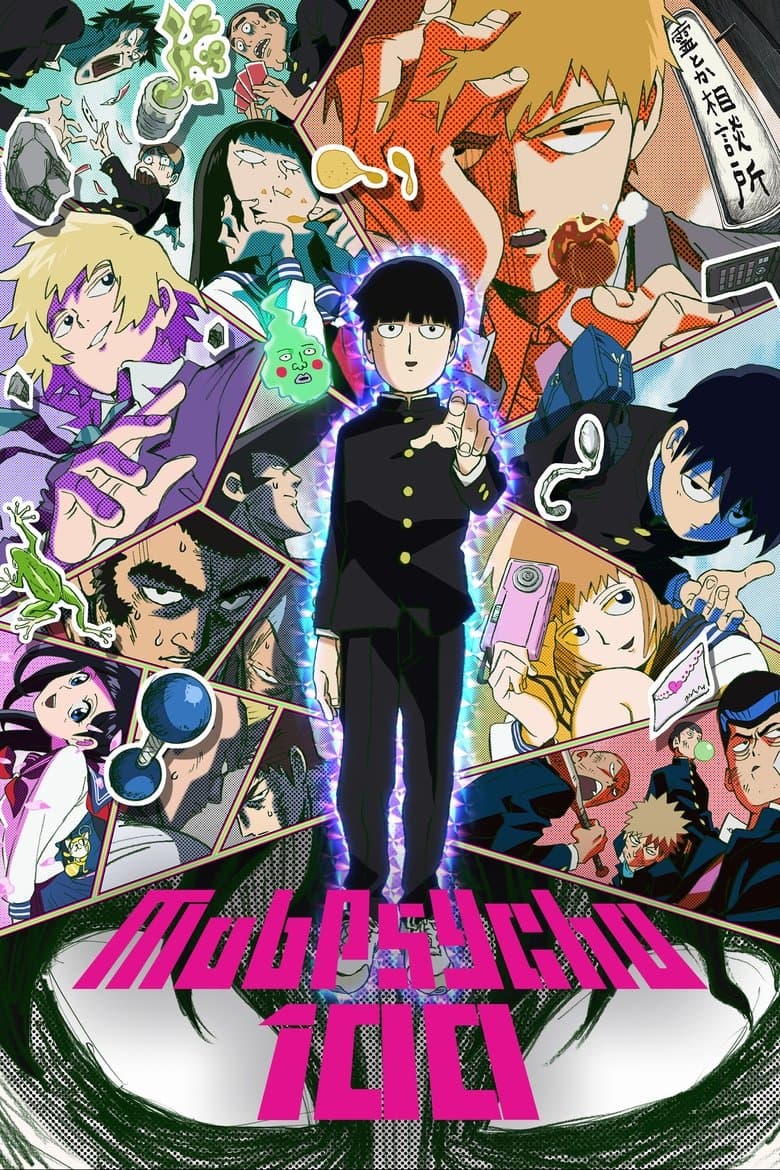
TV Show · 2016
Shigeo Kageyama, a.k.a. "Mob," is a boy who has trouble expressing himself, but who happens to be a powerful esper.
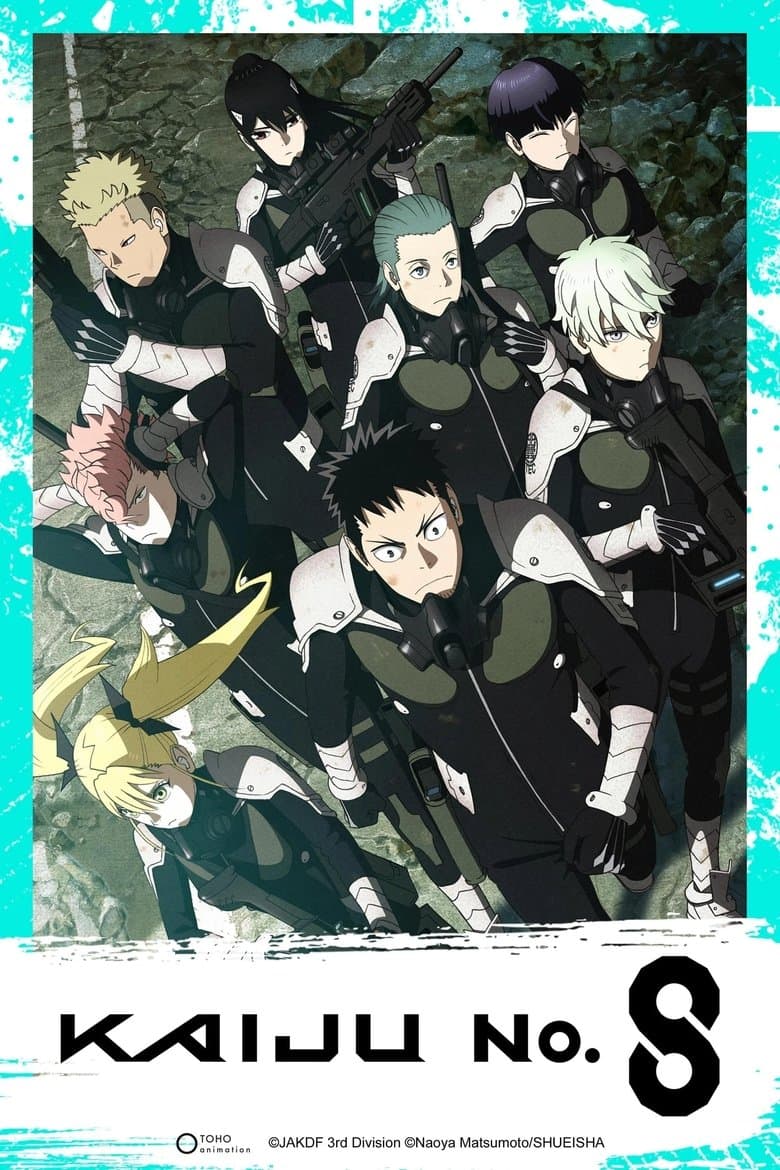
TV Show · 2024
In a world plagued by creatures known as Kaiju, Kafka Hibino aspired to enlist in The Defense Force. He makes a promise to enlist with his childhood friend, Mina Ashiro.
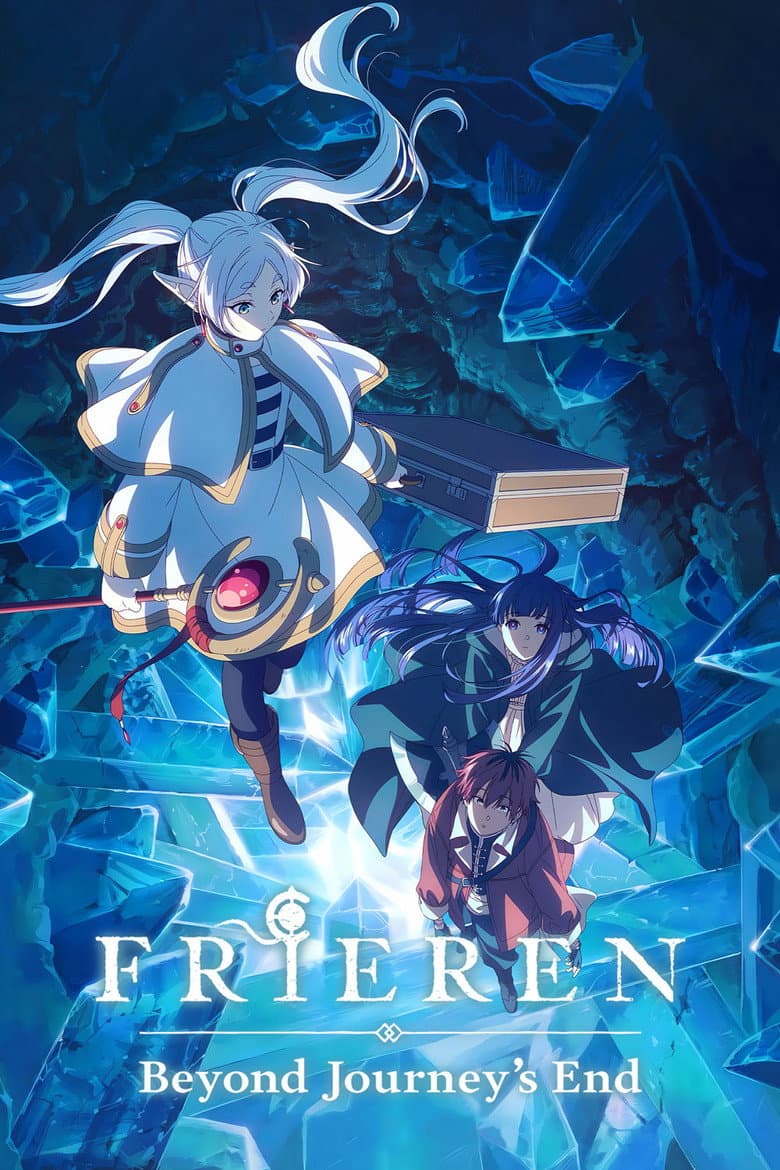
TV Show · 2023
After the party of heroes defeated the Demon King, they restored peace to the land and returned to lives of solitude.
TV Show · 2022
After losing his home to a powerful enemy, a hot-tempered fighter trains under his zealous grandfather while awaiting his chance for revenge.
TV Show · 2019
Year 198 of the Solar Era in Tokyo, special fire brigades are fighting against a phenomenon called spontaneous human combustion where humans beings are turned into living infernos…
TV Show · 2021
Two siblings - an idealistic teenage boy and his naive younger sister - are forced to pilot an abandoned Jaeger across a hostile landscape in a desperate attempt to find their…
TV Show · 2024
Mysteriously transformed into mini versions of themselves, Goku and his friends travel to the Demon Realm to uncover the truth and find a cure.
TV Show · 2016
After a traffic accident, Kazuma Sato’s disappointingly brief life was supposed to be over, but he wakes up to see a beautiful girl before him.
