Started July 5, 2019 · Ended · Based on 3 seasons, 73 episodes through April 4, 2026 · TV-14 · 24 min · Japanese
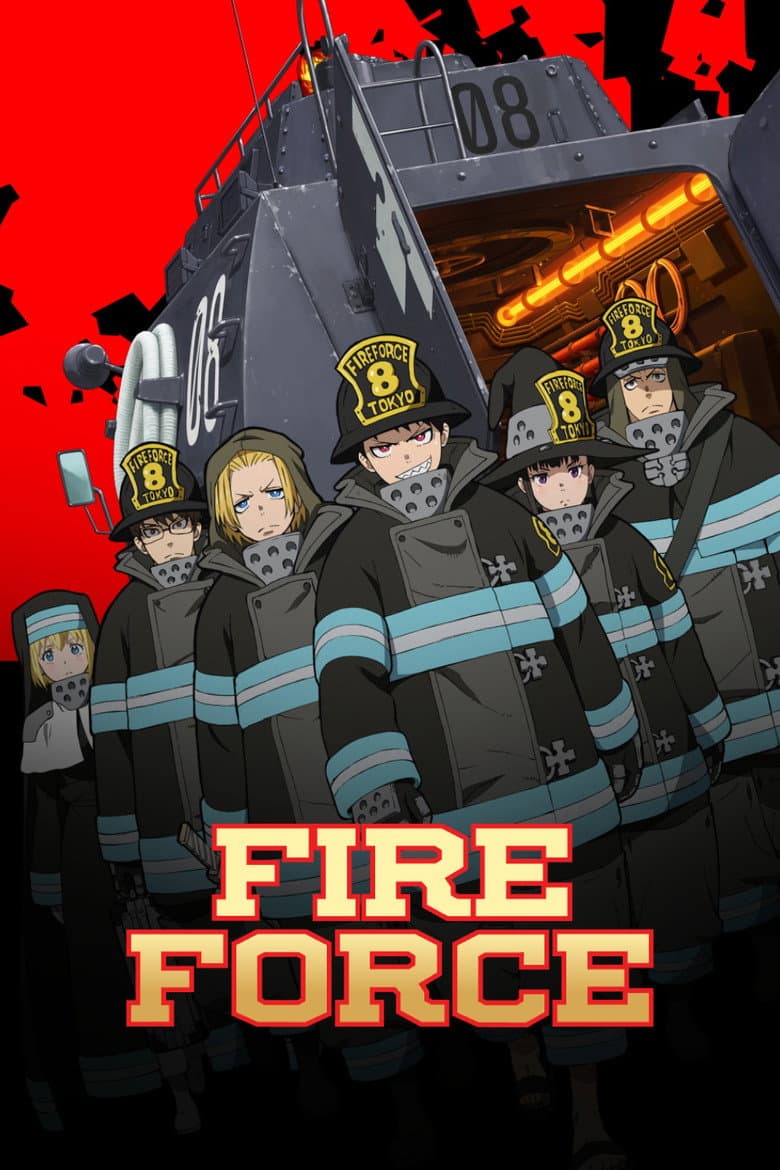
Fire Force follows Shinra Kusakabe, a young firefighter who can shoot flames from his feet. He joins Company 8 in a future Tokyo where some people suddenly burn alive and become Infernals. The team fights fires, a secret group called the White-Clad, and the mystery behind the fire that killed Shinra’s family. The tone mixes fast battles, dark deaths, religious mystery, comedy, and sexual fanservice.
The show presents the Holy Sol Temple as a powerful religious system that hides the truth and helps control society. It repeats the idea that shared belief can shape reality, especially in the later seasons. Season 3 gives one major episode to Tamaki’s clothes-coming-off gag, public shame, and a message against shaming sexual expression. These elements are noticeable, but the main story stays focused on faith, family, sacrifice, loyalty, and hope instead of modern identity politics.
Community feedback
Was our 25% Woke rating accurate?
Breakdown
These are the editorial factors and ratings behind our score for Fire Force.
Woke representation / casting
Not present. The story uses fictional characters in a future Tokyo shaped by Japanese names, customs, and institutions. It does not present a diversity-first cast or use identity-based casting language. Strong female fighters appear, but men also lead most teams and battles.
0%
Woke political dialogue
Several scenes use direct lines about gender and sexual shame. Maki’s brother says she is too frail to handle a dangerous task because she is a girl, and she proves him wrong. In season 3, a crowd calls Tamaki indecent before other characters argue that desire should not be treated as shameful. These lines appear in a few focused scenes, not throughout the series.
26%
Identity-driven story themes
The show gives Maki, Hibana, Arrow, Haumea, Inca, and Tamaki important roles, but male characters still lead the main team and most major fights. Season 2 rejects the idea that Maki is too weak for dangerous work because she is a girl. Season 3 turns Tamaki’s recurring clothes-coming-off gag into a larger message about sexual expression, public shame, and hope. The message is strongest in one late episode and does not define the whole show.
30%
Western institutional / cultural critique
The Holy Sol Temple is a powerful religious institution that hides the truth about its origin and helps control society. The empire and Haijima Industries also hide dangerous experiments and human sacrifices. The show presents these groups as villains inside a fantasy mystery. Sister Iris keeps a sincere personal faith, so the story does not make a broad modern attack on Christianity or Western culture.
18%
Woke character or canon changes
Not relevant. The anime adapts Atsushi Ohkubo’s manga without a reported race, gender, sexuality, or hero-role change to an established character or historical figure. The visible adaptation changes concern pacing, scene cuts, and broadcast edits.
0%
Anti-woke backlash and complaints
Not present. Public complaints focused on Tamaki’s fanservice, the treatment of a teenage character, pacing, adaptation cuts, and the ending. The available discussion does not show a clear anti-woke, anti-DEI, or anti-left campaign against the show.
0%
Creator track record context
Most key directors, producers, and writers have no documented activist or DEI record. Atsushi Ohkubo is mainly linked to firefighters, science, family, teamwork, and action fantasy. Yoriko Tomita has a broader pattern of writing about gender presentation and sexuality, but those subjects do not drive Fire Force. The creator context gives this title only a weak signal.
7%
Production
TV Show · 2024
They say whatever doesn’t kill you makes you stronger, but that’s not the case for the world’s weakest hunter Sung Jinwoo.
TV Show · 2024
In a world plagued by creatures known as Kaiju, Kafka Hibino aspired to enlist in The Defense Force. He makes a promise to enlist with his childhood friend, Mina Ashiro.
TV Show · 2016
Shigeo Kageyama, a.k.a. "Mob," is a boy who has trouble expressing himself, but who happens to be a powerful esper.
TV Show · 2019
One fateful day, all of humanity was petrified by a blinding flash of light. After several millennia, high schooler Taiju awakens and finds himself lost in a world of statues.
TV Show · 2021
Two siblings - an idealistic teenage boy and his naive younger sister - are forced to pilot an abandoned Jaeger across a hostile landscape in a desperate attempt to find their…
TV Show · 2022
Denji has a simple dream—to live a happy and peaceful life, spending time with a girl he likes. This is a far cry from reality, however, as Denji is forced by the yakuza into…
TV Show · 2016
After a traffic accident, Kazuma Sato’s disappointingly brief life was supposed to be over, but he wakes up to see a beautiful girl before him.
TV Show · 2016
In a world where superheroes have been real for decades, an accountant with zero powers comes to realize his city is owned by a super villain.
