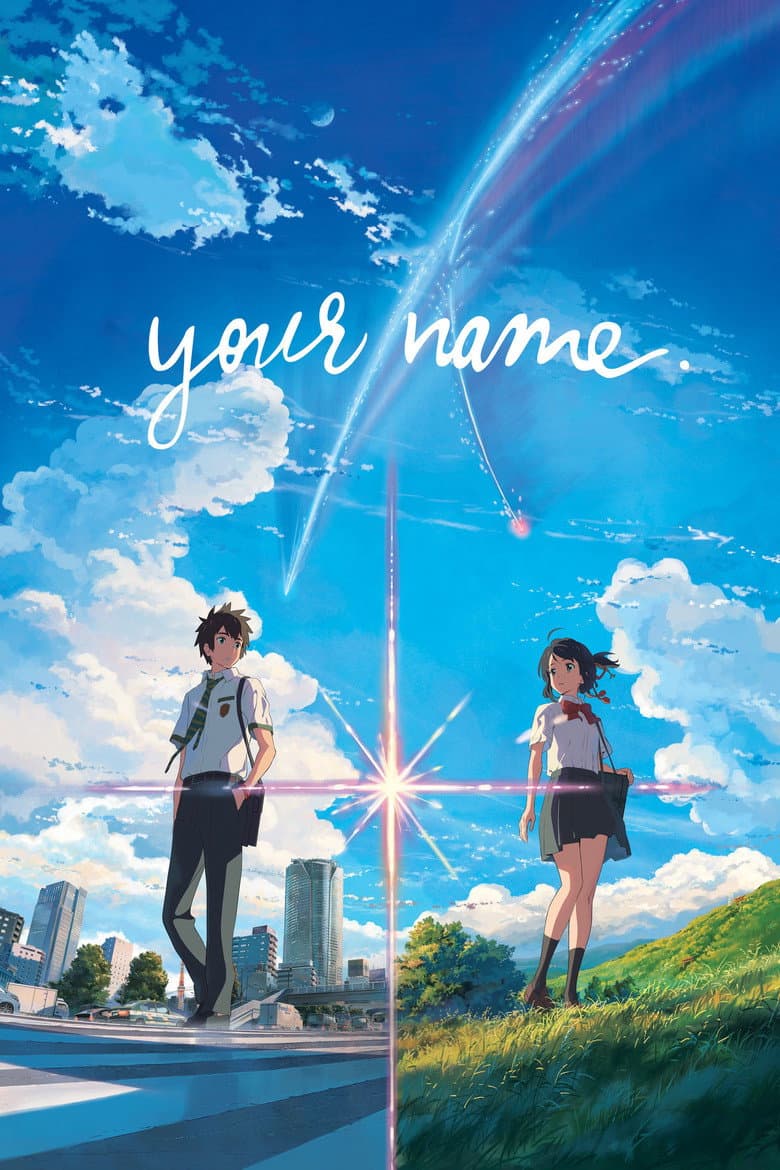
Your Name follows Mitsuha, a teenage girl in a small mountain town, and Taki, a teenage boy in busy Tokyo. They wake up in each other's bodies on random days, so each must learn the other person's home, school, family, and habits. Their strange link turns into a search across time when a comet destroys Mitsuha's town and separates their lives by three years. The movie shifts from funny body-swap scenes to a sad but hopeful romance about memory, fate, family, and saving a community.
The main identity-related element is the repeated switch between a boy's body and a girl's body. The film uses that change to show that people can act differently from usual expectations for boys and girls, while making jokes about clothes, bodies, dating, and daily routines. Mitsuha gains confidence in Taki's life, and Taki learns more about Mitsuha's family, shrine duties, and town. The story ends as a traditional boy-and-girl love story, so the gender play supports empathy and romance rather than a modern political message.
Community feedback
Was our 11% Woke rating accurate?
Breakdown
These are the editorial factors and ratings behind our score for Your Name..
Woke representation / casting
Not present. The original film is set in Japan, and its main characters and Japanese voice cast match that story world. The film does not present casting as a diversity or identity campaign.
0%
Woke political dialogue
Not present. The dialogue centers on body swapping, romance, family tradition, time, and a comet disaster. It does not contain repeated lines about DEI, activism, race, sexuality, or current political causes.
0%
Identity-driven story themes
The body-swap premise repeatedly puts a Japanese boy and girl in each other's bodies. The film uses this to play with expected male and female behavior and to show each teen learning the other's daily life. The gender element stays tied to comedy, empathy, and romance. The larger story is about memory, fate, Shinto tradition, disaster, and saving a town.
18%
Western institutional / cultural critique
Not present. The film contrasts rural tradition with modern Tokyo, but it does not attack Western institutions, family life, Christianity, or traditional gender roles through a modern activist message. The town mayor's refusal to believe Mitsuha is part of the disaster plot.
0%
Woke character or canon changes
Not relevant. The film is an original story written for animation, not a remake or adaptation that changes an established character. Its body swap is part of the original premise.
0%
Anti-woke backlash and complaints
Not present. Major reported backlash focused on fears that a planned Hollywood remake would whitewash the Japanese setting and cast. That complaint targeted a later remake, not the original film for pushing woke or activist content.
0%
Creator track record context
Makoto Shinkai has a recorded creator score of 10/100. His work often includes loneliness, disaster, social pressure, and some climate fear, but it is not built around activism or DEI. The listed producers and casting directors have recorded scores from 0 to 9 and no clear identity-first public profile. This supports a low creator track record context score.
8%
Production
Movie · 2018
After his classmate and crush is diagnosed with a pancreatic disease, an average high schooler sets out to make the most of her final days.

Movie · 2019
A family dog – with a near-human soul and a philosopher's mind – evaluates his life through the lessons learned by his human owner, a race-car driver.
Movie · 2016
This hand drawn animated film, based on the award winning graphic novel by Raymond Briggs, is an intimate and affectionate depiction of the life and times of his parents, two…

Movie · 2023
Mia and Kyle, two misfit American teens, travel to Spain in search of Mia's birth mother. As the pair road trip through the picturesque cities of Andalusia and fall in love, they…
Movie · 2025
From the songs of his mother’s heart to the whispers of a faithful God, David’s story begins in quiet devotion.

Movie · 2020
The true-life story of Christian music star Jeremy Camp and his journey of love and loss that looks to prove there is always hope.
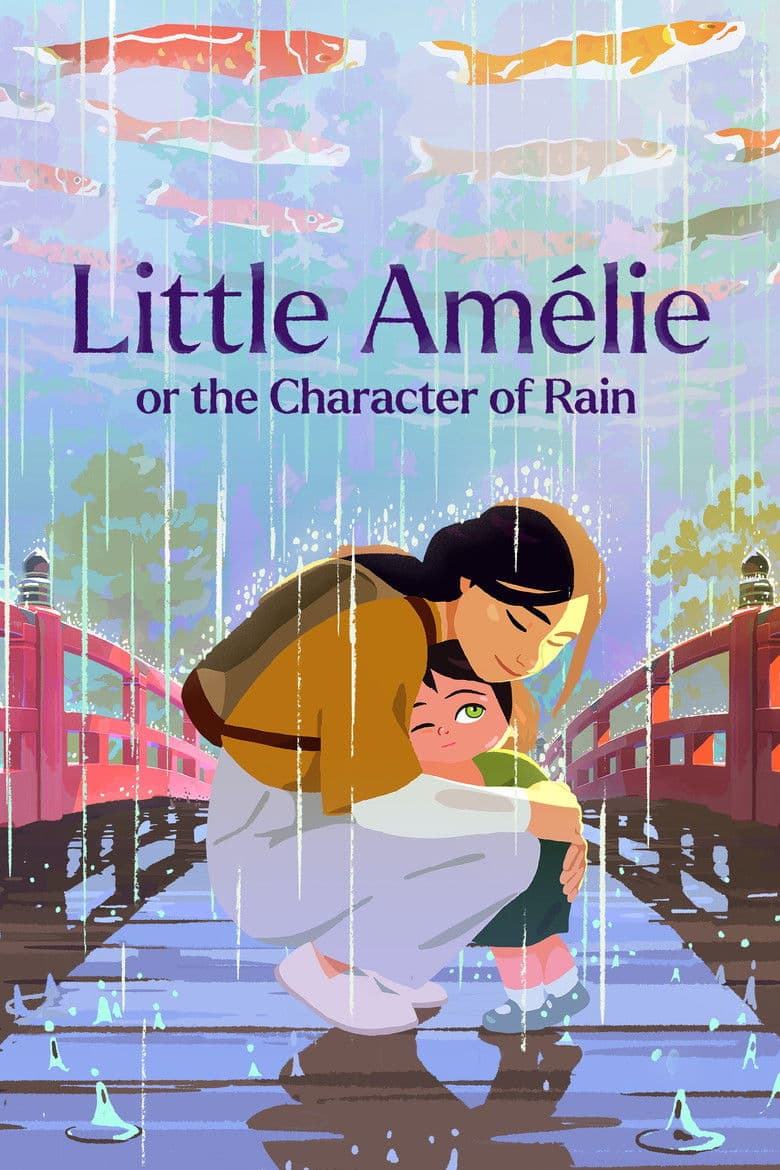
Movie · 2025
The world is a perplexing, peaceful mystery to Amélie until a miraculous encounter with chocolate ignites her wild sense of curiosity.
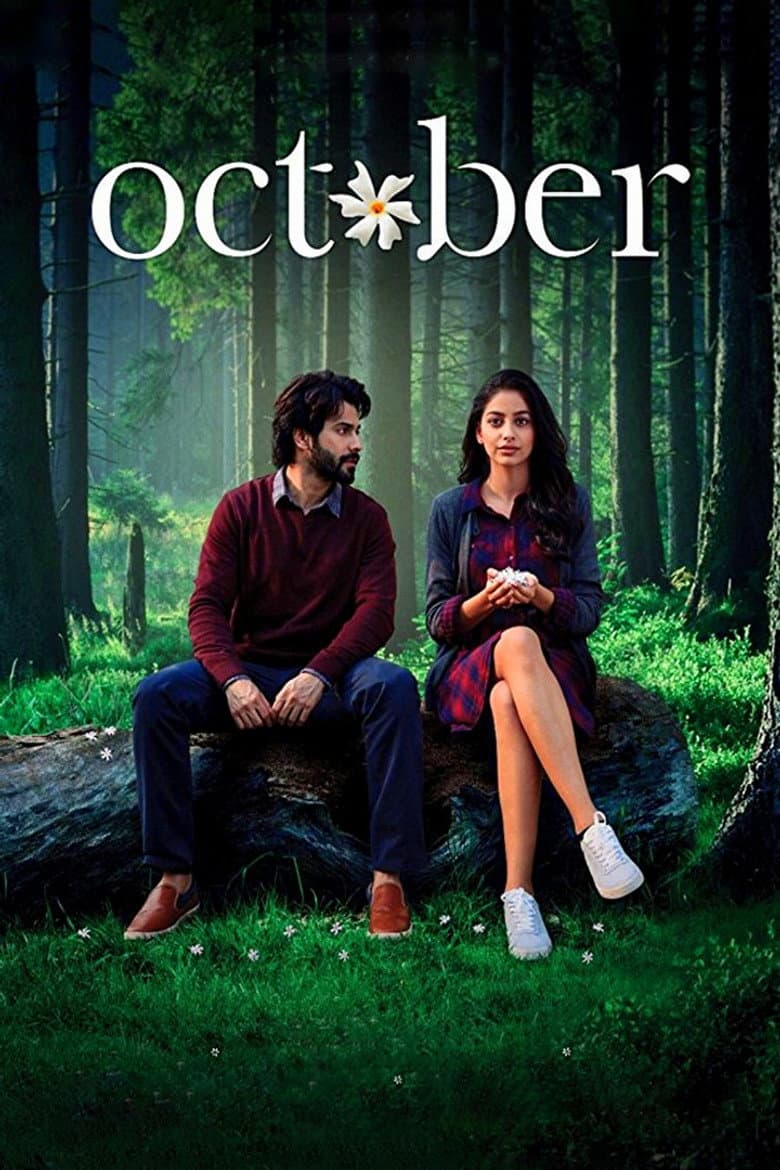
Movie · 2018
Dan, a 21-year-old carefree boy is always surrounded by a bunch of friends and fellow hotel interns who feed off each other's everyday moments, their ups and downs.
