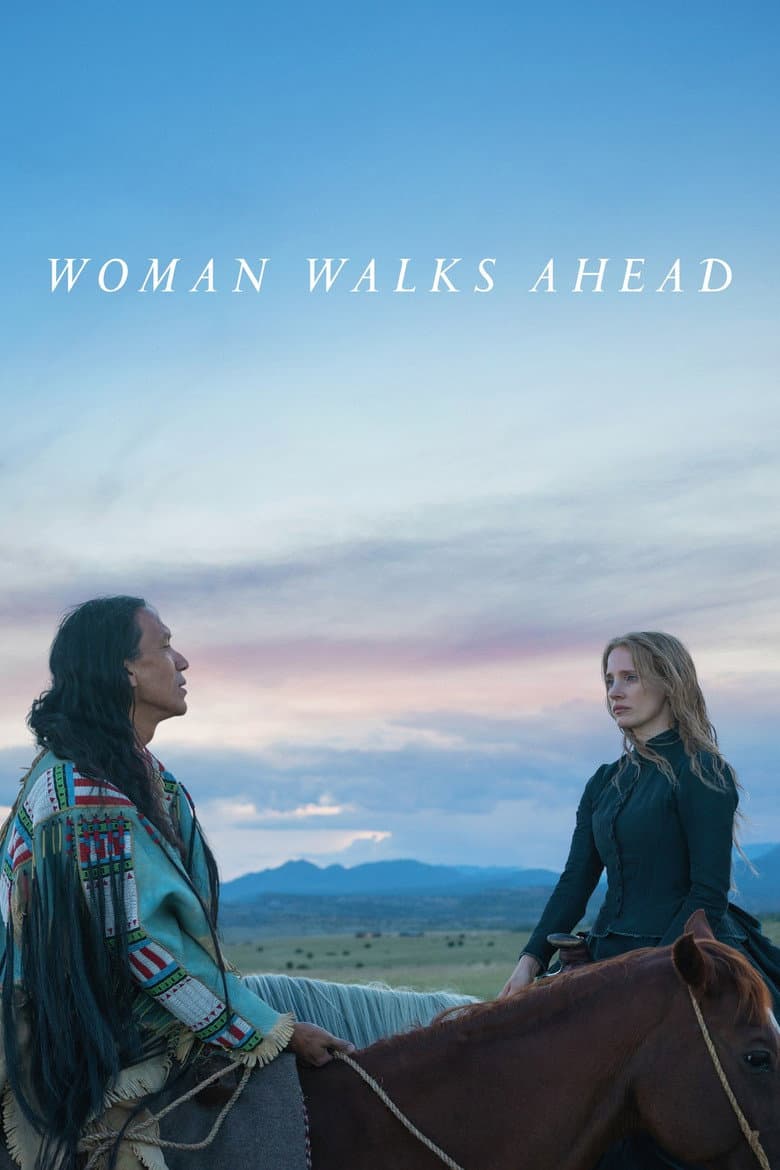
In 1890, Catherine Weldon leaves New York after her husband dies and travels alone to Standing Rock in Dakota Territory. The painter wants to make a portrait of Lakota leader Sitting Bull, but Army officers and local officials try to stop her. Catherine and Sitting Bull grow close while the government pushes a treaty that would take more Lakota land. The film mixes a serious history story with dry humor, romance, violence, and wide views of the prairie.
The film gives a white woman the main point of view as she moves from a sheltered artist to an active helper in a native land fight. Catherine speaks about women being controlled by fathers and husbands, and she says she has a democratic right to campaign against the treaty. The story presents the Army and its agents as cruel forces that use hunger, broken promises, and a rigged vote against the Lakota people. The film also praises native culture, spiritual beliefs, shared land, and resistance to government control, so its identity and social themes remain important through the second half.
Community feedback
Was our 60% Woke rating accurate?
Breakdown
These are the editorial factors and ratings behind our score for Woman Walks Ahead.
Woke representation / casting
Catherine is a white woman, and Michael Greyeyes, a native actor, plays Sitting Bull. Other major Lakota characters are also played by Indigenous performers. The director publicly described the film as giving voice to female and Native experience and as a western told through a female gaze. The casting fits the story world, so the identity signal is present but not dominant.
30%
Woke political dialogue
Catherine says that marriage stopped her from working and that she no longer needs permission from men. Catherine calls her campaign against the treaty a democratic right. Sitting Bull and his allies say that land cannot be sold and condemn government control and damage to the earth. These ideas return in several key scenes, but they remain part of the historical story.
45%
Identity-driven story themes
Catherine’s story is built around female independence and her rejection of older gender rules. The film then makes her an active helper in the Lakota fight over land, food, and political power. Catherine and Sitting Bull are both shown as people pushed aside by the dominant society. These themes shape the film from her journey through the treaty conflict.
57%
Western institutional / cultural critique
The Army and federal agents use hunger, arrests, threats, and a land treaty to control the Lakota people. The film shows officials as willing to erase native culture and use violence when the vote goes against them. Sitting Bull also challenges the idea that people can buy the earth, which gives the story a wider critique of property and Western power. The critique is strong, but it stays mainly inside the historical conflict.
48%
Woke character or canon changes
Not relevant. The film changes Catherine’s name, marital history, romance, and some events. Those are ordinary biographical changes and do not change a person’s race, sex, sexuality, or hero role.
0%
Anti-woke backlash and complaints
A small number of audience reviews call the film woke or politically correct and compare it negatively with Dances with Wolves. One complaint says the film uses fake history and modern political correctness. The wider audience response was mixed, and the X research found no anti-woke reaction.
18%
Creator track record context
Susanna White and Steven Knight have low cached woke scores and no strong activist record. Edward Zwick and Marshall Herskovitz have mild liberal and social issue backgrounds. Erika Olde, Andrea Calderwood, and Tanja Tawadjoh have stronger records supporting women and underrepresented filmmakers. Most other producers have low or neutral cached scores, so the creator signal is moderate.
30%
Production
Movie · 2019
Richard Jewell thinks quick, works fast, and saves hundreds, perhaps thousands, of lives after a domestic terrorist plants several pipe bombs and they explode during a concert…
Movie · 2025
Diagnosed with Tourette Syndrome at 15, John Davidson navigates his way against the odds through troubled teenage years and into adulthood, finding inspiration in the kindness of…
Movie · 2016
WWII American Army Medic Desmond T. Doss, who served during the Battle of Okinawa, refuses to kill people and becomes the first Conscientious Objector in American history to…

Movie · 2023
The true story of the inseparable Von Erich brothers, who made history in the intensely competitive world of professional wrestling in the early 1980s.
Movie · 2022
London, 1953. Mr. Williams, a veteran civil servant, is an important cog within the city's bureaucracy as it struggles to rebuild in the aftermath of World War II.
Movie · 2022
Based on a true tragedy, the emotionally triggering film sheds light on the plight of Kashmiri Pandits (Hindus), a religious minority in the 1990s Kashmir valley, who were…
Movie · 2023
The story of J. Robert Oppenheimer's role in the development of the atomic bomb during World War II.
Movie · 2016
After his older brother passes away, Lee Chandler is forced to return home to care for his 16-year-old nephew.
