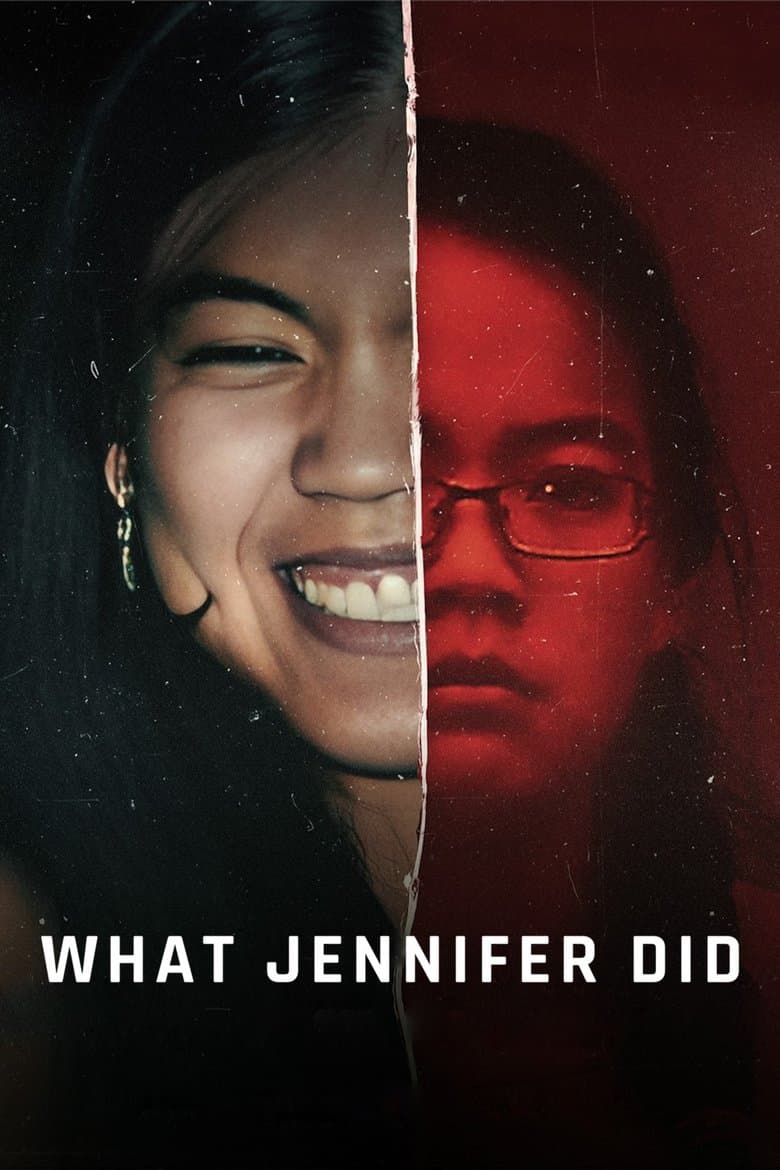
What Jennifer Did follows Jennifer Pan, a 24-year-old woman in Markham, Ontario, after she calls 911 and says armed men have attacked her family. Her mother is killed, her father is badly wounded, and Jennifer appears to be the only witness. Police soon question her story because the house shows little sign of a real robbery. The tense true-crime film uses police recordings, news clips, and interviews to show how a planned murder begins to come apart.
Jennifer has spent years hiding failed school plans and a forbidden relationship from parents who demand high grades and a safe career. The film presents that pressure, immigrant-family expectations, and her mental distress as part of the path toward the crime. It then shifts attention to her lies, her boyfriend Daniel Wong, the hired attackers, and the evidence that exposes the plan. The main message concerns family pressure, deception, selfish choices, and the terrible cost of murder.
Community feedback
Was our 18% Woke rating accurate?
Breakdown
These are the editorial factors and ratings behind our score for What Jennifer Did.
Woke representation / casting
Not present. The film follows the real Vietnamese-Canadian Pan family and uses real detectives, friends, and case footage. It does not present casting as a diversity or identity statement.
0%
Woke political dialogue
Not present. The recorded interviews discuss the crime, family pressure, school lies, mental distress, and police work. They do not contain modern identity, DEI, or activist lines.
0%
Identity-driven story themes
The film links Jennifer’s crime to pressure from parents who demand strong grades, a safe career, and control over dating. It also discusses the experience of immigrant families and the harm that can come from harsh expectations. The film keeps this as background to a murder investigation rather than a call for identity-based change. The main focus stays on lies, money, and the murder plan.
18%
Western institutional / cultural critique
The film shows the parents restricting Jennifer’s dating, school plans, and social life. It presents that family control as part of the pressure around her distress. The criticism stays inside one family and does not attack Christianity, men as a group, capitalism, or Western institutions.
12%
Woke character or canon changes
Not relevant. This is a documentary about a real criminal case, not a remake or fictional story with established characters. It does not change the case to make an identity point.
0%
Anti-woke backlash and complaints
Not present. Public complaints focused on alleged AI-altered photos, missing background, and weak editing. The reviewed complaints did not accuse the film of pushing woke, DEI, or identity politics.
0%
Creator track record context
Jenny Popplewell directed the film. Her earlier documentary Jamie: Drag Queen at 16 tells a queer youth story. She has also spoken in favor of more women directors and diverse hires. This gives mild creator track record context, but it does not show a strong activist pattern tied to this film.
28%
Production

Movie · 2022
When the young founder of a collapsing cryptocurrency exchange dies unexpectedly, irate investors suspect there's more to his death than meets the eye.

Movie · 2026
A teen slams her car into a building, killing her boyfriend and his friend. What seems like a tragic accident becomes a murder case.

Movie · 2022
A young mother’s mysterious death and her son’s subsequent kidnapping blow open a decades-long mystery about the woman’s true identity, and the murderous federal fugitive at the…

Movie · 2024
In this twisting documentary, a mechanic tries online dating for the first time and meets a woman who takes romantic obsession to a deadly extreme.
Movie · 2023
After Kai saves a woman's life, he turns into an overnight hero and viral sensation — until disturbing truths about his erratic behavior come to light.

Movie · 2022
Follows the man who survived an assassination attempt by poisoning with a lethal nerve agent in August 2020. During his months-long recovery, he makes shocking discoveries about…

Movie · 2023
A courageous pastor uses his underground network to rescue and aid North Korean families as they risk their lives to embrace freedom.

Movie · 2017
Legendary journalist Gay Talese unmasks a motel owner who spied on his guests for decades. But his bombshell story soon becomes a scandal of its own.
