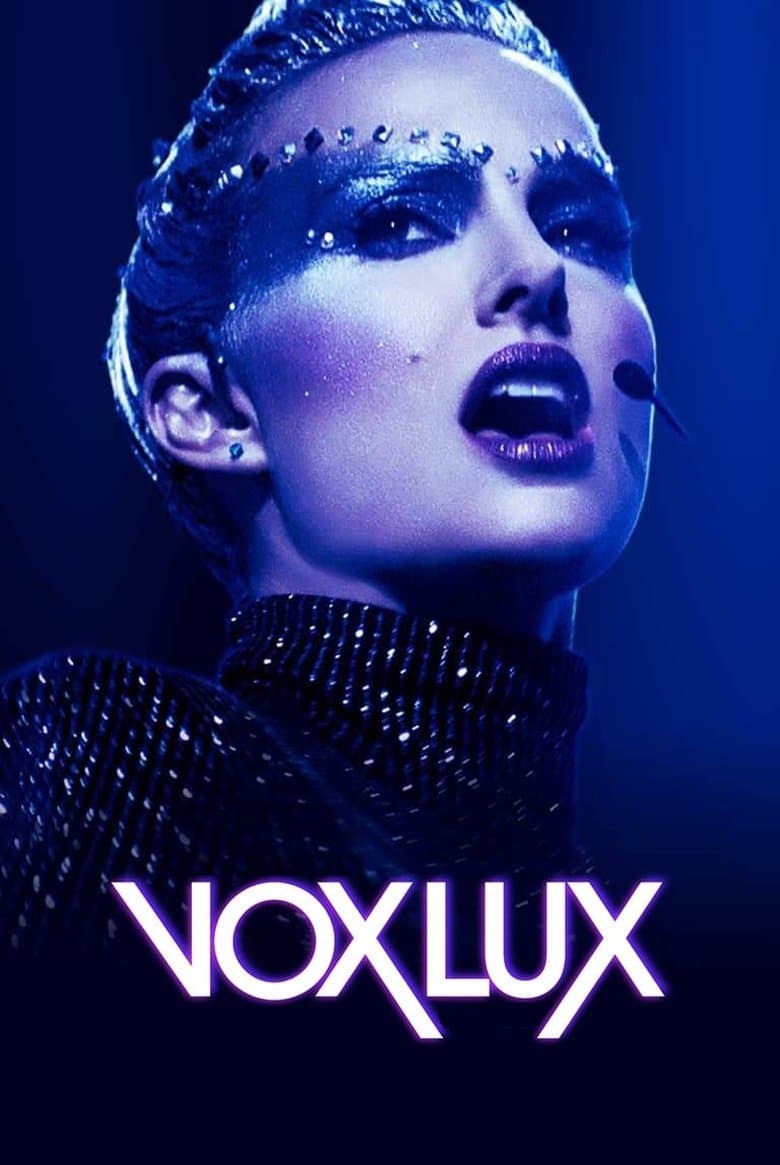
Vox Lux follows Celeste, a girl who survives a school shooting in Staten Island in 1999. She and her sister Eleanor write a song about the attack, and the song turns Celeste into a pop star. In 2017, Celeste is a famous but troubled mother who faces addiction, family anger, public scandal, and a new terrorist attack that may be linked to her music. The film uses a cold, strange, and often harsh tone as it moves between private pain and huge public shows.
The film gives clear weight to female experience, especially the way a young girl is turned into a product after trauma. Celeste talks about being judged as a woman, being called a floozy, and living in a way that upsets other people. The story also shows sexual misconduct, the pressure to look attractive, and the burden of raising a daughter while working inside a male-led music business. These ideas matter to the character, but the film mainly attacks fame, media spectacle, violence, and the business that sells pain as hope.
Community feedback
Was our 52% Woke rating accurate?
Breakdown
These are the editorial factors and ratings behind our score for Vox Lux.
Woke representation / casting
Not present. Celeste, Eleanor, and most major characters are white, and the film does not present a diversity-first cast pattern. Its focus on a female singer follows the story rather than a public identity-casting message.
0%
Woke political dialogue
Celeste says that the terrorists may have targeted her because she is a woman or a successful woman. Celeste also says that people may dislike her for having a child when she was young and for the way she chose to live. The press scene turns gender judgment and sexual double standards into part of the film’s public debate. The dialogue appears in one major interview scene, but it does not control most of the movie.
32%
Identity-driven story themes
The story follows a girl who is turned into a product after surviving violence. The film shows a young Celeste in a troubling sexual encounter with an older musician. The film shows pressure to mix innocence with sex appeal and fear of being judged for motherhood and sexual choices. Celeste acts as a bold, successful woman, but the film also shows her cruelty, addiction, and damage to her family. These gender and female experience ideas recur across both time periods, while fame and violence remain the larger focus.
48%
Western institutional / cultural critique
The narrator treats Celeste as a picture of America after 1999. The story links school violence, 9/11, terrorism, news cycles, and pop entertainment through a shared focus on public spectacle. The music business turns a survivor’s pain into a product and uses simple feel-good songs to keep audiences from thinking. The film also mocks corporate marketing and the public’s hunger for cheap images, but it does not build a detailed attack on capitalism or conservative beliefs.
45%
Woke character or canon changes
Not relevant. Vox Lux is an original fictional story, and it does not change an established character, source, or real historical person. It uses real events such as Columbine and 9/11 as background, but Celeste and the other main characters are fictional.
0%
Anti-woke backlash and complaints
Not present. The available public reaction shows mixed views about the movie’s style, acting, politics, and link between pop fame and violence. No sustained anti-woke or anti-DEI complaint about the title was found, and the X pass reported no anti-woke reaction.
0%
Creator track record context
The stored context rates Brady Corbet at 47 and Mona Fastvold at 64. The same context rates Natalie Portman at 60 and Christine Vachon at 73, while most other producers score low or moderate. This gives the project a clear progressive and identity-focused background, but the film itself is more about celebrity, violence, and media than a direct activist program.
58%
Production

Movie · 2016
WWII American Army Medic Desmond T. Doss, who served during the Battle of Okinawa, refuses to kill people and becomes the first Conscientious Objector in American history to…

Movie · 2016
After his older brother passes away, Lee Chandler is forced to return home to care for his 16-year-old nephew.
Movie · 2023
American ballet dancer Joy Womack is accepted into Moscow's infamously tough Bolshoi Ballet Academy, with the dream of becoming a great ballerina.

Movie · 2025
Diagnosed with Tourette Syndrome at 15, John Davidson navigates his way against the odds through troubled teenage years and into adulthood, finding inspiration in the kindness of…

Movie · 2023
The true story of the inseparable Von Erich brothers, who made history in the intensely competitive world of professional wrestling in the early 1980s.
Movie · 2022
A quiet, neglected girl is sent away from her dysfunctional family to live with relatives for the summer. She blossoms in their care, but in this house where there are meant to be…

Movie · 2025
A logger leads a life of quiet grace as he experiences love and loss during an era of monumental change in early 20th-century America.
Movie · 2020
A man refuses all assistance from his daughter as he ages and, as he tries to make sense of his changing circumstances, he begins to doubt his loved ones, his own mind and even…
