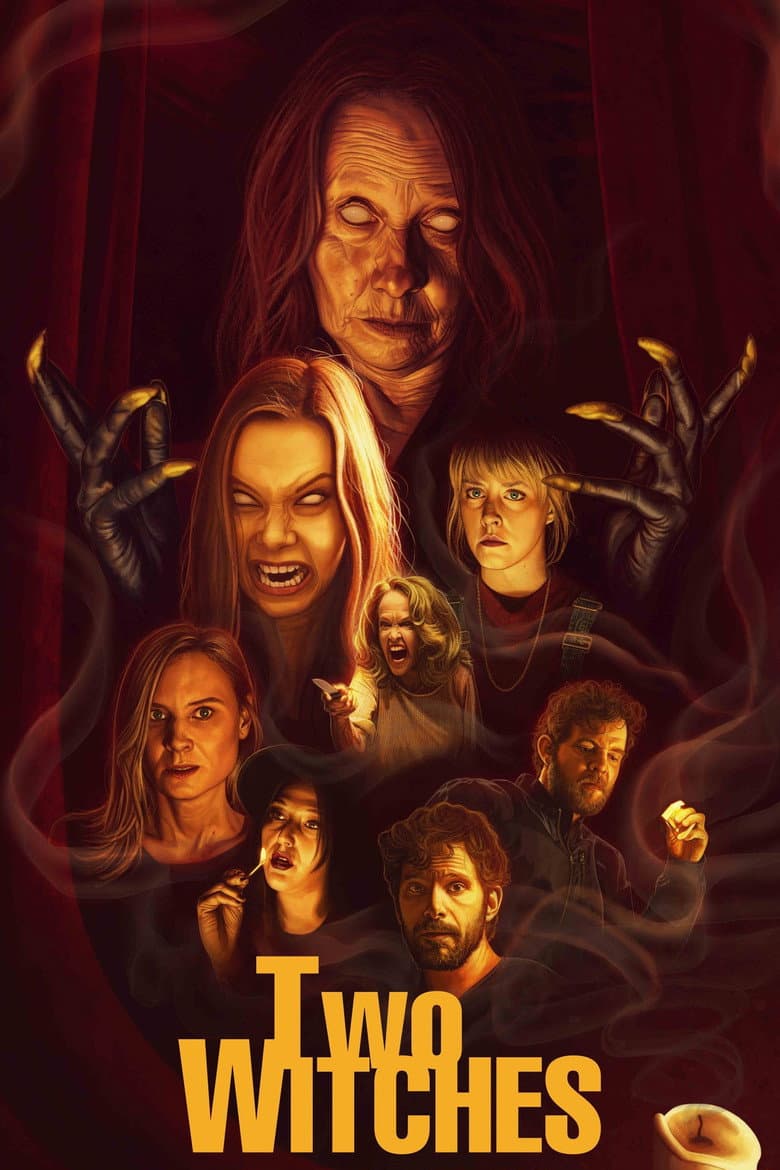
Two Witches follows Masha, a strange young woman who has always known that she will inherit her grandmother’s witch powers. The story first follows Sarah, a pregnant woman who sees an old witch at a restaurant and then suffers frightening visions. The two stories meet through a family line of witches as Masha turns her new powers against her roommate, her roommate’s family, and other people around her. The film moves through modern homes, a country house, and a Christmas gathering, and its tone is bloody, strange, and often darkly funny.
The film places women at the center of its horror, and a family line led by women passes supernatural power from one generation to the next. The two main villains are female, while several men doubt women, become victims, or lose control when the witches attack. Masha calls witches powerful women, questions why God must be called a man, and says her grandmother taught her not to fear her sexuality. These ideas are visible across the story, but the film uses them inside a bloody horror tale instead of building a full modern political message.
Community feedback
Was our 49% Woke rating accurate?
Breakdown
These are the editorial factors and ratings behind our score for Two Witches.
Woke representation / casting
Two Witches puts a female witch family and several women in its most important roles. The two main villains are women, and the story gives them supernatural control while men often doubt, fear, or fall victim to them. The filmmakers said they wanted female supervillains and chose not to sexualize the witches, making the gender pattern an open creative statement. The film does not show a broad race, sexuality, or disability campaign, so this signal remains moderate.
44%
Woke political dialogue
Masha calls witches “badass women” and links the usual evil-witch story to a patriarchal view. Masha also says her grandmother taught her not to fear her sexuality. Rachel describes a controlling former fiancé, and other lines question why God must be called a man. These comments appear in a few scenes, but they do not become a long speech or the main plot.
32%
Identity-driven story themes
The film makes female power and female anger part of its central story. The grandmother passes dark power to Masha, and Masha uses it to control, punish, and threaten people who have more love or status than she has. The story gives men roles as doubters, victims, or sexual targets, which reverses some usual horror roles. The film treats this power as cruel and destructive, but it still keeps gender, sexuality, and control visible through both chapters.
50%
Western institutional / cultural critique
Simon dismisses Sarah’s fear as a problem caused by pregnancy, and the men joke about her distress. Rachel describes a former fiancé who controlled her, checked her phone, and made her feel unstable. Masha questions why God must be called a man and calls the usual witch story patriarchal. These moments give the film a brief critique of male control and gendered religious language, but they do not shape the whole story.
28%
Woke character or canon changes
Not relevant. The film is an original horror story with no established character, source canon, or real historical figure being changed.
0%
Anti-woke backlash and complaints
Not present. The separate X research found no anti-woke complaints, boycott, or review-bombing tied to the film. The reviewed Reddit and review discussions focused on scares, gore, performances, and the two-part structure, not on DEI or identity politics.
0%
Creator track record context
Pierre Tsigaridis has a modest gender-representation signal from choosing strong female horror villains, but his public work is mainly independent horror. Maxime Rancon shares that choice and has discussed using powerful female villains without sexualizing them. Their public record centers on horror, visual style, and production rather than DEI or political activism. Their recorded creator scores are 25 for Tsigaridis and 22 for Rancon, so this factor stays low to moderate.
24%
Production
Movie · 2026
After breaking the mysterious "One Wish Willow" to win his crush's heart, a hopeless romantic finds himself getting exactly what he asked for but soon discovers that some desires…
Movie · 2017
Several years after the tragic death of their little girl, a doll maker and his wife welcome a nun and several girls from a shuttered orphanage into their home, soon becoming the…
Movie · 2023
Eight year old Peter is plagued by a mysterious, constant tapping from inside his bedroom wall—one that his parents insist is all in his imagination.
Movie · 2016
In 1630, a farmer relocates his family to a remote plot of land on the edge of a forest where strange, unsettling things happen.
Movie · 2024
A live broadcast of a late-night talk show in 1977 goes horribly wrong, unleashing evil into the nation's living rooms.
Movie · 2016
Lorraine and Ed Warren travel to north London to help a single mother raising four children alone in a house plagued by malicious spirits.
Movie · 2022
A year after the Miles County massacre, Art the Clown is resurrected by a sinister entity. Art returns home, where he must hunt down and destroy teenage Sienna and her younger…
Movie · 2022
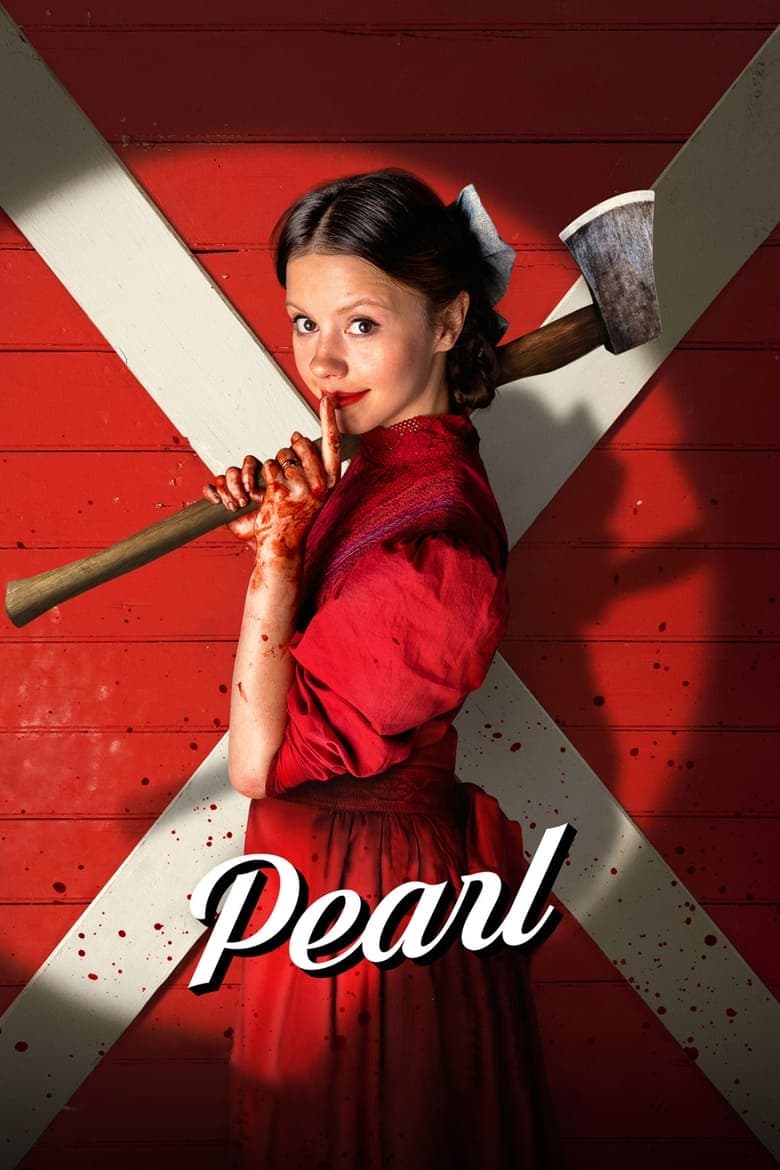
Trapped on her family’s isolated farm, Pearl must tend to her ailing father under the bitter and overbearing watch of her devout mother.
