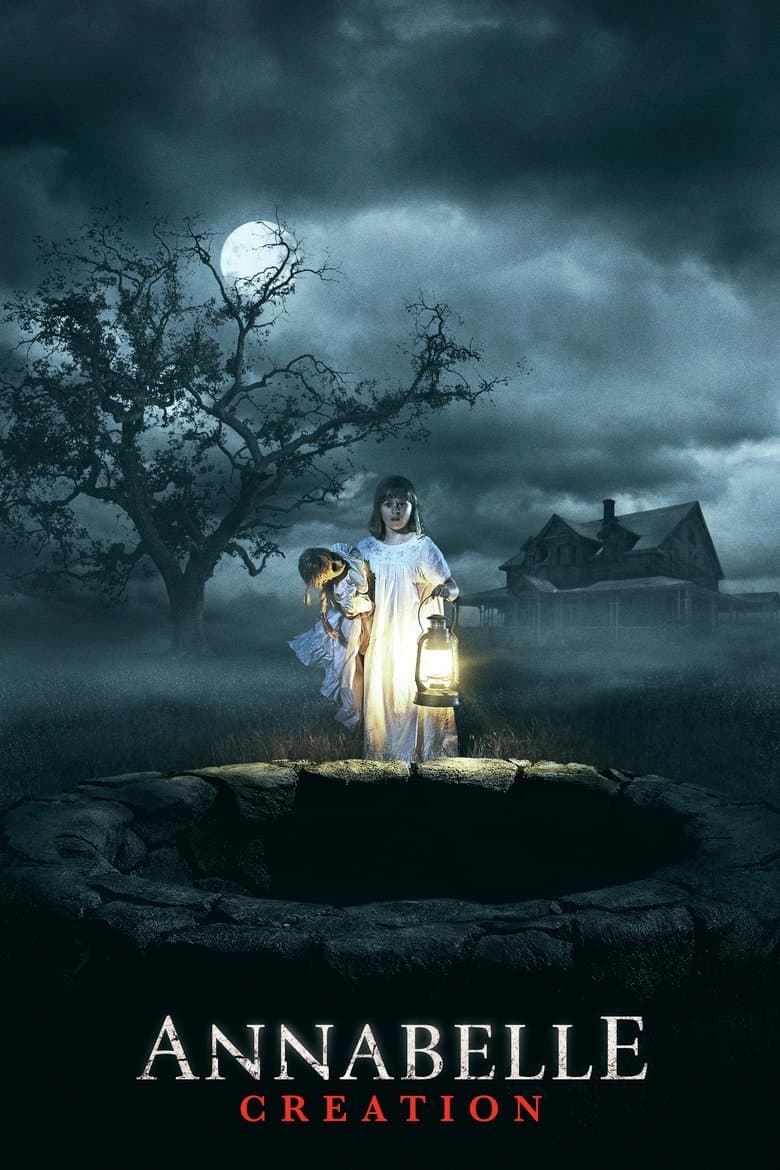
This movie is a prequel in The Conjuring universe set mainly in the mid-1950s. Dollmaker Samuel Mullins and his wife Esther lose their daughter Bee in 1943. Years later they take in a Catholic nun named Sister Charlotte and six orphan girls after the orphanage closes. One girl, Janice, who has polio and wears a leg brace, unlocks Bee’s room and releases a demon tied to a porcelain doll. The house turns into a possession and haunted-house nightmare that leads into later Annabelle stories. The main through-line is grief, temptation, and demonic evil set against Christian faith and protection.
There is little modern identity politics in the story audiences see. The cast is mostly white for a mid-1950s rural California setting, with one Black orphan in a supporting peer role and a Mexican actress as the nun guardian. That diversity sits in secondary and guardian roles and is not driven by identity plotlines. Dialogue stays in horror, period, and religious territory with no activist or progressive political speech. Church figures, the crucifix, and faith work as protection against evil rather than as targets of attack. The real focus is parental grief, a demonic bargain in a doll, orphan danger, and a spiritual fight, not queer, race, or gender ideology arcs.
Community feedback
Was our 4% Woke rating accurate?
Breakdown
These are the editorial factors and ratings behind our score for Annabelle: Creation.
Woke representation / casting
The mid-1950s rural California cast is mostly white in the lead roles. One Black orphan is a supporting peer among the six girls, and a Mexican actress plays the nun guardian. This is mild period diversity in secondary and guardian roles, not an identity-branded hero stack or story built around identity plots.
5%
Woke political dialogue
Not present. Dialogue is horror, period, and religious. There is no modern activist, DEI, identity, or progressive political speech.
0%
Identity-driven story themes
Not present. The story is about grief, a demonic doll bargain, orphan danger, and faith against evil. Polio is classic horror vulnerability, not disability rights messaging. There are no queer, race, or gender ideology plotlines.
0%
Western institutional / cultural critique
Not present. Church, nun, priests, and the crucifix protect against a demon in a Christian good-versus-evil frame. The film does not mock faith, family, or Western institutions, and the parents’ sin is desperate grief, not a systemic social critique.
0%
Woke character or canon changes
Not relevant. This is a franchise-original prequel inventing the doll’s origin. There are no identity or DEI race or gender swaps of established literary or historical figures.
0%
Anti-woke backlash and complaints
Not present. There was no meaningful right-leaning campaign treating this film as DEI or agenda propaganda. Reception focused on scares, craft, and franchise quality rather than woke complaints.
0%
Creator track record context
Cached scores are low for Sandberg, Dauberman, Wan, Safran, and other producers. Their profiles are commercial horror and studio craft, not activist or identity-first work.
7%
Production
Movie · 2016
Rebecca must unlock the terror behind her little brother's experiences that once tested her sanity, bringing her face to face with a supernatural spirit attached to their mother.
Movie · 2022
Trapped on her family’s isolated farm, Pearl must tend to her ailing father under the bitter and overbearing watch of her devout mother.
Movie · 2022
Inspired by the true story of a family who believed they were possessed by spirits. This film follows a woman who must protect her child from a curse.
Movie · 2023
Still reeling from the tragic death of their mother, a teenage girl and her younger sister find themselves plagued by a sadistic presence in their house and struggle to get their…
Movie · 2024
A live broadcast of a late-night talk show in 1977 goes horribly wrong, unleashing evil into the nation's living rooms.
Movie · 2025
Following the death of their father, a brother and sister are sent to live with a foster mother, only to learn that she is hiding a terrifying secret.
Movie · 2022
A year after the Miles County massacre, Art the Clown is resurrected by a sinister entity. Art returns home, where he must hunt down and destroy teenage Sienna and her younger…
Movie · 2026
After breaking the mysterious "One Wish Willow" to win his crush's heart, a hopeless romantic finds himself getting exactly what he asked for but soon discovers that some desires…
