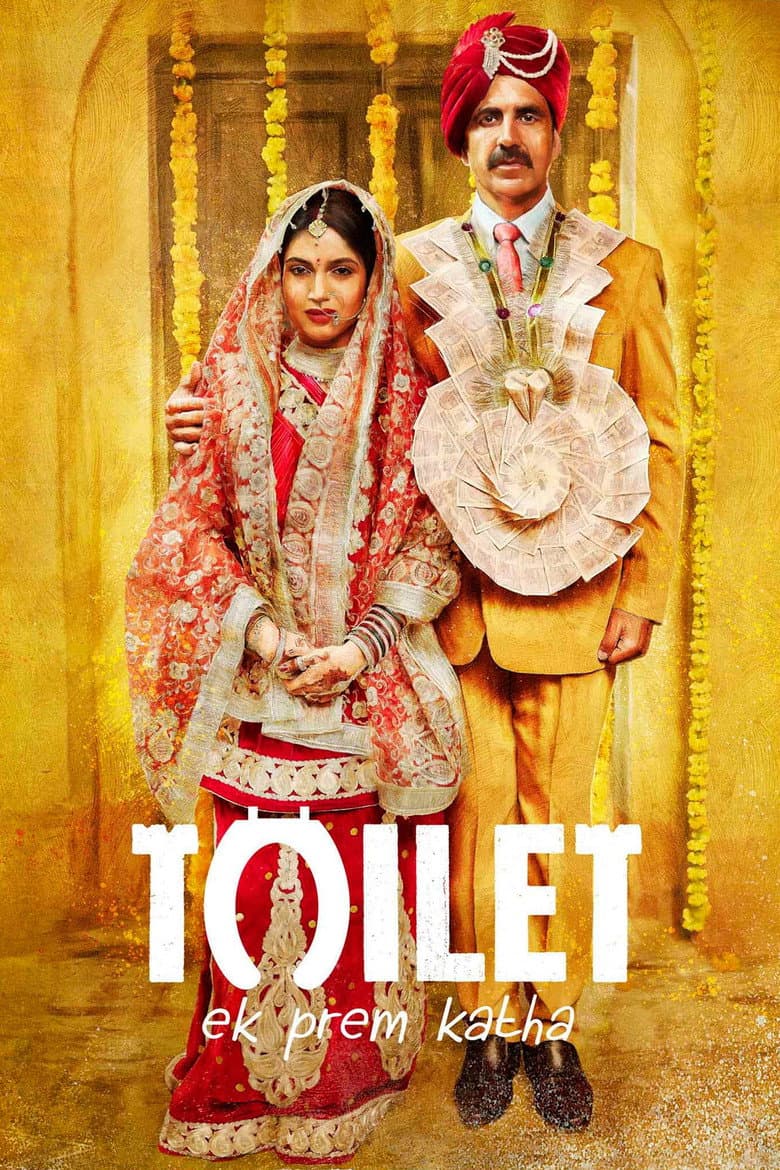
Keshav Sharma is a bicycle repairman in a village near Mathura, Uttar Pradesh. He marries Jaya, an educated young woman, but she leaves after learning that his home has no toilet. Keshav first tries quick fixes and then fights his superstitious father, village leaders, corrupt officials, and old customs to bring her back. The film mixes romance, jokes, songs, and serious scenes about using fields as toilets, safety, and shame. Jaya’s demand gives the story a clear women’s-rights message because the village women must use fields before sunrise or after dark. The film says privacy, safety, and dignity matter more than customs that treat toilets as wrong for a home. Keshav becomes the public face of the fight, while Jaya starts the conflict and later joins the wider protest. The film also praises the Swachh Bharat cleanliness drive and asks families and government workers to change how they think and act.
Community feedback
Was our 44% Woke rating accurate?
Breakdown
These are the editorial factors and ratings behind our score for Toilet: A Love Story.
Woke representation / casting
Not present. The cast fits the film’s Indian setting. The movie does not make casting or ethnic diversity part of its message.
0%
Woke political dialogue
The film repeatedly presents toilet building as a public duty. Keshav speaks about women’s safety and says people must change their thinking. The opening and later scenes praise the Swachh Bharat campaign and Narendra Modi’s government. This message grows in the second half, but it stays focused on sanitation and public policy rather than a broad identity-politics program.
34%
Identity-driven story themes
Jaya makes the need for a private toilet the condition for staying in her marriage. The story repeatedly links women’s sanitation with privacy, safety, dignity, and freedom. The village women join a public protest against the customs that keep them in the fields. Keshav remains the main problem-solver, which keeps the film from being a female-dominance story.
47%
Western institutional / cultural critique
Keshav and Jaya challenge traditional family rules that force women to use fields as toilets. The father and village elders use religion, custom, and family honor to defend those rules. The story treats these beliefs as barriers to women’s safety and dignity. The criticism targets local customs rather than Western institutions, so this element is noticeable but limited.
29%
Woke character or canon changes
Not relevant. The film uses fictional characters loosely inspired by reported real events. It does not change the identity of a known fictional character or real public figure.
0%
Anti-woke backlash and complaints
Not present. Public criticism focused on whether the film acted like a pro-government advertisement. X research found no anti-woke complaints, while a few right-leaning accounts praised the film as patriotic or not woke. Those comments are approval, not backlash.
0%
Creator track record context
Shree Narayan Singh has a clear pattern of social-problem films. Garima Wahal and Siddharth Singh have discussed feminist writing and have written other socially sensitive stories. The producers and casting directors are mostly tied to commercial work and talent discovery, with little public evidence of partisan or identity-politics activism. This gives the film a moderate issue-focused creator context without a strong DEI persona.
40%
Production

Movie · 2017
After the early death of his wife, a mourning father moves with his teenage son across the country for a private school teaching job.

Movie · 2023
Highly intelligent computer major Zoey Miller is uninterested in romantic love, but her life is turned upside down when Zack, the school's soccer star, gets amnesia and mistakes…

Movie · 2024
After discovering their significant others are siblings, two resentful exes must spend Christmas under one roof — while hiding their romantic history.

Movie · 2024
Fran likes to think about dying. It brings sensation to her quiet life. When she makes the new guy at work laugh, it leads to more: a date, a slice of pie, a conversation, a…

Movie · 2020
Faced with sudden doubts about her marriage, a young New York mother teams up with her larger-than-life playboy father to tail her husband.

Movie · 2016
Maggie's plan to have a baby on her own with a sperm donor is derailed when she falls in love with John, an older married professor, destroying his volatile marriage to the…

Movie · 2023
Mira Ray, dealing with the loss of her fiancé, John, sends a series of romantic texts to his old cell phone number… not realizing the number was reassigned to Rob Burns' new work…

Movie · 2020
A teenager lives out the hilarious and often tragic consequences of being lethally attractive, until he meets a girl with a congenital defect.
