
Young Avery and Logan grow up as best friends, fall in love, and break up when Avery chooses a dream job in London. Ten years later, Avery is a business consultant and Logan is a real estate developer. They discover that their new partners are siblings, so they must spend Christmas in the same house while hiding their past. The warm but messy comedy uses family secrets, cheating, weed gummies, church chaos, and old hurt to bring the exes back together.
The clearest identity-related element is Avery's choice to build a career before marriage, and the movie presents her as a successful woman with an MBA. The story treats her wish for work and independence as real, but it finally joins that wish to a shared home, family life, and marriage. A short timeline montage mentions legalized same-sex marriage, and a brief cake image shows two grooms. The movie does not build its main conflict around race, gender politics, queer life, or a campaign message, so these elements stay small beside the romance and family comedy.
Community feedback
Was our 9% Woke rating accurate?
Breakdown
These are the editorial factors and ratings behind our score for Our Little Secret.
Woke representation / casting
Not present. The leads are white, while supporting roles include a black father, a mother of Dominican background, and an Asian priest. The movie does not present those choices as an identity statement or build the cast around representation.
0%
Woke political dialogue
Not present. A short timeline montage names same-sex marriage, Greta Thunberg, and Bernie Sanders's mittens. No character gives a speech or argues for identity, DEI, or activist politics.
0%
Identity-driven story themes
Avery leaves a relationship to take a dream job in London, and the movie treats that choice as important. Avery later has an MBA and a successful business career, while Logan seeks her advice on a work deal. The ending puts love, family, honesty, and a shared home beside her career, so the identity-driven message stays mild.
12%
Western institutional / cultural critique
Not present. Erica is a rude, status-focused mother, and the church scene is used for physical comedy. The movie treats these as personal jokes and does not make a modern activist critique of family, religion, gender roles, or Western institutions.
0%
Woke character or canon changes
Not relevant. The movie is an original screenplay and does not change established characters, canon, or real historical figures.
0%
Anti-woke backlash and complaints
Not present. No qualifying backlash was found. The separate X pass found only small accounts praising the film as “woke free.” Other audience comments focused on the romance, comedy, and Lindsay Lohan.
0%
Creator track record context
The director and writer have little public record of political or identity-driven work. Lindsay Lohan has some LGBTQ visibility and past support for marriage equality, but her public activism is limited and inconsistent. The other cached creators have low or modest scores and no strong activist profile.
15%
Production

Movie · 2023
Mira Ray, dealing with the loss of her fiancé, John, sends a series of romantic texts to his old cell phone number… not realizing the number was reassigned to Rob Burns' new work…

Movie · 2023
Two romantic burnouts, Jane and Will, are immediately drawn to each other at a mutual friend’s wedding. After a disastrous hookup in the coatroom, the two spend the next 24 hours…

Movie · 2016
The story of a young man who arrives in Hollywood during the 1930s hoping to work in the film industry, falls in love, and finds himself swept up in the vibrant café society that…
Movie · 2025
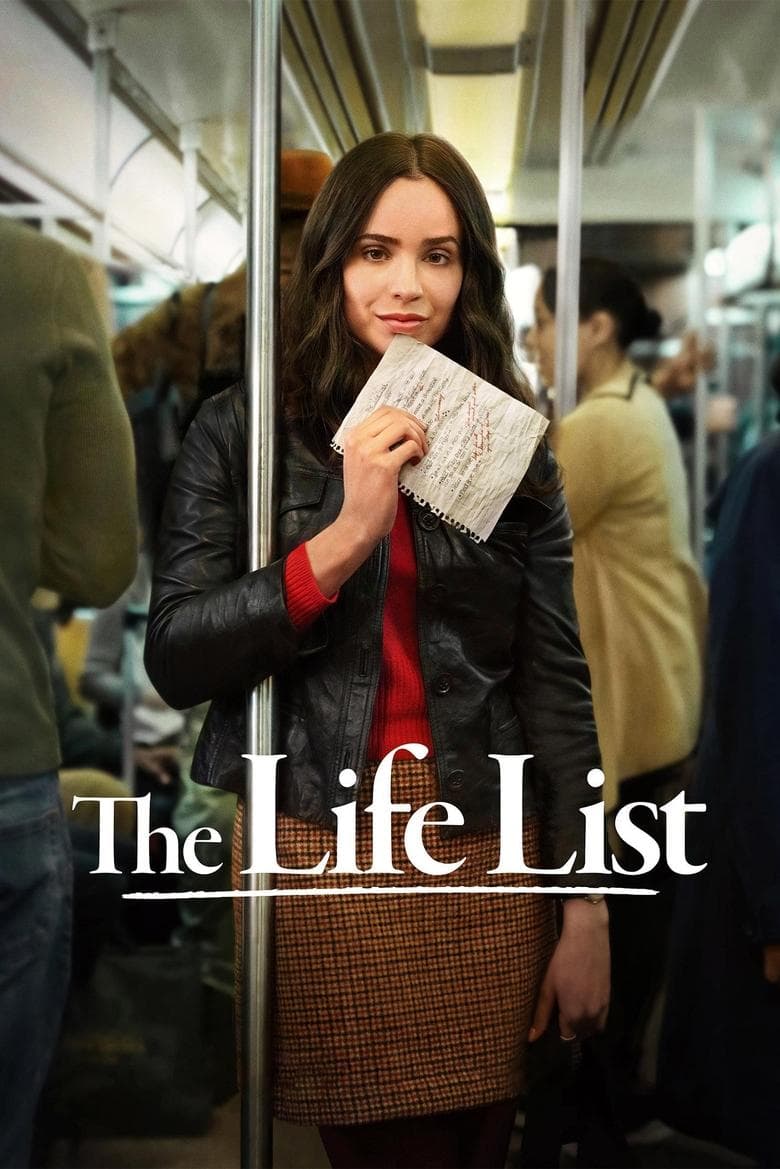
When her mother sends her on a quest to complete a teenage bucket list, a young woman uncovers family secrets, finds romance — and rediscovers herself.

Movie · 2023
The dramatic comedy is based on the true story of writer and pinball wizard Roger Sharpe, chronicling his journey to overturn New York City’s 35-year ban on pinball.

Movie · 2022
Divorced couple Georgia and David find themselves on a shared mission: they team up and travel to Bali to stop their daughter Lily from making the same mistake they once made 25…

Movie · 2023
Michelle and Allen, who have reached the point in their relationship where they are considering next steps, decide to invite their parents to finally meet and to offer some…

Movie · 2024
Fran likes to think about dying. It brings sensation to her quiet life. When she makes the new guy at work laugh, it leads to more: a date, a slice of pie, a conversation, a…
