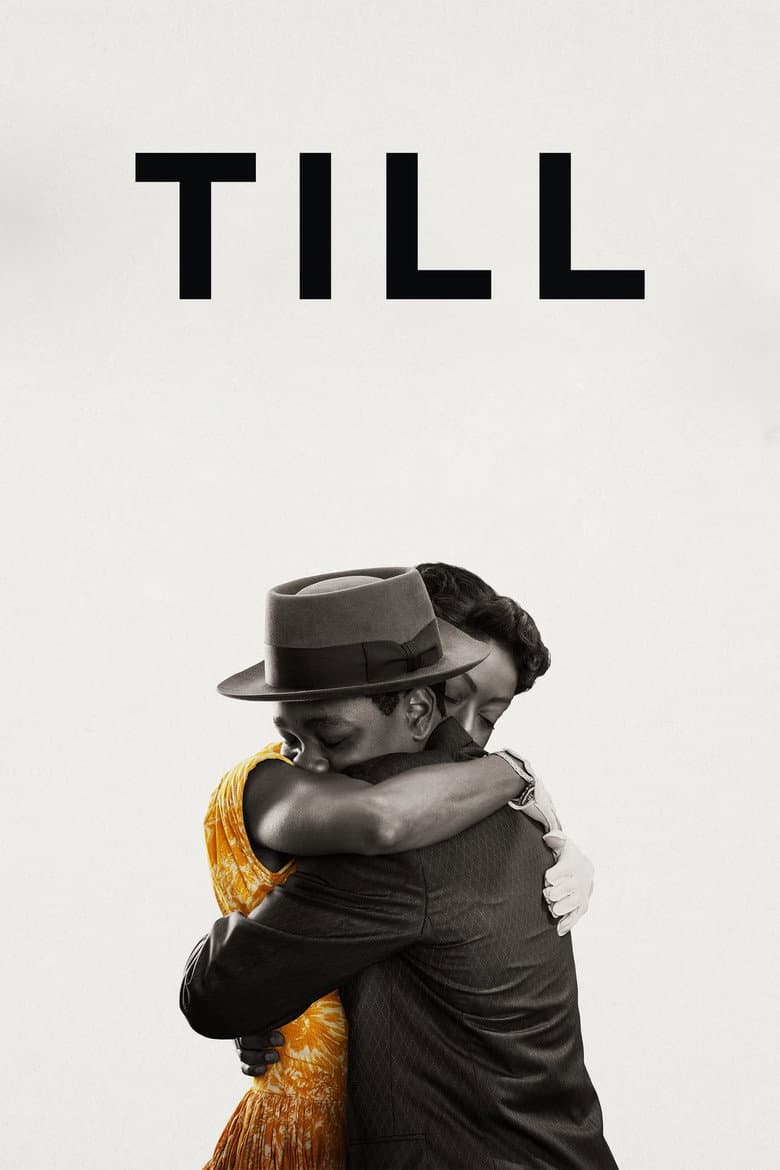
In 1955 Chicago, Mamie Till-Mobley raises her bright, playful 14-year-old son Emmett. She lets him visit cousins in Money, Mississippi, but warns him that the South has harsh rules for black people. After Emmett is kidnapped and killed, Mamie fights to show the world what happened and to seek justice. The movie is a heavy, sad true-story drama about grief, courage, and the start of a public fight for equal rights.
Race and unfair laws sit at the center of the story because that is what really happened. Viewers clearly see Jim Crow rules, a racist murder, an all-white jury that frees the killers, and Mamie turning pain into civil-rights work with the NAACP. Her open-casket choice and rally speeches about failed justice are major beats. Press and cast talks sometimes tied the film to today’s race fights, but the film itself stays in 1955 and tells a mother’s true story. There are no queer storylines, no race swaps of real people, and no modern DEI slogans as the main plot. A normal viewer will notice strong race, justice, and activism themes because they are the whole film.
Community feedback
Was our 46% Woke rating accurate?
Breakdown
These are the editorial factors and ratings behind our score for Till.
Woke representation / casting
Leads and key roles match the real people in this 1955 story: black mother and son, white shopkeeper and killers. Race is on screen because history put it there, not because of modern quota casting or race swaps of known characters. Diversity is story-driven, not a separate signaling choice.
0%
Woke political dialogue
Characters talk about Jim Crow rules, unequal justice, the NAACP, and civil rights. Mamie’s rally lines say the courts failed her son and that equal justice in America failed. The talk is political and about race, but it sounds like 1950s civil-rights speech, not modern DEI catchphrases.
34%
Identity-driven story themes
The whole film is about a black boy killed over race and his mother’s path into civil-rights activism. Race, grief, and justice for black Americans drive the plot and tone. It is real history, not a made-up identity lesson, but a normal viewer cannot miss race and activism as the center of the story.
54%
Western institutional / cultural critique
Mississippi courts, an all-white jury, Jim Crow custom, and a justice system that frees the killers are shown as cruel and broken. Mamie’s story attacks failed equal justice in that time and place. That is hard historical critique of racist institutions, not a separate modern sermon about capitalism or abstract “whiteness,” but institutions are clearly the problem on screen.
46%
Woke character or canon changes
Not relevant. The film follows real people and events. No race or gender swaps of established fictional characters or invented identity rewrites of the historical figures for DEI points.
0%
Anti-woke backlash and complaints
Little organized anti-woke backlash. Critics and many audiences praised the film. A few fringe or one-off posts treated race history films as political or doubted the framing. No major national campaign labeled Till a woke propaganda hit.
8%
Creator track record context
Provided cache lists the named directors, writer, and producer as craft- and production-focused with no clear activist or identity-politics records (all 0/100). That stored context supports a low score for this factor.
0%
Production
Movie · 2022
A quiet, neglected girl is sent away from her dysfunctional family to live with relatives for the summer. She blossoms in their care, but in this house where there are meant to be…
Movie · 2016
In a desolate war zone where screams of the innocent echo, on the very line between disaster and valor, 7 Maroon Berets will dance with death.
Movie · 2026
While people across 1990s Iraq struggle to survive the war and food shortages, Saddam Hussein requires each school in the country to prepare a cake to celebrate his birthday.
Movie · 2022
London, 1953. Mr. Williams, a veteran civil servant, is an important cog within the city's bureaucracy as it struggles to rebuild in the aftermath of World War II.

Movie · 2016
After his older brother passes away, Lee Chandler is forced to return home to care for his 16-year-old nephew.
Movie · 2022
Based on a true tragedy, the emotionally triggering film sheds light on the plight of Kashmiri Pandits (Hindus), a religious minority in the 1990s Kashmir valley, who were…
Movie · 2017
Members of the Granite Mountain Hotshots battle deadly wildfires to save an Arizona town.
Movie · 2023
American ballet dancer Joy Womack is accepted into Moscow's infamously tough Bolshoi Ballet Academy, with the dream of becoming a great ballerina.
