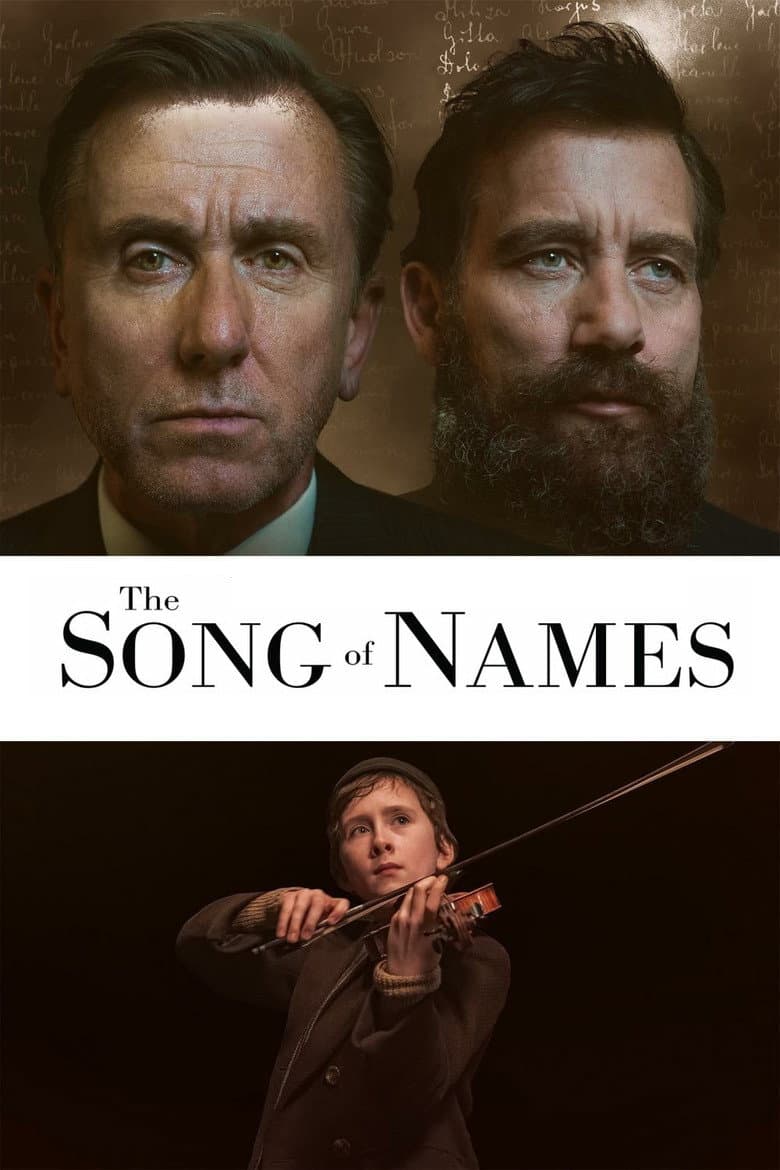
Martin Simmonds grows up in London with Dovidl Rapoport, a gifted violin boy sent from Poland before the Second World War. Dovidl becomes Martin’s foster brother, but he disappears just before his first concert in 1951. Thirty-five years later, Martin follows small clues through Europe and America to learn why his friend left and what happened to his family. The film moves between childhood, war years, and old age, and its mood is sad, quiet, and focused on music, memory, faith, and forgiveness.
The film gives Jewish history and religious life a central place through Dovidl’s family, the Holocaust, a synagogue song that names the dead, and his return to Orthodox Judaism. It treats the song as a way to remember people who were murdered and as a turning point in Dovidl’s life. The story also follows the pain of a child who loses his family and the guilt carried by people who survive. The ending joins friendship, forgiveness, and music with the duty to keep the dead remembered.
Community feedback
Was our 6% Woke rating accurate?
Breakdown
These are the editorial factors and ratings behind our score for The Song of Names.
Woke representation / casting
Not present. The film uses white British and Polish Jewish characters that fit its period setting. It does not make diversity or identity-based casting part of the story or marketing.
0%
Woke political dialogue
Not present. The dialogue discusses faith, grief, war, and memory. It does not push modern identity politics, DEI ideas, or activist slogans.
0%
Identity-driven story themes
Not present. Jewish identity, Holocaust memory, and religious faith are central to the story, but the film treats them as historical and personal matters. It does not turn them into modern activist or identity-politics messaging.
0%
Western institutional / cultural critique
Not present. The film shows Nazi tyranny and the loss of a Jewish family as historical events. It does not attack Christianity, family life, men, capitalism, or Western institutions through a modern activist message.
0%
Woke character or canon changes
The novel has Jewish families on both sides, but the film makes Martin’s family non-Jewish. Tim Roth suggested the change so Martin could discover Jewish life with viewers who do not know it. The change affects Martin’s identity and his place in the story. It is a story device, not a modern DEI or activist message.
15%
Anti-woke backlash and complaints
Not present. Reviews and audience posts focus on the film’s pacing, ending, accents, and Holocaust subject. The supplied X pass found no anti-woke reaction, boycott talk, or defense of the film against woke criticism.
0%
Creator track record context
François Girard has a modest cached score from work about cultural identity and Indigenous history, but he has no clear public activist persona. Jeffrey Caine has written stories about corporate abuse and disability, while Norman Lebrecht has no clear DEI or identity-politics record. The producers are mostly business-focused, with some history, humanitarian, queer, or climate-related work in their wider records. This gives a mild context signal, but it does not show a strong modern activist pattern.
15%
Production
Movie · 2017
Members of the Granite Mountain Hotshots battle deadly wildfires to save an Arizona town.
Movie · 2016
On 15 January 2009, the world witnessed the 'Miracle on the Hudson' when Captain 'Sully' Sullenberger glided his disabled plane onto the Hudson River, saving the lives of all 155…
Movie · 2022
London, 1953. Mr. Williams, a veteran civil servant, is an important cog within the city's bureaucracy as it struggles to rebuild in the aftermath of World War II.
Movie · 2020
A man refuses all assistance from his daughter as he ages and, as he tries to make sense of his changing circumstances, he begins to doubt his loved ones, his own mind and even…
Movie · 2026
While people across 1990s Iraq struggle to survive the war and food shortages, Saddam Hussein requires each school in the country to prepare a cake to celebrate his birthday.
Movie · 2022
Based on a true tragedy, the emotionally triggering film sheds light on the plight of Kashmiri Pandits (Hindus), a religious minority in the 1990s Kashmir valley, who were…
Movie · 2025
A logger leads a life of quiet grace as he experiences love and loss during an era of monumental change in early 20th-century America.
Movie · 2023
American ballet dancer Joy Womack is accepted into Moscow's infamously tough Bolshoi Ballet Academy, with the dream of becoming a great ballerina.
