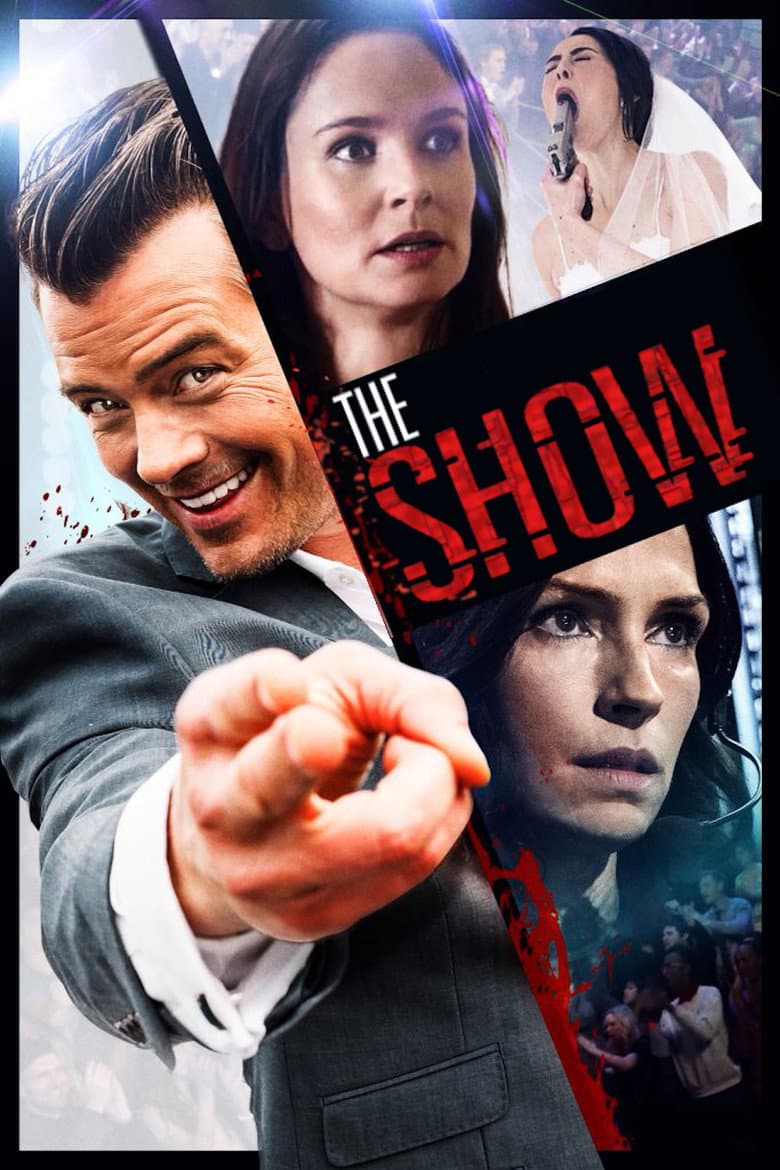
The Show follows Adam Rogers, a television host whose dating program ends with a rejected contestant shooting the chosen man and then herself on live TV. The network turns the tragedy into a new program called This Is Your Death, where desperate people die on camera so their families can receive money. Adam accepts the job because he says the deaths can teach viewers to value life, but ratings and praise pull him toward cruelty. At the same time, Mason Washington loses work and health benefits while trying to keep his wife, children, and home safe. The film is a grim, angry drama with shocks, family pain, and dark satire.
The film's main social message attacks reality television, network greed, and viewers who turn real suffering into a show. It shows a black working father, women in network and producer jobs, a battered mother, and a sister fighting addiction, while their personal troubles feed the plot rather than an identity lesson. The show raises money for families and briefly supports a cause involving Syrian refugees, yet the story treats charity as part of a dangerous ratings machine. Adam's speeches about empathy and a higher purpose collapse as he hides a failed death and chases bigger shocks. Mason's love for his family and refusal to die give the grim story its small note of hope.
Community feedback
Was our 23% Woke rating accurate?
Breakdown
These are the editorial factors and ratings behind our score for The Show.
Woke representation / casting
Not present. The modern American cast includes a black male family lead, women in senior jobs, and white male and female leads. The film does not frame these choices as a diversity message.
0%
Woke political dialogue
Not present. The dialogue has no repeated lines about race, DEI, sexual identity, or activist gender ideas. Adam talks about empathy, life, and ratings, but those lines serve the media plot.
0%
Identity-driven story themes
Not present. The story follows reality TV, suicide, family poverty, addiction, and moral collapse. Its main character arcs do not center on identity politics or DEI struggles.
0%
Western institutional / cultural critique
The film repeatedly attacks a ratings-driven TV network and the viewers who reward shocking deaths. Adam blames himself, the network, and the audience for turning people into entertainment. The network hides a failed death, pushes larger stunts, and treats desperate families as a product. The critique is focused on media greed and public taste rather than a broad attack on Western culture.
32%
Woke character or canon changes
Not relevant. The movie is an original story about fictional characters. It does not change an established character, source, or real historical figure.
0%
Anti-woke backlash and complaints
Not present. Reviews and audience posts focus on suicide, tone, and the film’s weak satire. No notable complaints say the movie pushes DEI, identity politics, or left-wing ideology.
0%
Creator track record context
Giancarlo Esposito has a cached score of 58/100 because representation and anti-racist public themes recur in his wider work. Noah Pink has a cached score of 6/100, and Kenny Yakkel has 0/100. The cached producer scores range from 0 to 20 and show no strong activist pattern. The movie reflects Esposito’s interest in social issues through media criticism, but its story is not identity-centered.
34%
Production
Movie · 2019
Richard Jewell thinks quick, works fast, and saves hundreds, perhaps thousands, of lives after a domestic terrorist plants several pipe bombs and they explode during a concert…

Movie · 2016
After his older brother passes away, Lee Chandler is forced to return home to care for his 16-year-old nephew.
Movie · 2023
The true story of the inseparable Von Erich brothers, who made history in the intensely competitive world of professional wrestling in the early 1980s.
Movie · 2017
In 1950, amidst the ravages of the Korean War, Sergeant Süleyman stumbles upon a a half-frozen little girl, with no parents and no help in sight and he risks his own life to save…
Movie · 2023
American ballet dancer Joy Womack is accepted into Moscow's infamously tough Bolshoi Ballet Academy, with the dream of becoming a great ballerina.
Movie · 2023
The story of J. Robert Oppenheimer's role in the development of the atomic bomb during World War II.
Movie · 2020
A man refuses all assistance from his daughter as he ages and, as he tries to make sense of his changing circumstances, he begins to doubt his loved ones, his own mind and even…
Movie · 2016
WWII American Army Medic Desmond T. Doss, who served during the Battle of Okinawa, refuses to kill people and becomes the first Conscientious Objector in American history to…
