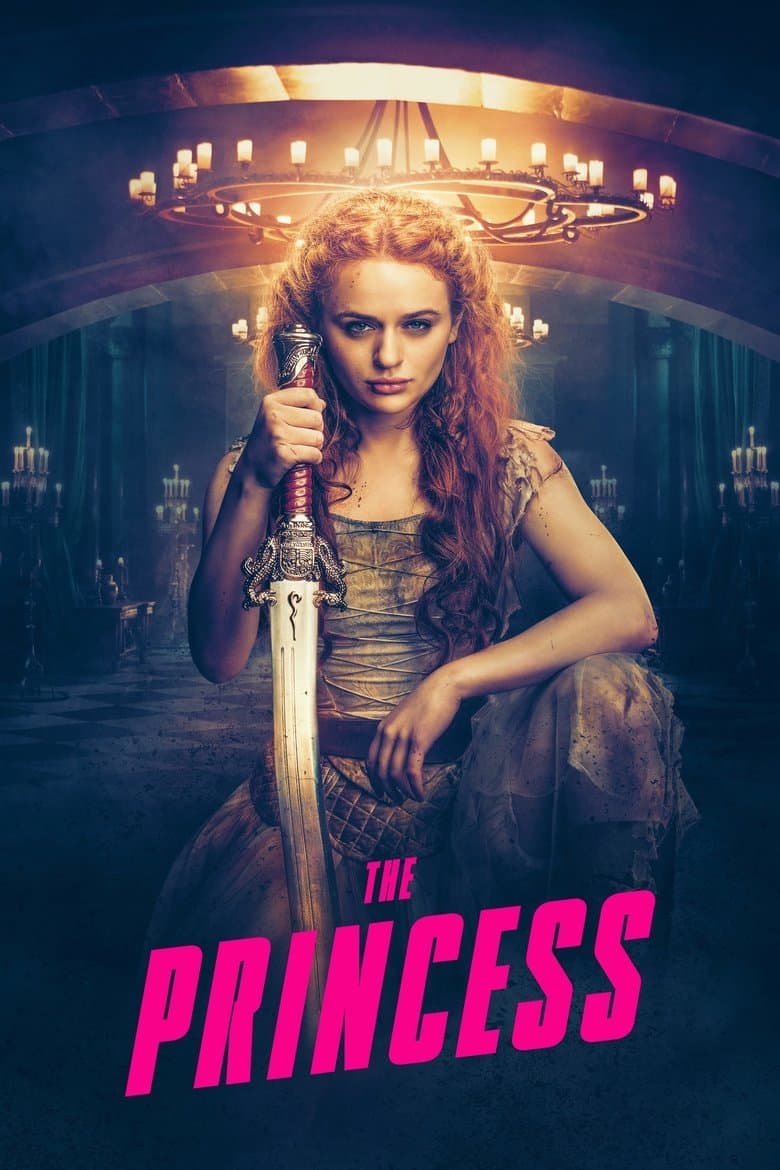
The Princess follows an unnamed royal daughter who refuses to marry Julius, a cruel lord chosen by her father. Julius takes the castle, locks her in a tower, and plans to seize the throne through the marriage. She fights down through the castle, rescues her family, and joins her friend Linh for the final battle. The setting is a made-up medieval kingdom, and the tone is bloody, fast, and playful.
The film makes female freedom and female strength the center of its story. The princess rejects a forced marriage, trains as a warrior, defeats many male guards, and kills the man who wants to own her. Linh is a skilled female mentor and fighter, and the young sister Violet is also told that she can choose her own future. The story treats the old rule that a kingdom needs a male heir as wrong, but it does not build a wider political message around race, sexuality, or money.
Community feedback
Was our 59% Woke rating accurate?
Breakdown
These are the editorial factors and ratings behind our score for The Princess.
Woke representation / casting
The film puts Joey King’s unnamed princess and Vietnamese actor Veronica Ngo’s Linh in its main heroic roles. The director says the film gives him and Ngo a chance to represent Vietnamese people and says a Vietnamese person could have lived in medieval times. The setting is a made-up kingdom, so this is a mild identity signal rather than a clear historical mismatch.
14%
Woke political dialogue
The king says the kingdom needs a son and orders the princess to marry for an heir. The princess says she is not property and rejects the duty forced on her. Julius calls her a weak person who should know her place, while the ending says the daughters of the kingdom can make their own fate. The lines are direct and repeated, but they stay inside the fairy-tale conflict rather than discussing current politics.
33%
Identity-driven story themes
The story centers on a woman who refuses a forced marriage and becomes the person who saves her family and kingdom. The princess trains, fights, leads, and kills the man who tries to control her. Linh acts as her skilled female mentor, and Violet is told that she can choose her future. The ending links female freedom to the kingdom’s new rule about daughters and inheritance.
62%
Western institutional / cultural critique
The film treats the royal marriage system and male-only succession as unfair limits on women. The king first sees his daughter as a way to secure an heir, and Julius says she was born to be his wife. The story makes male entitlement and old gender rules part of the villain’s power. The setting is fictional, and the criticism stays focused on gender and monarchy rather than modern capitalism or real Western institutions.
48%
Woke character or canon changes
Not relevant. The film is an original story about an unnamed princess, not a retelling of a named character or real person. It does not change an established canon character.
0%
Anti-woke backlash and complaints
Some audience posts describe the story as women good and men bad, and they complain that the men are fools while the women do everything. A conservative family review calls the film politically correct and says it focuses on feminist rage. Other viewers praised the action or treated the gender message as part of a simple fantasy. The reaction stayed small and mixed, with no major news controversy found.
27%
Creator track record context
Cached notes give Joey King 43/100 because of public support for LGBTQ youth, Black Lives Matter, and gun control. The notes give Le Van Kiet 14/100, Jake Thornton 12/100, and Ben Lustig 0/100. The other listed producers are also low, from 5 to 12/100. This gives mild supporting context, while the film’s message remains more important than the crew history.
22%
Production
Movie · 2021
Determined to ensure Superman's ultimate sacrifice was not in vain, Bruce Wayne aligns forces with Diana Prince with plans to recruit a team of metahumans to protect the world…
Movie · 2021
The Earthrealm heroes must journey to the Outworld and fight for the survival of their homeland, invaded by the forces of evil warlord Shao Kahn, in the tournament to end all…
Movie · 2025
Ten-year-old Aurora asks her hitman neighbor to kill the monster under her bed that she claims ate her family.
Movie · 2025
A queen sends the powerful and feared sorceress Gray Alys to the ghostly wilderness of the Lost Lands in search of a magical power, where she and her guide, the drifter Boyce…
Movie · 2022
A revenge mission becomes a fight to save the world from an ancient threat when superpowered assassin Kai tracks a killer to Bangkok.
Movie · 2020
Tanjiro Kamado, joined with Inosuke Hashibira, a boy raised by boars who wears a boar's head, and Zenitsu Agatsuma, a scared boy who reveals his true power when he sleeps, boards…
Movie · 2022
Prince Amleth is on the verge of becoming a man when his father is brutally murdered by his uncle, who kidnaps the boy's mother.
Movie · 2026
The fan favorite champions—now joined by Johnny Cage himself—are pitted against one another in the ultimate, no-holds barred, gory battle to defeat the dark rule of Shao Kahn that…
