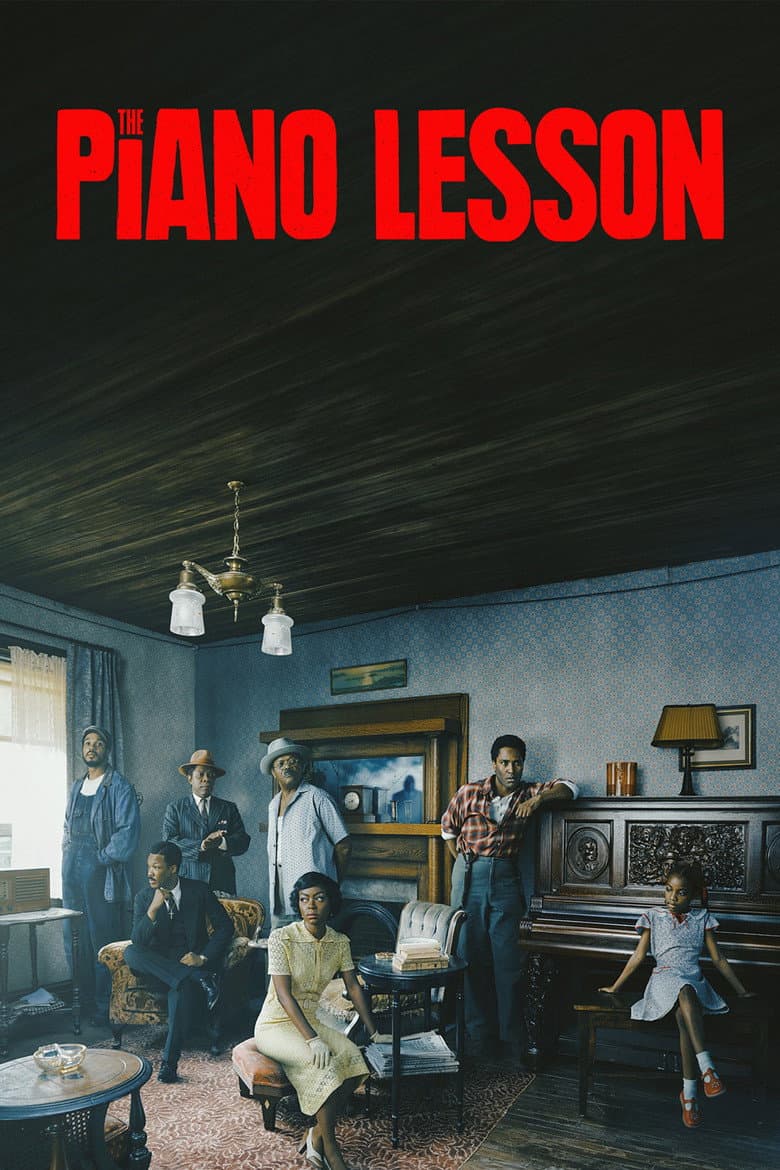
Boy Willie arrives at his sister Berniece's home in Pittsburgh in 1936 with a plan to sell their family piano. He wants the money to buy the Mississippi land where their enslaved ancestors once worked, but Berniece refuses because the piano carries their carved family history. Their argument brings old grief and a dangerous ghost into the house. The movie mixes tense family drama with music, humor, and supernatural fear.
The story makes black family history and the lasting harm of slavery central from its opening scene to its final act. It shows white owners using violence to hold power, while the Charles family fights over whether freedom comes from owning land or guarding the past. Berniece also pushes back when men tell her how to live, but the film gives her real flaws and does not turn the men into fools. The strongest identity theme is the need to face family pain and pass black history to the next generation.
Community feedback
Was our 46% Woke rating accurate?
Breakdown
These are the editorial factors and ratings behind our score for The Piano Lesson.
Woke representation / casting
Not present. The black cast plays a black family in 1936, as written in August Wilson's play. The few white figures fit the family's history with the Sutter land.
0%
Woke political dialogue
Several talks link race, land ownership, prison labor, and power. Boy Willie sees owning land as a way for a black man to gain freedom and respect. The dialogue stays tied to the family's life in 1936 and does not become modern party or activist talk.
22%
Identity-driven story themes
Black family history and the lasting pain of slavery drive the main conflict. The piano carries carved images of enslaved ancestors, and the siblings' father died while taking it back. Berniece ends the haunting by calling on those ancestors. The ending also shows her teaching the next generation to keep that history alive.
52%
Western institutional / cultural critique
Berniece rejects Avery's claim that a woman needs a man to have a full life. She also fights Boy Willie's effort to decide the piano's fate over her. Avery's Christian prayer fails before Berniece's call to her ancestors drives out the ghost. The film treats these as family and spiritual conflicts rather than a broad attack on men, faith, or Western life.
34%
Woke character or canon changes
Not relevant. The film adds flashbacks and shows events that the play only described. These changes expand the ghost story without changing characters for identity reasons.
0%
Anti-woke backlash and complaints
Not present. No major or repeated complaints accused the film of pushing woke, DEI, or left-wing politics. Audience criticism mainly concerned pacing and its stage-play feel.
0%
Creator track record context
Malcolm Washington and Virgil Williams have clear records of work centered on black culture and race. Constanza Romero has linked Wilson's work to present racial injustice. Katia Washington has some identity-focused projects. Denzel Washington, Todd Black, and Jennifer Roth have little or no strong record of this kind.
42%
Production
Movie · 2016
On 15 January 2009, the world witnessed the 'Miracle on the Hudson' when Captain 'Sully' Sullenberger glided his disabled plane onto the Hudson River, saving the lives of all 155…
Movie · 2022
London, 1953. Mr. Williams, a veteran civil servant, is an important cog within the city's bureaucracy as it struggles to rebuild in the aftermath of World War II.
Movie · 2016
In a desolate war zone where screams of the innocent echo, on the very line between disaster and valor, 7 Maroon Berets will dance with death.

Movie · 2025
Diagnosed with Tourette Syndrome at 15, John Davidson navigates his way against the odds through troubled teenage years and into adulthood, finding inspiration in the kindness of…

Movie · 2023
The story of J. Robert Oppenheimer's role in the development of the atomic bomb during World War II.
Movie · 2019
Richard Jewell thinks quick, works fast, and saves hundreds, perhaps thousands, of lives after a domestic terrorist plants several pipe bombs and they explode during a concert…
Movie · 2025
A logger leads a life of quiet grace as he experiences love and loss during an era of monumental change in early 20th-century America.

Movie · 2016
After his older brother passes away, Lee Chandler is forced to return home to care for his 16-year-old nephew.
