Movie review
December 5, 2024 · 134 min · PG-13 · Fantasy · Animation · Action · Adventure
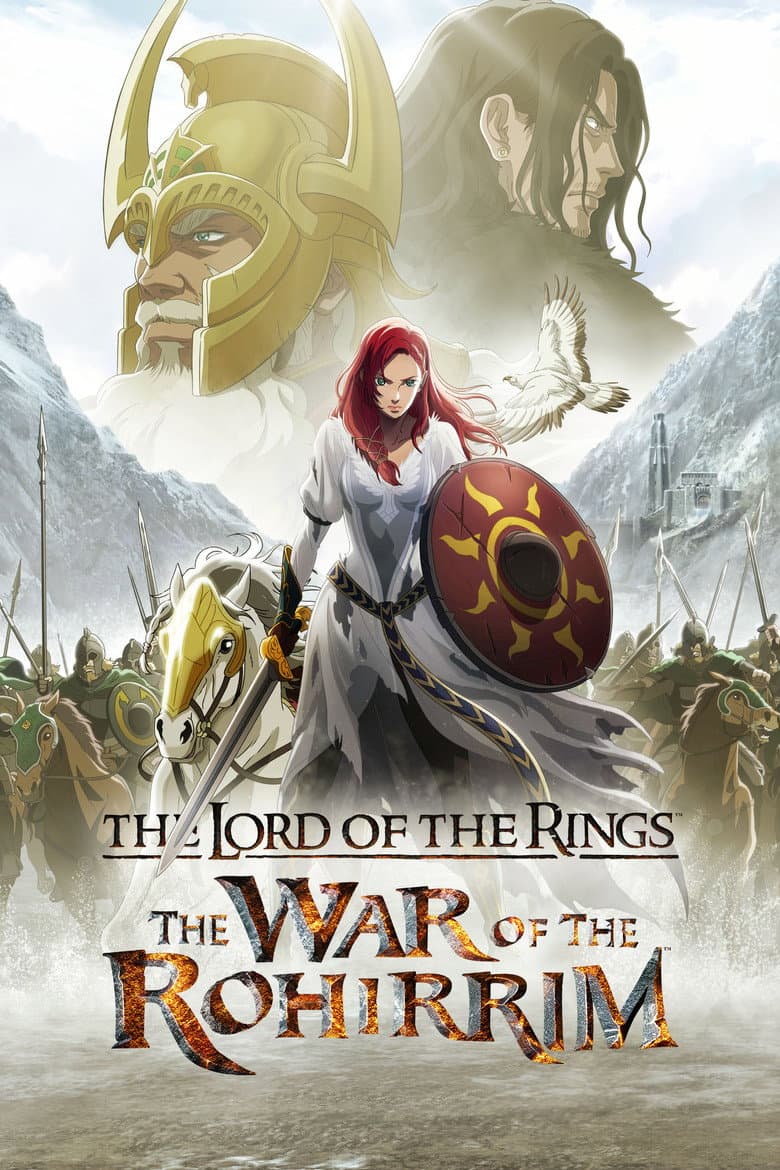
Héra is the unnamed daughter of Helm Hammerhand, the proud king of Rohan. After Héra rejects Wulf’s marriage offer, Helm kills Wulf’s father during a fight, and Wulf starts a war for revenge. Héra and her family flee with their people to the Hornburg, where hunger, snow, grief, and a long siege test them. The film has a serious, violent, and tragic tone, with large horse battles and a hand-drawn anime style.
Héra is also the film’s main warrior and plays a key role in saving Rohan when many male leaders fall. The story shows men trying to decide her marriage and future, while she grows from a restless princess into a brave defender and later kills Wulf. Olwyn, an older shieldmaiden, trains and protects her, and Éowyn’s narration links Héra’s courage to the women who come after her. These choices make female strength, women’s forgotten place in history, and resistance to old gender roles clear parts of the story, although the main plot remains a war story about revenge, family, and duty.
Community feedback
Was our 61% Woke rating accurate?
Breakdown
These are the editorial factors and ratings behind our score for The Lord of the Rings: The War of the Rohirrim.
Woke representation / casting
Héra is the central heroic role, and Olwyn is also a capable shieldmaiden. Rohan’s culture gives women a warrior history, so the film does not present the choice as a modern diversity mix. Interviews still call Héra the franchise’s first female protagonist and describe a female lens and better representation, which makes the lead choice a visible identity statement.
30%
Woke political dialogue
Not present. Characters discuss marriage, family duty, war, and leadership, but they do not use modern political or activist language.
0%
Identity-driven story themes
Héra starts as a restless princess who does not want an arranged marriage or a quiet royal role. Men try to control her future, and the film repeatedly shows her proving herself as a rider, fighter, and defender. The story links her to Éowyn and treats the lost achievements of women as an important part of Middle-earth history. The main war is still about revenge and survival, so the identity message is strong but not the whole film.
50%
Western institutional / cultural critique
Rohan is shown as a male-led society that expects Héra to marry and stay away from war. Helm loves his daughter, but he still dismisses her advice and assumes that men will decide her future. Wulf treats her refusal as an insult and turns his wounded pride into a war. The film favors Héra and Olwyn’s courage over these older male rules, creating a repeated critique of traditional gender roles.
38%
Woke character or canon changes
Tolkien’s appendix only mentions Helm’s daughter and does not name her or make her a warrior. The film names her Héra, makes her the lead, and gives her the main heroic actions, including the final fight with Wulf. Fréaláf is the source’s active hero, but the film gives Héra much of his story role while Éowyn becomes the narrator. The creators linked this change to giving women a stronger voice in Middle-earth, so this is a major identity-driven canon change.
55%
Anti-woke backlash and complaints
Anti-woke posts called the film a woke mess and described Héra as a girlboss or Mary Sue who rewrites Tolkien. Other complaints said the film replaces the source’s male hero Fréaláf with Héra and makes women the most active fighters. Some viewers defended Héra and said the film’s female lead was not enough to make it woke. The backlash was recurring and visible, but it was scattered and had no clear organized boycott or mass review-bomb campaign.
40%
Creator track record context
The cached creator context gives most key writers, producers, and casting leads low woke scores and records no strong activist or DEI campaign work. Kamiyama has discussed justice and has a pattern of strong female leads, but his public record is not strongly identity-driven. This film’s interviews openly stress a first female protagonist, a female lens, and better representation, so the context gives a mild supporting signal.
17%
Production
Movie · 2001
Young hobbit Frodo Baggins, after inheriting a mysterious ring from his uncle Bilbo, must leave his home in order to keep it from falling into the hands of its evil creator.
Movie · 2025
After a catastrophic event leaves their bodies destroyed, Ne Zha and Ao Bing are granted a fragile second chance at life.
Movie · 2018
Half-human, half-Atlantean Arthur Curry is taken on the journey of his lifetime to discover if he is worth of being a king.
Movie · 2026
The fan favorite champions—now joined by Johnny Cage himself—are pitted against one another in the ultimate, no-holds barred, gory battle to defeat the dark rule of Shao Kahn that…
Movie · 2016
A thousand years ago, one boy with a dream of becoming a great warrior is abducted with his sister and taken to a land far away from home.
Movie · 2020
A portal transports Cpt. Artemis and an elite unit of soldiers to a strange world where powerful monsters rule with deadly ferocity.
Movie · 2022
A new adventure begins for Luffy and his crew when mysterious pop superstar Uta unveils her identity — and launches a misguided plan for world peace.
Movie · 2020
Earth is decimated after intergalactic tyrant Darkseid has devastated the Justice League in a poorly executed war by the DC Super Heroes.
