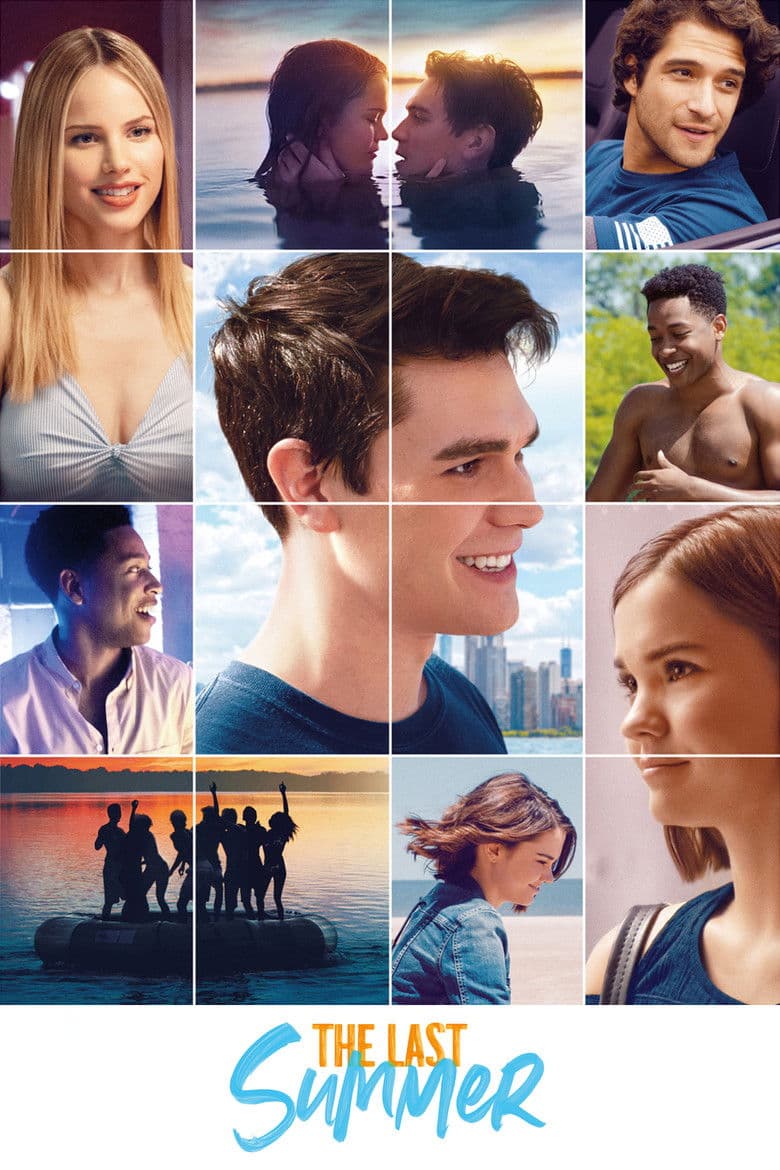
The Last Summer follows Griffin, Phoebe, and several friends during the final summer after high school in Chicago. Griffin wants to study music, but his father pushes him toward a safer school and uses family connections to help him get in. Phoebe works on a short documentary while she plans for film school, and their romance becomes harder when their parents’ affair is exposed. Other stories follow Erin and Alec after their breakup, Audrey as a babysitter, and two boys who lie about their age to enter a business bar. The tone is a glossy but messy teen romance with jokes, drinking, sex talk, and many side stories.
The movie’s main message is that young people should choose their own path before college. Phoebe works to fund NYU through her film, and Griffin leaves the school chosen by his father to study music. Audrey rejects a child star’s push toward fame and later chooses work with children, while a Christian girl explains that classmates mock her faith. These stories focus on romance, family mistakes, money, school pressure, and the fear of growing up.
Community feedback
Was our 3% Woke rating accurate?
Breakdown
These are the editorial factors and ratings behind our score for The Last Summer.
Woke representation / casting
Not present. The Chicago teen ensemble has a mixed cast, but the story gives no identity message or diversity-first focus to those choices.
0%
Woke political dialogue
Not present. The film contains jokes about traders, work, sex, and college choices, but it does not use recurring spoken lines to push modern identity or activist ideas.
0%
Identity-driven story themes
Not present. The characters face romance, school, money, family betrayal, and early adult choices. Their personal goals are not built around race, gender, sexuality, or activist causes.
0%
Western institutional / cultural critique
Not present. The story shows a father using family ties for college and a rich mother pushing her child into fame. Those are family and class conflicts, not a broad attack on Western institutions or social norms.
0%
Woke character or canon changes
Not relevant. The movie is an original teen romance with no established characters, historical figures, or source canon being changed.
0%
Anti-woke backlash and complaints
Not present. The separate X pass found no anti-woke reaction. Other reviews and audience comments focused on clichés, weak plotting, teen drinking, sex, and deceptive behavior rather than woke, DEI, or identity politics claims.
0%
Creator track record context
The director, Scott Bindley, and most producers have mainstream commercial profiles with no strong public activist record. Co-writer Alaman Diadhiou has recurring work about black culture and inclusive self-expression. That background is mild supporting context and is not strongly tied to this film’s story or marketing.
16%
Production
Movie · 2016
The story of a young man who arrives in Hollywood during the 1930s hoping to work in the film industry, falls in love, and finds himself swept up in the vibrant café society that…
Movie · 2019
No beau? No problem! To earn money for college, a high schooler creates a dating app that lets him act as a stand-in boyfriend.
Movie · 2022
Two strangers believe in love but never seem to be able to find its true meaning. In a wild twist of events, fate puts each in the other's path on one stormy New Year's Eve.
Movie · 2023
Mira Ray, dealing with the loss of her fiancé, John, sends a series of romantic texts to his old cell phone number… not realizing the number was reassigned to Rob Burns' new work…
Movie · 2019
Two young people arrive in New York to spend a weekend, but once they arrive they're met with bad weather and a series of adventures.

Movie · 2018
A quirky couple spends their three-year dating anniversary looking back at their relationship and contemplating whether they should break up.
Movie · 2018
When teenager Elle's first kiss leads to a forbidden romance with the hottest boy in high school, she risks her relationship with her best friend.
Movie · 2025
When her mother sends her on a quest to complete a teenage bucket list, a young woman uncovers family secrets, finds romance — and rediscovers herself.
