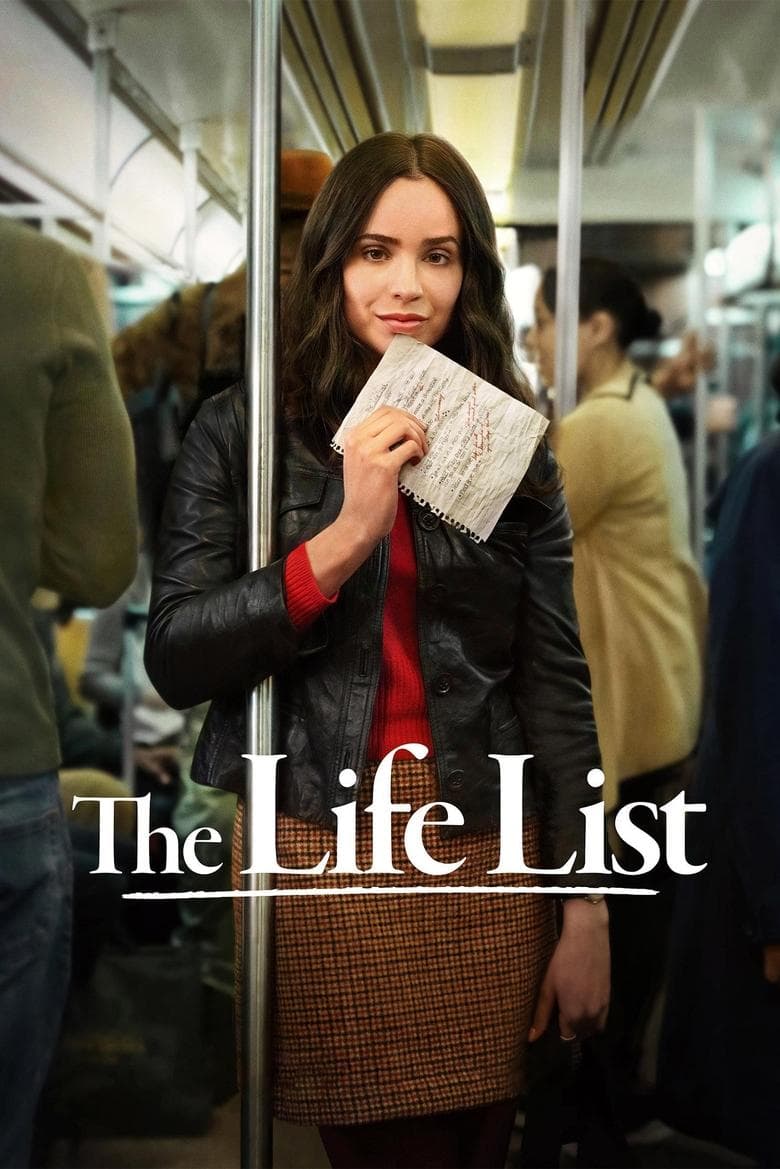
Alex Rose is a young woman living in New York City who feels stuck in a job, a relationship, and the grief caused by her mother's death. Before she dies, Alex's mother leaves a recorded message that ties Alex's inheritance to a list Alex wrote at age thirteen. Alex must finish the list, which sends her into teaching, open-mic comedy, travel, new romance, and hard talks with her family. The movie uses a warm, polished, sometimes tearful tone as Alex learns what she wants from work, love, and home.
The clearest woke element is a mild female-empowerment theme because Alex leaves a boyfriend who does not support her and chooses a life built around her own goals. Her return to teaching at a women's shelter gives that message a repeated setting, but the film treats it as personal growth rather than a political lesson. The mixed White and Latino Rose family fits the modern New York setting, and the film does not make race or diversity a main subject. The film stays focused on grief, family, work, and romance instead of political speeches or attacks on Western institutions.
Community feedback
Was our 15% Woke rating accurate?
Breakdown
These are the editorial factors and ratings behind our score for The Life List.
Woke representation / casting
Not present. The story presents Alex as the daughter of a White mother and Latino father in modern New York. The film does not make race, gender, or group balance a point of the story.
0%
Woke political dialogue
Not present. Characters talk about grief, family, jobs, love, fear, and personal goals. The film has no speeches about identity politics, DEI, or current partisan issues.
0%
Identity-driven story themes
Alex’s main arc is a female self-empowerment story. She leaves a boyfriend who does not support her and chooses work and love that fit her goals. The film treats this as personal growth, not as a speech about gender politics or a wider activist cause.
15%
Western institutional / cultural critique
Not present. The film shows a women’s shelter and a family company as parts of Alex’s life. It does not attack men, family, capitalism, religion, or Western institutions.
0%
Woke character or canon changes
Not relevant. The film is based on a novel, but no identity-driven change to an established character, canon, or real person is part of the story.
0%
Anti-woke backlash and complaints
One small X account grouped the film with Netflix romances that “toss an offering to the woke gods.” The post alleged a required gay best friend, token minority stories, and female-empowerment lectures, but it gave no scene evidence. It had zero likes and about 90 views, and no boycott or review-bomb campaign was found.
10%
Creator track record context
Writer-director Adam Brooks has a record of WGAE inclusion work and earlier films about race or politics. The other listed writer, producers, and casting directors have little documented activist history. That background gives this factor a modest lift, but the current film does not use those earlier themes.
25%
Production
Movie · 2022
Divorced couple Georgia and David find themselves on a shared mission: they team up and travel to Bali to stop their daughter Lily from making the same mistake they once made 25…

Movie · 2016
A boy growing up in Dublin during the 1980s escapes his strained family life by starting a band to impress the mysterious girl he likes.

Movie · 2023
Two romantic burnouts, Jane and Will, are immediately drawn to each other at a mutual friend’s wedding. After a disastrous hookup in the coatroom, the two spend the next 24 hours…

Movie · 2023
Michelle and Allen, who have reached the point in their relationship where they are considering next steps, decide to invite their parents to finally meet and to offer some…
Movie · 2023
Mira Ray, dealing with the loss of her fiancé, John, sends a series of romantic texts to his old cell phone number… not realizing the number was reassigned to Rob Burns' new work…
Movie · 2016
Mia, an aspiring actress, serves lattes to movie stars in between auditions and Sebastian, a jazz musician, scrapes by playing cocktail party gigs in dingy bars, but as success…
Movie · 2021
Senior year of high school takes center stage as Lara Jean returns from a family trip to Korea and considers her college plans — with and without Peter.

Movie · 2021
Troubled teen Will Hawkins has a run-in with the law that puts him at an important crossroad: go to juvenile detention or attend a Christian summer camp.
