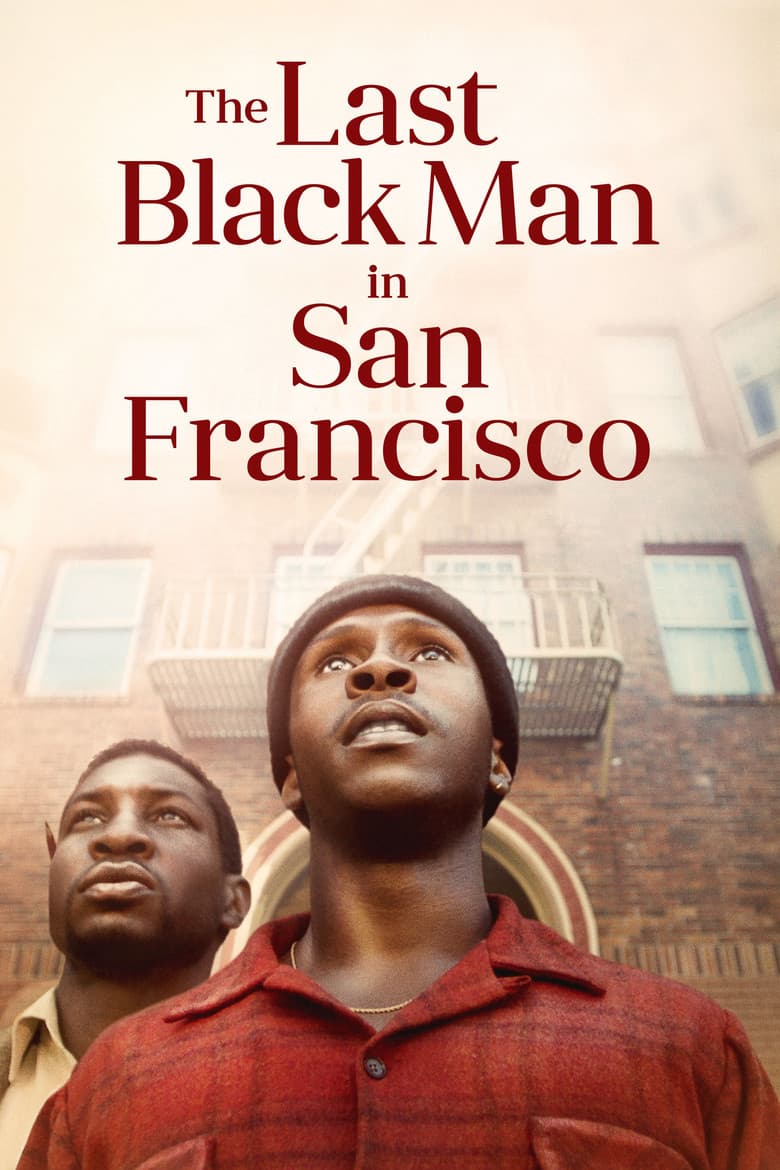
Jimmie Fails is a young black man who wants to reclaim the Victorian house where his family once lived. He and his best friend Mont move into the empty home after its owners leave, but Jimmie's dream hides painful truths about his family and his past. Their search takes them through San Francisco, from the old Fillmore neighborhood to the poorer edge of Hunters Point. The film feels sad, strange, warm, and dreamlike as the friends face loss, grief, and change.
The film's clearest woke elements are its focus on Black belonging, racial displacement, and gentrification. Its dialogue repeatedly says that Black residents built the city and are being pushed out by richer newcomers, while Mont's play asks the men around him to look past hard public roles. The story also questions narrow ideas of Black manhood by showing two men who care for each other, make art, and allow themselves to grieve. These themes are important throughout the movie, but the film tells them through a personal friendship and family story instead of a direct political campaign.
Community feedback
Was our 61% Woke rating accurate?
Breakdown
These are the editorial factors and ratings behind our score for The Last Black Man in San Francisco.
Woke representation / casting
Not present. The main cast is mostly Black because the story follows a black family and Black residents in San Francisco. The casting matches the people and place shown.
0%
Woke political dialogue
The street preacher opens with lines about poisoned water, Manifest Destiny, and black people building the city. Jimmie and Mont keep talking about Black residents being pushed out by richer newcomers. Mont's play asks people to look beyond the roles they were born into and to see the city's hidden history. These lines appear in several key scenes, but the film does not become a long political speech.
45%
Identity-driven story themes
The plot follows a black man's fight to reclaim a family home and a place in the city. The film ties that fight to black history in the Fillmore, loss of neighborhood culture, racial displacement, and gentrification. Mont's play and Kofi's death add a second thread about black male identity, grief, and pressure to act tough. These ideas shape the setting, the conflict, and the ending, so identity-driven story themes are a major part of the film.
67%
Western institutional / cultural critique
The film shows wealthy newcomers and real-estate pressure pushing Black residents away from the Fillmore. The street preacher links the city's growth to taking land and erasing black history. Mont's story questions the pressure on black men to act hard instead of showing feeling. The movie criticizes housing costs and social power, but it does not attack Christianity or all Western institutions.
47%
Woke character or canon changes
Not relevant. The film is an original drama based partly on Jimmie Fails's life. It does not change an established character, source, or historical figure.
0%
Anti-woke backlash and complaints
Not present. The separate X pass found no anti-woke reaction. Web discussion mainly praised the film or debated its style and gentrification themes, without clear complaints that it pushed DEI or identity politics.
0%
Creator track record context
Talbot's work often centers on race, displacement, cultural memory, and belonging. Fails writes from his own experience as a Black San Franciscan pushed to the edge of a changing city. Several producers and the casting team have worked on social-issue or representation-focused projects. This gives the film a clear creator track record context, but the group has not built a broad partisan campaign around it.
43%
Production
Movie · 2016
WWII American Army Medic Desmond T. Doss, who served during the Battle of Okinawa, refuses to kill people and becomes the first Conscientious Objector in American history to…
Movie · 2023
The story of J. Robert Oppenheimer's role in the development of the atomic bomb during World War II.
Movie · 2025
Diagnosed with Tourette Syndrome at 15, John Davidson navigates his way against the odds through troubled teenage years and into adulthood, finding inspiration in the kindness of…
Movie · 2024
On the brink of the Second World War, a young Norwegian man's drive to resist the Nazis sets a new course for his future – and the future of his country.
Movie · 2019
Richard Jewell thinks quick, works fast, and saves hundreds, perhaps thousands, of lives after a domestic terrorist plants several pipe bombs and they explode during a concert…
Movie · 2023
The true story of the inseparable Von Erich brothers, who made history in the intensely competitive world of professional wrestling in the early 1980s.
Movie · 2016
After his older brother passes away, Lee Chandler is forced to return home to care for his 16-year-old nephew.
Movie · 2016
In a desolate war zone where screams of the innocent echo, on the very line between disaster and valor, 7 Maroon Berets will dance with death.
