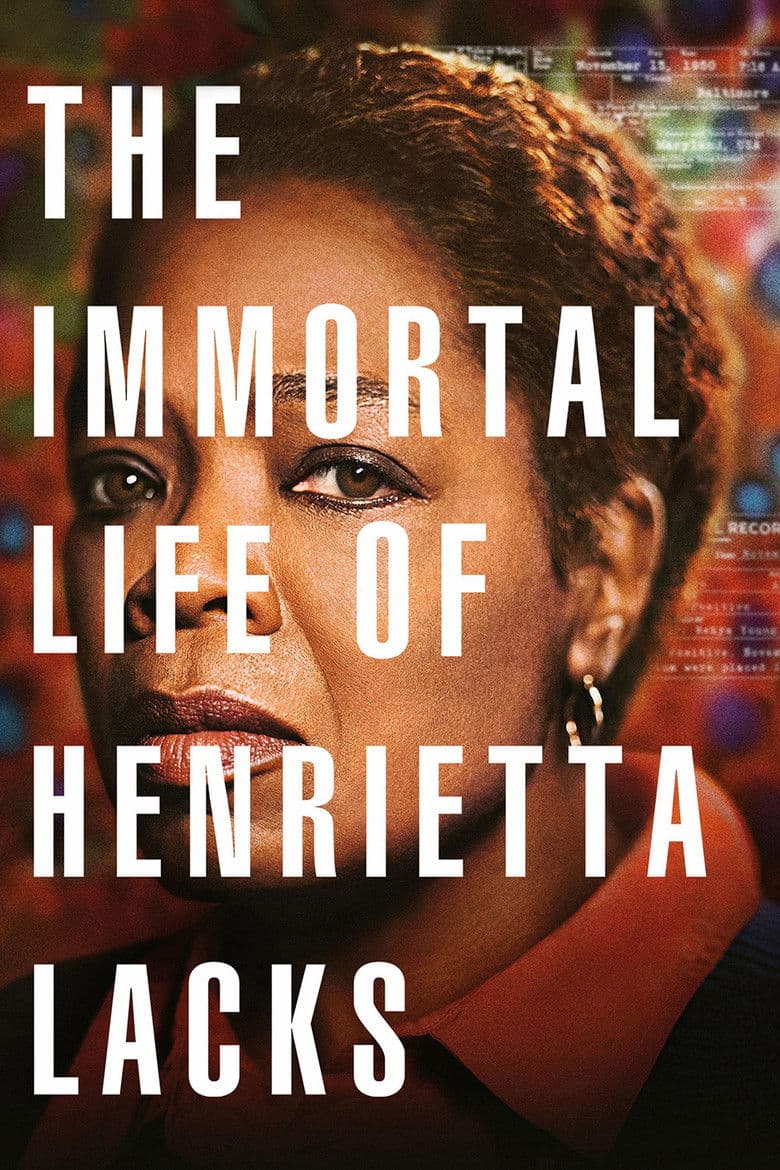
The film follows Deborah Lacks, a troubled daughter who wants to understand her mother Henrietta. In 1951, Henrietta receives treatment for cervical cancer at Johns Hopkins in Baltimore, where doctors take tissue from her tumor without telling her. The cells grow forever and help medicine, while her family learns nothing for years. Decades later, reporter Rebecca Skloot travels between Baltimore and Virginia with Deborah to uncover Henrietta’s life and the damage left behind. The tone is sad, tense, and personal, with brief warm and spiritual moments.
The story puts a black family at the center and repeatedly links its suffering to racism, poverty, and the medical system’s power. Deborah and Rebecca work to restore Henrietta’s name after white researchers hide it and use her cells without consent. The film gives women the main roles in the search for truth, while male doctors and institutions are shown as sources of harm or silence. These themes are central, but the film presents them through a true historical case rather than current party politics.
Community feedback
Was our 57% Woke rating accurate?
Breakdown
These are the editorial factors and ratings behind our score for The Immortal Life of Henrietta Lacks.
Woke representation / casting
Not present. The main casting follows the real story, with black actors playing the Lacks family and Rose Byrne playing white writer Rebecca Skloot. The film does not show a diversity-first group or a clear identity mismatch.
0%
Woke political dialogue
Deborah tells Rebecca to “keep on being white” after the white reporter gains access to family records. The characters discuss how doctors hid Henrietta’s name and used her cells without permission. The film links that treatment to Henrietta being a poor black woman. The dialogue stays tied to the historical medical case instead of present-day party politics.
28%
Identity-driven story themes
The film centers on a black family whose mother’s cells changed medicine while the family stayed poor and uninformed. Deborah spends the story reclaiming Henrietta’s name and facing the harm done to her family. The story connects race, poverty, consent, and medical power across decades. The film supports giving patients and families a voice, so identity-driven themes are central even though the events come from a true historical case.
63%
Western institutional / cultural critique
Johns Hopkins doctors take Henrietta’s tissue without asking and later allow researchers to study the family without clear explanations. The film shows medical experts treating a poor black family as sources of data instead of people. The story criticizes institutional racism, secrecy, and lack of consent. The criticism stays tied to historical medicine rather than attacking Western culture or capitalism as a whole.
28%
Woke character or canon changes
Not relevant. The film does not make a clear identity-based change to a real person or established character. Its changes mainly shorten events from the nonfiction book.
0%
Anti-woke backlash and complaints
Not present. The separate X pass found no anti-woke reaction. News coverage found family complaints about accuracy, exploitation, and money, not claims that the film pushed DEI or identity politics.
0%
Creator track record context
George C. Wolfe has a strong race and queer-focused creative record, including black history and civil rights stories. Alan Ball and Oprah Winfrey also have long records involving queer visibility, minority stories, and empowerment themes. Rebecca Skloot’s work centers on race, medical abuse, and the rights of vulnerable people. Alexander Woo, Peter Landesman, Lydia Dean Pilcher, and the other credited crew add less activist context, so this factor is strong but not near the maximum.
68%
Production
Movie · 2016
On 15 January 2009, the world witnessed the 'Miracle on the Hudson' when Captain 'Sully' Sullenberger glided his disabled plane onto the Hudson River, saving the lives of all 155…
Movie · 2022
Based on a true tragedy, the emotionally triggering film sheds light on the plight of Kashmiri Pandits (Hindus), a religious minority in the 1990s Kashmir valley, who were…
Movie · 2025
Diagnosed with Tourette Syndrome at 15, John Davidson navigates his way against the odds through troubled teenage years and into adulthood, finding inspiration in the kindness of…

Movie · 2023
The true story of the inseparable Von Erich brothers, who made history in the intensely competitive world of professional wrestling in the early 1980s.
Movie · 2016
In a desolate war zone where screams of the innocent echo, on the very line between disaster and valor, 7 Maroon Berets will dance with death.
Movie · 2026
While people across 1990s Iraq struggle to survive the war and food shortages, Saddam Hussein requires each school in the country to prepare a cake to celebrate his birthday.
Movie · 2025
A logger leads a life of quiet grace as he experiences love and loss during an era of monumental change in early 20th-century America.
Movie · 2017
Members of the Granite Mountain Hotshots battle deadly wildfires to save an Arizona town.
