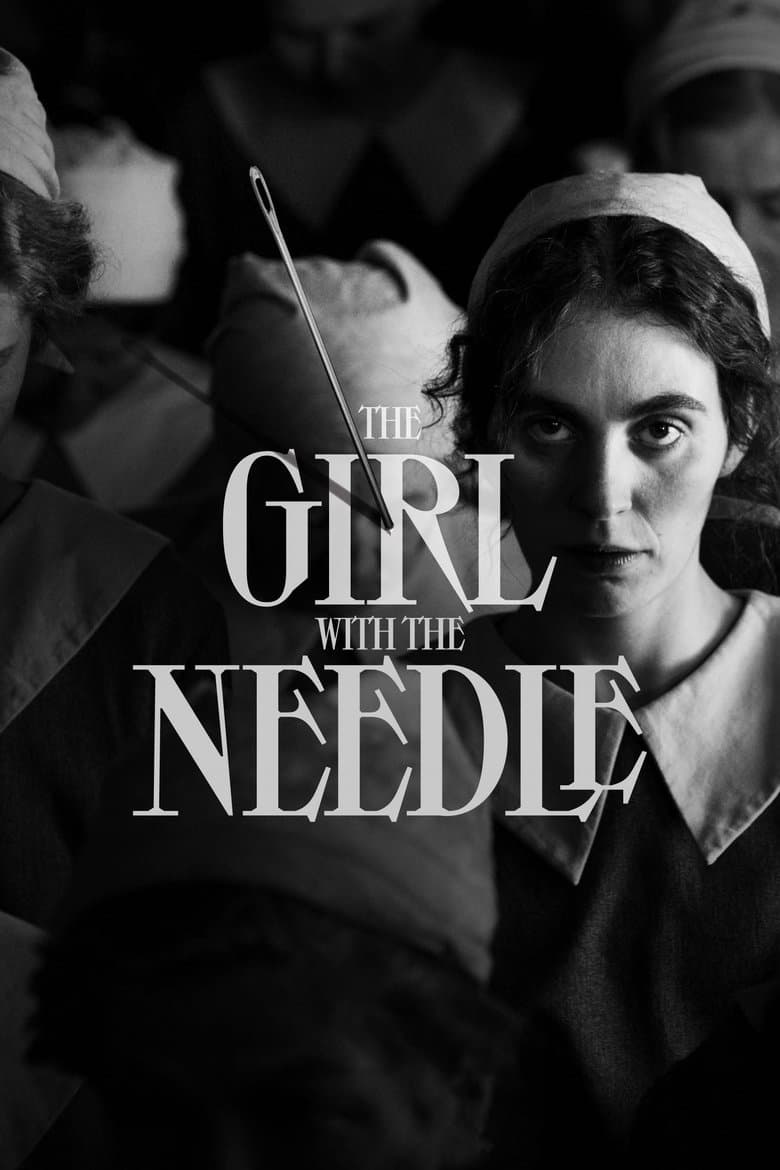
Karoline is a poor young factory worker in Copenhagen just after the First World War. Her husband is missing, her job and home disappear, and she becomes pregnant after an affair with her wealthy boss. With no safe way to end the pregnancy, she turns to Dagmar, a friendly shopkeeper who promises to place the baby with a good family. The film follows their bond as Dagmar’s hidden crimes turn a desperate plan into a nightmare. Its black-and-white images, harsh sounds, and sudden body horror create a bleak fairy-tale tone.
The main woke element is the film’s focus on women’s control over their bodies and the way jobs, housing, health care, and child care fail poor women. Karoline’s dangerous abortion attempt and the baby-placement scheme make control over pregnancy and motherhood the center of the story. The film presents men, wealthy families, and public systems as weak, selfish, or unable to protect women. Karoline’s final decision to care for a child gives the story a small hopeful answer, but it does not remove the strong message that society must give women better choices.
Community feedback
Was our 71% Woke rating accurate?
Breakdown
These are the editorial factors and ratings behind our score for The Girl with the Needle.
Woke representation / casting
Besir Zeciri, who has described himself as a brown man, plays Peter, a Danish soldier in 1919. The film gives Peter no family or migration story that explains his place in that setting. This is one noticeable casting mismatch in a small main cast, but the film does not build a wider representation pattern.
28%
Woke political dialogue
Not present. The characters do not give speeches or repeated lines about feminism, DEI, identity politics, or modern activist causes. Their dialogue stays with poverty, pregnancy, survival, guilt, and crime.
0%
Identity-driven story themes
The film centers on Karoline’s pregnancy, her attempt to end it, and her lack of safe choices. The story repeatedly shows poor women losing work, homes, health care, and control over their children. Karoline and Dagmar mirror each other as women shaped by a society that offers little help. The film makes women’s bodily autonomy and social treatment central to its message.
72%
Western institutional / cultural critique
The film shows a postwar society that leaves poor women without safe work, housing, health care, or child care. Wealthy employers, landlords, and officials protect status or fail to help when Karoline needs them. Men are often shown as weak, selfish, predatory, or too damaged to protect the women around them. The story turns this historical misery into a wider critique of gender roles, social inequality, and institutions that still fail women.
62%
Woke character or canon changes
Not relevant. The film is a loose fictional version of the Dagmar Overbye case. Its changes add Karoline’s viewpoint and alter events, but they do not swap the race, gender, or sexuality of an established character.
0%
Anti-woke backlash and complaints
A Danish anti-abortion group criticized the film for treating legal abortion and women’s choice as a good answer to the crisis. The group argued that the film also points to the rights of babies and that legal abortion would not have stopped Dagmar’s murders. The complaint appeared in the group’s own article and magazine, with no sign of a boycott, review-bombing, or broad news campaign.
18%
Creator track record context
Magnus von Horn has a cached score of 55 and often links personal harm to social failure. Line Langebek Knudsen has a cached score of 68 because of her work for workplace equality and family access in film. Lone Scherfig has a cached score of 49 and often explores women’s agency, class, and male-led institutions. Most other credited producers and the casting director have low or no recorded activist pattern, so the project has clear social-justice context but not a strong partisan or DEI persona.
58%
Production

Movie · 2023
The true story of the inseparable Von Erich brothers, who made history in the intensely competitive world of professional wrestling in the early 1980s.
Movie · 2016
WWII American Army Medic Desmond T. Doss, who served during the Battle of Okinawa, refuses to kill people and becomes the first Conscientious Objector in American history to…
Movie · 2019
Richard Jewell thinks quick, works fast, and saves hundreds, perhaps thousands, of lives after a domestic terrorist plants several pipe bombs and they explode during a concert…
Movie · 2023
The story of J. Robert Oppenheimer's role in the development of the atomic bomb during World War II.

Movie · 2026
While people across 1990s Iraq struggle to survive the war and food shortages, Saddam Hussein requires each school in the country to prepare a cake to celebrate his birthday.
Movie · 2025
A logger leads a life of quiet grace as he experiences love and loss during an era of monumental change in early 20th-century America.

Movie · 2025
Diagnosed with Tourette Syndrome at 15, John Davidson navigates his way against the odds through troubled teenage years and into adulthood, finding inspiration in the kindness of…
Movie · 2017
In 1950, amidst the ravages of the Korean War, Sergeant Süleyman stumbles upon a a half-frozen little girl, with no parents and no help in sight and he risks his own life to save…
