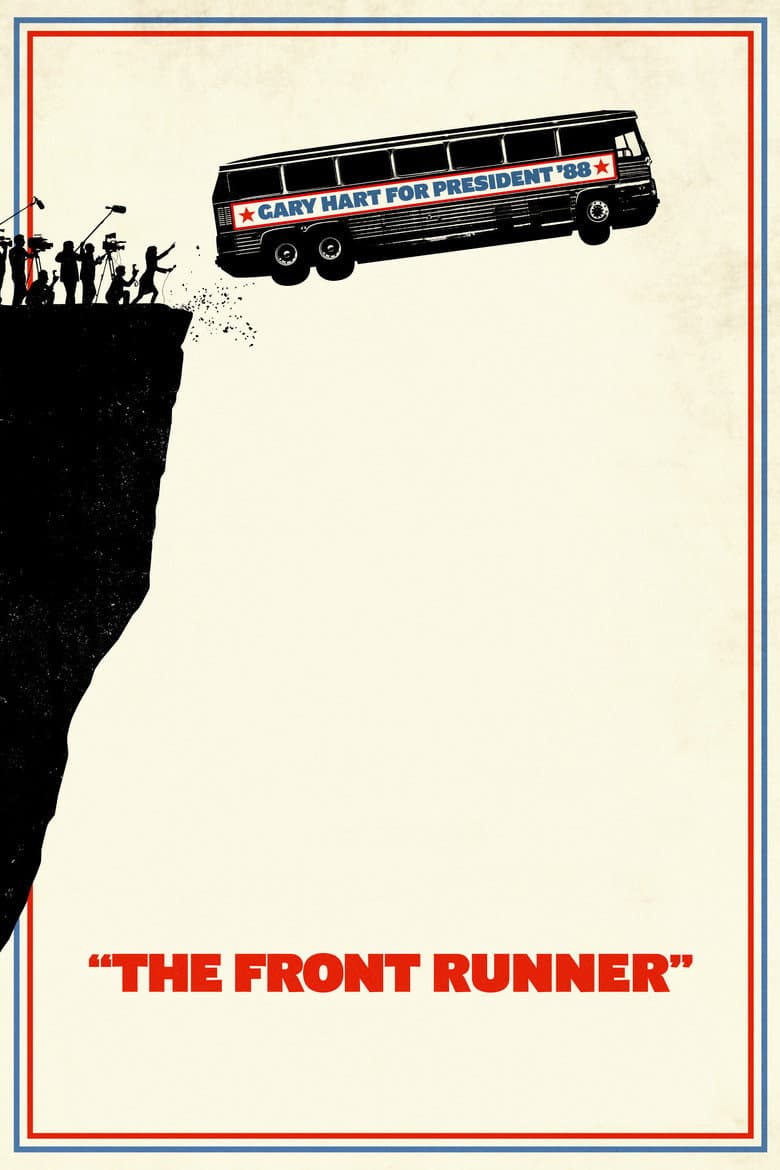
Gary Hart is a Colorado senator who seems ready to win the Democratic nomination for president in 1987. He is smart, charming, and full of big plans, but he also believes his private life should stay private. When reporters follow him after rumors about Donna Rice, his campaign breaks apart in days. The movie moves between Hart, his wife Lee, his staff, and the newspapers in a fast, tense, sometimes dryly funny account of a political fall.
The film gives repeated attention to how powerful men, their wives, and women caught in scandals are treated. Lee Hart, Donna Rice, Irene Kelly, Andrea Hart, and reporter Ann Devroy receive important scenes and different points of view. Ann directly questions Hart’s respect for women, and the film shows Donna being pushed aside by both the campaign and the press. The story also asks whether newspapers should expose private behavior and whether politics has become entertainment.
Community feedback
Was our 46% Woke rating accurate?
Breakdown
These are the editorial factors and ratings behind our score for The Front Runner.
Woke representation / casting
A.J. Parker is a fictional character made by combining two real reporters, and the film presents him through black actor Mamoudou Athie. The movie also gives five women important speaking roles. Those roles fit the campaign and newsroom setting, so the identity emphasis remains limited. The cast does not follow a clear representation-first design.
18%
Woke political dialogue
Ann Devroy says she questions Hart’s respect for women. She says a man with power has a responsibility to act properly. She says Hart throws Donna Rice under the campaign bus. The exchange is brief, but it clearly connects gender, power, and public duty.
32%
Identity-driven story themes
The film repeatedly follows how Lee Hart and Donna Rice suffer because of Hart’s conduct and the media storm. The story gives women important viewpoints instead of treating them only as background figures. Irene Kelly also handles the emotional damage caused by a powerful male politician. These themes shape a major part of the story, but they do not fully replace the political and media plot.
48%
Western institutional / cultural critique
The film questions the old practice of protecting powerful men from reports about their private behavior. It shows Hart’s campaign asking women to manage damage caused by his choices. It also attacks the shift from serious journalism toward gossip and entertainment. The criticism targets politics and the press, not Western culture as a whole.
33%
Woke character or canon changes
A.J. Parker is a fictional character made by combining two real reporters from the source history. The film presents this reporter as black through Mamoudou Athie, which changes the visible identity of the source material. The other major changes concern timing and private events, not race, gender, or sexuality. This is a small adaptation choice, not a central rewrite.
12%
Anti-woke backlash and complaints
Not present. Available audience reaction centers on pacing, accuracy, and the press, not claims that the film pushes woke or DEI ideas. The supplied X pass found no anti-woke posts or specific complaints.
0%
Creator track record context
The supplied creator records are mostly low to moderate. Jason Reitman has some work and comments tied to gender and social issues, but his score is 32. Jay Carson and Matt Bai are mainly linked to mainstream Democratic politics and journalism. George Wolfe has a strong identity-focused record, but the wider creative group is not strongly activist.
24%
Production
Movie · 2019
Richard Jewell thinks quick, works fast, and saves hundreds, perhaps thousands, of lives after a domestic terrorist plants several pipe bombs and they explode during a concert…
Movie · 2023
The true story of the inseparable Von Erich brothers, who made history in the intensely competitive world of professional wrestling in the early 1980s.
Movie · 2022
London, 1953. Mr. Williams, a veteran civil servant, is an important cog within the city's bureaucracy as it struggles to rebuild in the aftermath of World War II.
Movie · 2023
American ballet dancer Joy Womack is accepted into Moscow's infamously tough Bolshoi Ballet Academy, with the dream of becoming a great ballerina.
Movie · 2016
On 15 January 2009, the world witnessed the 'Miracle on the Hudson' when Captain 'Sully' Sullenberger glided his disabled plane onto the Hudson River, saving the lives of all 155…
Movie · 2025
A logger leads a life of quiet grace as he experiences love and loss during an era of monumental change in early 20th-century America.
Movie · 2017
In 1950, amidst the ravages of the Korean War, Sergeant Süleyman stumbles upon a a half-frozen little girl, with no parents and no help in sight and he risks his own life to save…

Movie · 2016
After his older brother passes away, Lee Chandler is forced to return home to care for his 16-year-old nephew.
